
Disaster Management, Discretionary Efforts, and Our Fiscal Readiness
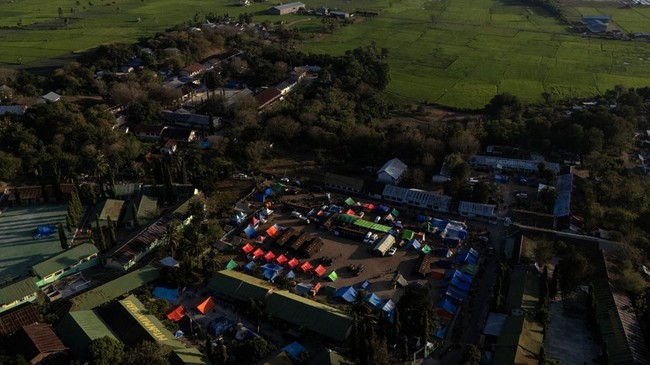
Disaster Management, Discretionary Efforts, and Our Fiscal Readiness
In December 2025, while serving at the Directorate of Business Climate and International Cooperation of the Government Goods/Services Procurement Agency (LKPP), I proposed a technocratic idea titled “Regional Fiscal Stimulus and Accelerated Post-Disaster Procurement”. This idea stemmed from the need for the Ministry of Finance and the Ministry of Home Affairs to provide fiscal stimulus to disaster-affected regions.
Why did this occur to me? Because at that time, the situation was so urgent, yet the available rapid-response solutions were extremely limited. Regional finances were unprepared, even nearly depleted, leaving regional heads with insufficient room to take emergency measures.
Imagine, when a disaster is imminent and local governments are required to act immediately, regional heads must instead face lengthy bureaucratic procedures. Furthermore, to obtain additional Transfers to Regions (TKD), local governments effectively have to “beg” for mercy from the central government. How can local governments move quickly if their own fiscal space is inadequate or virtually non-existent?
Disasters do not only cause loss of life and socio-economic damage. Infrastructure is destroyed, public services are disrupted, and community livelihoods are struck. Therefore, recovery requires strong fiscal support alongside procurement mechanisms that are fast, targeted, and remain accountable.
This nation indeed possesses a high level of natural disaster vulnerability. Indonesia’s geographical condition, situated within the Pacific Ring of Fire and at the meeting point of several major tectonic plates—including the Eurasian, Indo-Australian, and Pacific plates—makes Indonesia susceptible to various disasters, such as earthquakes, volcanic eruptions, and tsunamis. Geographical vulnerability is not merely a natural issue, but also a challenge for governance.
Given this reality, we should be sensitive! We should no longer hear of budget efficiencies affecting institutions such as the Meteorology, Climatology, and Geophysics Agency (BMKG) and the National Disaster Management Agency (BNPB). Similarly, cuts to Transfers to Regions (TKD) have the potential to affect the ability of regions to fund disaster management.
There is no need to think too far technocratically; if we truly care, mitigation should be prepared long before a disaster occurs. At the very least, the state must ensure the availability of adequate instruments to detect, map, and anticipate potential disasters.
Fiscal readiness in disaster management deserves serious attention. We must learn from past disasters; in the 2026 State Budget (APBN), the budget for the National Disaster Management Agency (BNPB) is recorded at only around Rp491 billion, a drastic decrease compared to the Rp2.01 trillion outlook for 2025 and Rp4.91 trillion in 2024. A decrease of approximately 75.62 percent in one year indicates the narrowing fiscal space of the central government to support disaster management functions.
The issue becomes more complex with adjustments to Transfers to Regions (TKD), which further constrict regional fiscal capacity, including the availability of Unforeseen Expenditures (BTT). In fact, BTT is a vital instrument for local governments to respond to emergencies quickly.
The experience of disaster handling in North Sumatra in December 2025 demonstrated that limited regional fiscal capacity can become a real obstacle when the need for disaster response increases suddenly.
On the other hand, overly strict budget efficiencies at the BMKG and other agencies with mandates for mitigation and disaster management have the potential to narrow the state’s capacity to build preparedness. Efficiency is necessary, but it should not reduce the state’s ability to anticipate catastrophic risks.
Fiscal and Discretion in Disaster Management
Our nation continues to undergo the recovery process from various disasters. From strong earthquakes in East Nusa Tenggara that caused thousands of residents to flee, to forest and land fires in Kalimantan, to various hydrometeorological disasters occurring in several other regions.
In such situations, the speed of the government’s response is crucial. However, disaster management often faces lengthy bureaucratic procedures. The problem is not merely that the government fails to act immediately, but that public officials must navigate various laws and regulations when making decisions in emergency situations.
This is where discretion becomes vital. In disaster conditions, the government needs space to make rapid decisions based on the concrete situation faced by the community. Discretion allows the government to act when regulations do not explicitly govern every issue that arises in the field.
Recently, the Constitutional Court (MK), through Decision Number 261/PUU-XXIII/2025, provided “fresh air” for disaster management reform in Indonesia. In the decision read on 28 August 2026, the MK partially granted the petition for the judicial review of Law 24/2007 concerning Disaster Management and declared Article 7 paragraph (2) unconstitutional conditionally.
This decision changes the mechanism for determining the status and level of disasters, particularly national disasters. Previously, five indicators—number of victims, property loss, damage to infrastructure, geographical coverage, and socio-economic impact—were understood cumulatively. The MK now requires at least three indicators…
Source: jawawa.id (https://jawawa.id/newsitem/disaster-management-discretionary-efforts-and-our-fiscal-readiness-1791363249)
Originally published by CNBC Indonesia (https://www.cnbcindonesia.com/opini/20261007143645-14-774116/penanggulangan-bencana-upaya-diskresi-dan-kesiapan-fiskal-kita), translated from Indonesian