
Disaster management and state responsibility following Constitutional Court decision
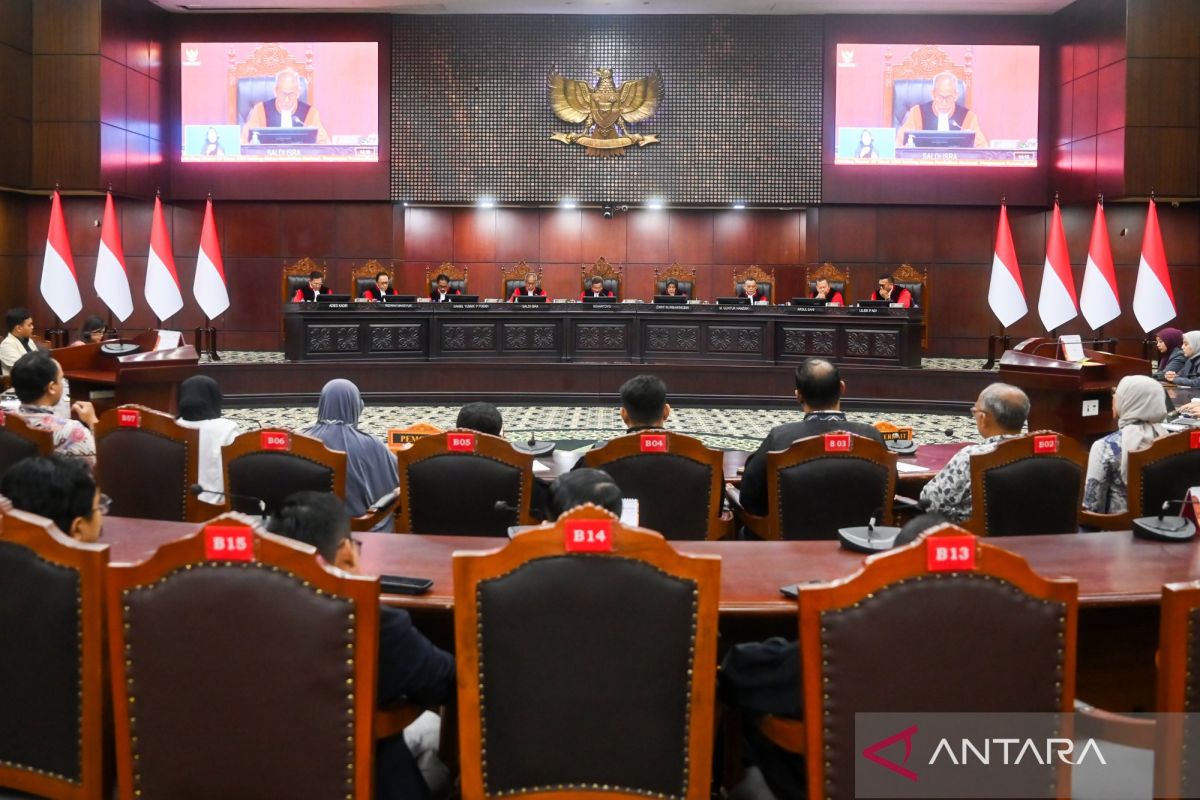
This decision serves as a push for the state to move from a procedural bureaucracy to a responsive one, from decisions that await certainty to those based on data, and from reactive disaster management to a proactive system.
Recently, Indonesia has continued to struggle to recover from various disasters, ranging from earthquakes in East Nusa Tenggara that forced thousands of residents to evacuate, to forest and land fires in Kalimantan, and hydrometeorological disasters in various regions. In such situations, the speed of the government’s response becomes vital. However, disaster management still frequently faces bureaucratic procedures that require significant time. The issue is not merely that the government fails to act immediately, but rather that public officials must navigate various statutory provisions when making decisions in emergency situations.
This is where discretion becomes essential. In disaster conditions, the government requires the space to make rapid decisions based on the concrete circumstances faced by the community. Discretion allows the government to act when regulations do not explicitly detail every issue that arises in the field.
Discretion and the Declaration of Disaster Status
The reformist decision produced by the Constitutional Court provides “fresh air” for disaster management reform in our country. Through Decision Number 2rag/PUU-XXIII/2025, the Constitutional Court (MK) partially granted the petition for the judicial review of Law Number 24 of 2007 concerning Disaster Management.
In the decision read on 28 August 2026, the Court stated that Article 7 paragraph (2) of the Disaster Management Law contradicts the 1945 Constitution and has no legally binding force conditionally (Constitutional Court, 2026).
This ruling brings important changes to the mechanism for determining the status and level of disasters, particularly national disasters. Previously, Article 7 paragraph (2) contained five indicators: the number of victims, property loss, damage to infrastructure and facilities, the scope of the affected area, and the resulting socio-economic impact. These five indicators were previously understood to be cumulative.
The Constitutional Court has altered this construction. The declaration of national disaster status is now based on at least three indicators, with the number of victims serving as the primary indicator that must be met. While this change may appear technical, from a legal and governance perspective, the consequences are far more fundamental. The ruling addresses a classic issue in disaster management: how to ensure that the law does not become a factor that slows the state’s presence when the community needs immediate help.
Through Decision Number 261/PUU-XXIII/2025, the Constitutional Court has further clarified the government’s scope of movement in disaster management when exercising discretion. Discretion must still be used based on the objectives and requirements as regulated in Article 22 paragraph (2) and Article 24 of Law Number 30 of 2014 concerning Government Administration.
The ruling not only provides space for the government to act more swiftly in emergency situations but also affirms that every discretionary decision must remain within the corridors of law, objectivity, and governmental accountability.