
‘Disaster’ Could Strike Asia’s Airlines, Passengers Must Be Prepared
Jakarta, CNBC Indonesia — Airlines in the Asia-Pacific region face growing risks because of high jet-fuel prices.
The situation comes as existing hedging contracts expire, forcing airlines to decide whether to lock in new protection at higher prices.
Fuel accounts for about 33% of airlines’ operating costs, according to Wong Hong, director-general of the Association of Asia Pacific Airlines (AAPA). That is higher than the global industry group IATA’s estimate of 25% last year, before prices surged.
Wong said the decision on whether to hedge now was an extremely complex dilemma. The AAPA represents 18 airlines in the region.
“Airlines that had hedging contracts over the past six to eight months have been in a very advantageous position. But now they face the need to hedge again at higher prices,” Wong was quoted as saying by Reuters on Friday (13 November 2026).
Adding to hedging protection is a bet on whether fuel prices will stay high. Airline executives attending the AAPA’s annual meeting in Kuala Lumpur this week expressed differing views on how long the pressure would last.
Jet fuel is currently trading on the spot market at about US$148 (around Rp27 million) a barrel, down from nearly US$180 at the end of October.
However, the price remains far above the roughly US$85 a barrel seen before the Iran war began in late February. Brent crude, meanwhile, is trading at around US$90 to US$100 a barrel.
“Our view is that we are facing a new normal, where fuel prices are likely to remain at levels similar to those we are seeing now,” said Air Astana chief executive Ibrahim Canliel.
Canliel said current prices were “unreasonable” for locking in new protection. Air Astana said its hedging contracts for the first half of this year had expired.
Nevertheless, the airline plans to rebuild its hedging position, aiming to cover all fuel purchases outside Kazakhstan. These typically account for around 30% of the company’s annual fuel requirements, Canliel added.
Japan Airlines (JAL) expects fuel prices to fluctuate. Ross Leggett, a senior managing executive officer at JAL, said the airline had drawn up its budget on a worst-case assumption of jet fuel at US$160 a barrel — the average price it paid between April and September.
All Nippon Airways (ANA) chief executive Juichi Hirasawa, meanwhile, expects the airline’s fuel costs to rise by 100 billion yen (US$626 million) this financial year compared with its initial plan. However, he expects the fuel market to stabilise in the second half of the financial year, which ends on 31 March.
ANA and JAL hedge only their domestic fuel consumption. For international flights, both rely on fuel surcharges and ticket-price adjustments to offset the risk of rising costs.
Neither airline indicated that it would change this approach.
Leggett said JAL would introduce fuel surcharges on domestic flights from next April. It would be the first time the airline had done so, after concluding that it could not continue to rely on government fuel subsidies.
Hirasawa said a surcharge on domestic flights was still “under consideration”. Competition from high-speed rail, however, makes the decision difficult.
Higher ticket prices?
Air fares have risen as oil prices have increased, but not always quickly enough to cover the full rise in fuel costs.
“There has to be a point at which passengers say no,” Wong said.
Passenger growth across Asia-Pacific airlines was negative overall between April and August, Wong said. In September, growth was only slightly above zero.
“Capacity reductions are clearly one of the risks that could materialise,” he said.
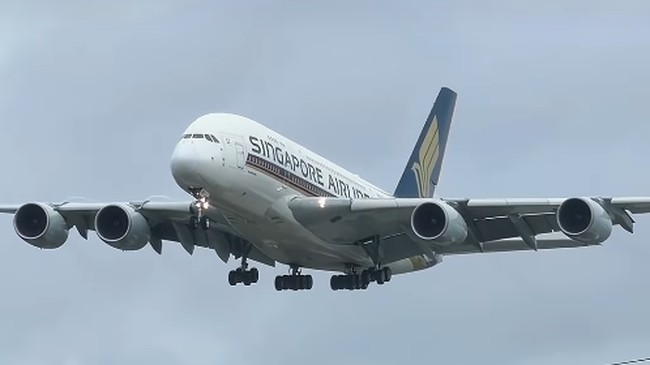
Singapore Airlines is one example of how airlines’ profit margins can come under pressure, even when they have substantial hedging protection.
The carrier’s fuel bill surged 56% in the six months to September, reaching S$3.97 billion (US$3.09 billion). This cut operating profit by 29%, despite the company reporting record revenue.
Before hedging, Singapore Airlines paid an average of US$171 a barrel, an 87% year-on-year increase.
Hedging gains reached S$731 million, reversing a loss of S$75 million the previous year. This brought the effective fuel price down to US$145 a barrel.
Even so, Singapore Airlines chief financial officer JoAnn Tan said hedging “only provides protection to a certain extent”. “Nobody can predict fuel prices. That is why we hedge,” she said at the results briefing yesterday.
Source: jawawa.id (https://jawawa.id/newsitem/disaster-could-strike-asias-airlines-passengers-must-be-prepared-1794545447)
Originally published by CNBC Indonesia (https://www.cnbcindonesia.com/news/20261113105647-4-784937/petaka-bisa-hantam-maskapai-penerbangan-asia-penumpang-harus-siap), translated from Indonesian