
Disaster Bills Arriving Faster, the United States Overwhelmed by the Cost
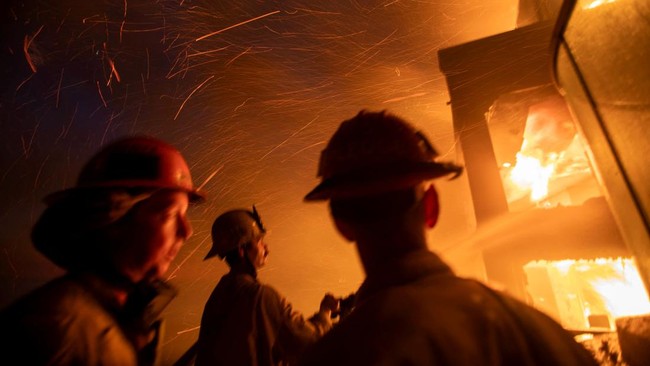
Disasters in the United States continue to incur enormous costs. In the 1980s, billion-dollar natural disasters were still relatively rare events. The situation is vastly different today. In just the first six years of the 2020s, losses from climate-related disasters have reached $901 billion. That figure nearly matches the total losses throughout the entire 2010s, which surpassed $1 trillion. In other words, a bill that once took a full decade to accumulate has almost been reached before the decade is over. Data from Climate Central indicates that the change is evident not only in the magnitude of losses but also in the type and frequency of disasters occurring.
The cost of billion-dollar disasters in the United States has risen almost without pause over the last four decades. In the 1980s, total losses reached $227 billion. That figure rose to $347 billion in the 1990s, then soared to $643 billion in the 2000s. Entering the 2010s, total losses breached the $1 trillion mark for the first time. The 2020s are striking; as of March 2026, total losses have already hit $901 billion, almost matching the entire losses of the 2010s. The biggest jump occurred in the 2000s when total disaster costs increased by about 85% compared to the previous decade. Since then, the graph has never truly reversed.
It is not just the magnitude of losses that has changed, but also the source. In the 1980s, drought was the largest cost contributor, with a value reaching $122 billion, more than half of the decade’s total losses. Meanwhile, losses from tropical cyclones were still around $48 billion. Four decades later, the picture has flipped entirely. As of March 2026, tropical cyclones have caused approximately $412 billion in losses. Severe storms follow with $252 billion in losses. This means the centre of gravity for economic losses has also shifted. Where drought once dominated disaster bills, tropical cyclones and extreme weather are now the biggest contributors to damage.
Not all of these losses come from many small events; some stem from a few very expensive disasters. The largest so far is Hurricane Ian, which slammed into the United States in September 2022. Its losses are estimated at $123 billion. Ian is also recorded as one of the most powerful storms to hit the United States since 1900. Meanwhile, wildfires have caused losses exceeding $100 billion throughout the 2020s.
The problem is not merely that each disaster is becoming more expensive; the number of disasters is also growing. In the 1980s, the United States recorded 33 climate-related disasters with losses of at least $1 billion. In the 2020s, that number has reached 143 occurrences up to 2026. This means losses are increasing not only because a few extraordinarily costly events appear, but because billion-dollar events now occur far more frequently than a few decades ago.
For years, companies and the insurance industry relied on historical data to measure risk. The logic was simple: what has happened is likely to provide a clue about what will happen next. That approach has become more complicated when the cost and frequency of disasters increase much faster than many models used to calculate risk. Under these conditions, the past remains useful, but it is no longer sufficient. For insurance companies, the challenge is not simply calculating the probability of one major catastrophe occurring; they must also estimate the likelihood of several expensive events appearing within a close period.
Behind all these figures, the main story is not really about storms, wildfires, or drought. The main story is risk. In four decades, disaster costs have risen from $227 billion to nearly $1 trillion per decade. At the same time, the number of billion-dollar disasters continues to set new records. For companies, investors, and the insurance industry, the challenge is no longer understanding what has happened, but estimating what might happen next. For decades, natural disasters were treated as calculable risks. The latest data shows that the calculation is becoming increasingly complex. As costs continue to rise and extreme events appear more frequently, the issue is no longer just how much loss a single disaster causes, but how quickly the next disaster arrives before the previous bill is paid.
Source: jawawa.id (https://jawawa.id/newsitem/disaster-bills-arriving-faster-the-united-states-overwhelmed-by-the-cost-1781164361)
Originally published by CNBC Indonesia (https://www.cnbcindonesia.com/research/20260611135334-128-742027/bencana-datang-lebih-cepat-amerika-kewalahan-menanggung-biayanya), translated from Indonesian