
Disaster-Affected Schools and 3T Regions Prioritised for Revitalisation
The government has established three groups of schools that will be prioritised in the educational unit revitalisation programme for 2-026. These include schools affected by disasters, schools in severely damaged condition, and schools located in underdeveloped, frontier, and outermost (3T) regions.
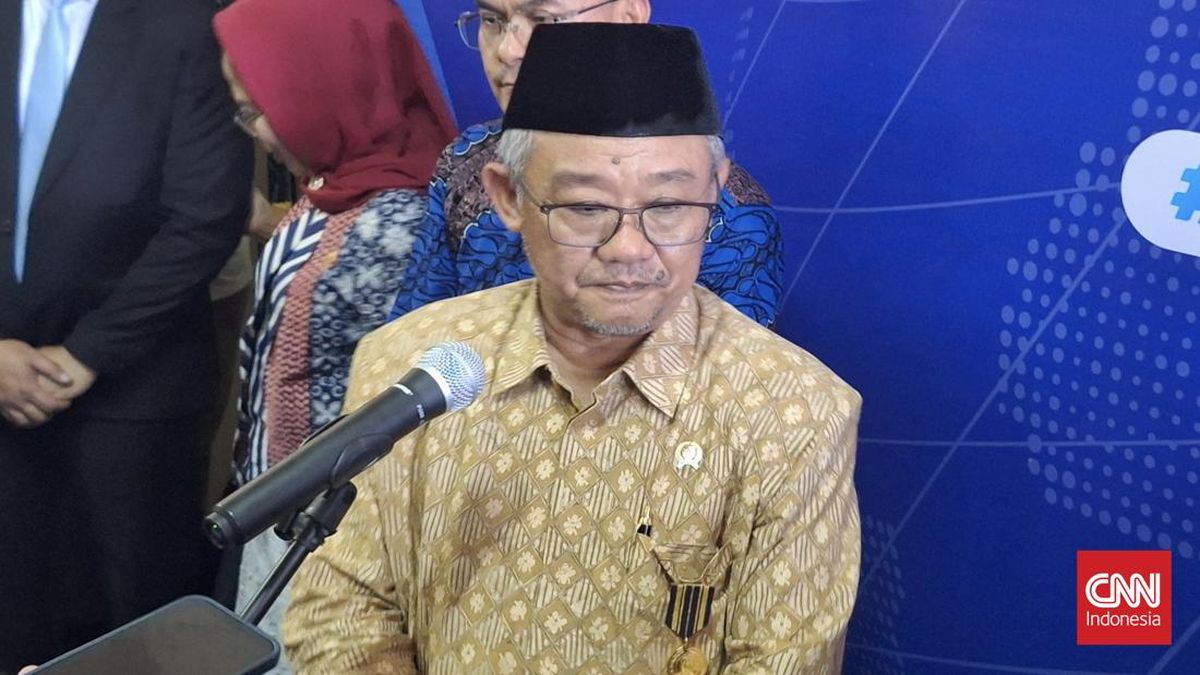
The Minister of Primary and Secondary Education, Abdul Mu’ti, stated that this year’s revitalisation programme targets tens of thousands of educational units throughout Indonesia. “For the 2026 revitalisation, we have three priorities. First, schools affected by disasters, particularly natural disasters. Second, schools that are severely damaged. Third, schools in 3T areas,” Mu’ti told reporters on Friday (11/9).
He noted that the government has begun construction on 11,744 educational units, with more than 1,000 of these having already completed the revitalisation process. Additionally, the government has started implementing revitalisation programmes funded by the Additional Budget (ABT). Overall, the government plans to revitalise 71,744 educational units throughout 2026.
“So for 2026, the Ministry of Primary and Secondary Education, along with related ministries, plans to revitalise 71,744 educational units across Indonesia,” he said.
Mu’ti mentioned that the number of schools to be revitalised could potentially increase due to efficiencies gained through a self-managed construction system involving the schools themselves. He explained that the self-managed system offers several benefits; besides being more cost-effective, construction by the schools is believed to improve quality as they are directly involved in the process.
According to him, this scheme also provides an economic impact on local communities. Labour and construction materials can be sourced from the local area, thereby stimulating regional economies. “First, it is more efficient. The cost is lower because it is managed by the schools themselves. Second, the work is better because they are doing it themselves, so they carry out the work to the best of their ability,” he said.
He added that self-managed construction also creates space for community participation. Some schools, particularly private ones, even receive support through community self-help to supplement revitalisation funding.
Mu’t also ensured that the programme does not only target state schools but also private schools. He stated that private schools play a vital role in supporting government programmes in the field of education. “Our target is not only state schools, but also private schools. We believe that the support from private schools is very significant in ensuring the success of government programmes, especially revitalisation,” he remarked.
Furthermore, he requested that the public and the media help monitor the implementation of the revitalisation programme to ensure it adheres to the principles of good governance. “We also ask for the support of the community and the media to ensure that the implementation of revitalisation follows correct principles of governance, ensuring there are no leakages or misuse of funds,” he concluded.