
Dirgen of Regional Finance Fatoni: Cooperation with Business Entities an Alternative for Infrastructure Development Financing
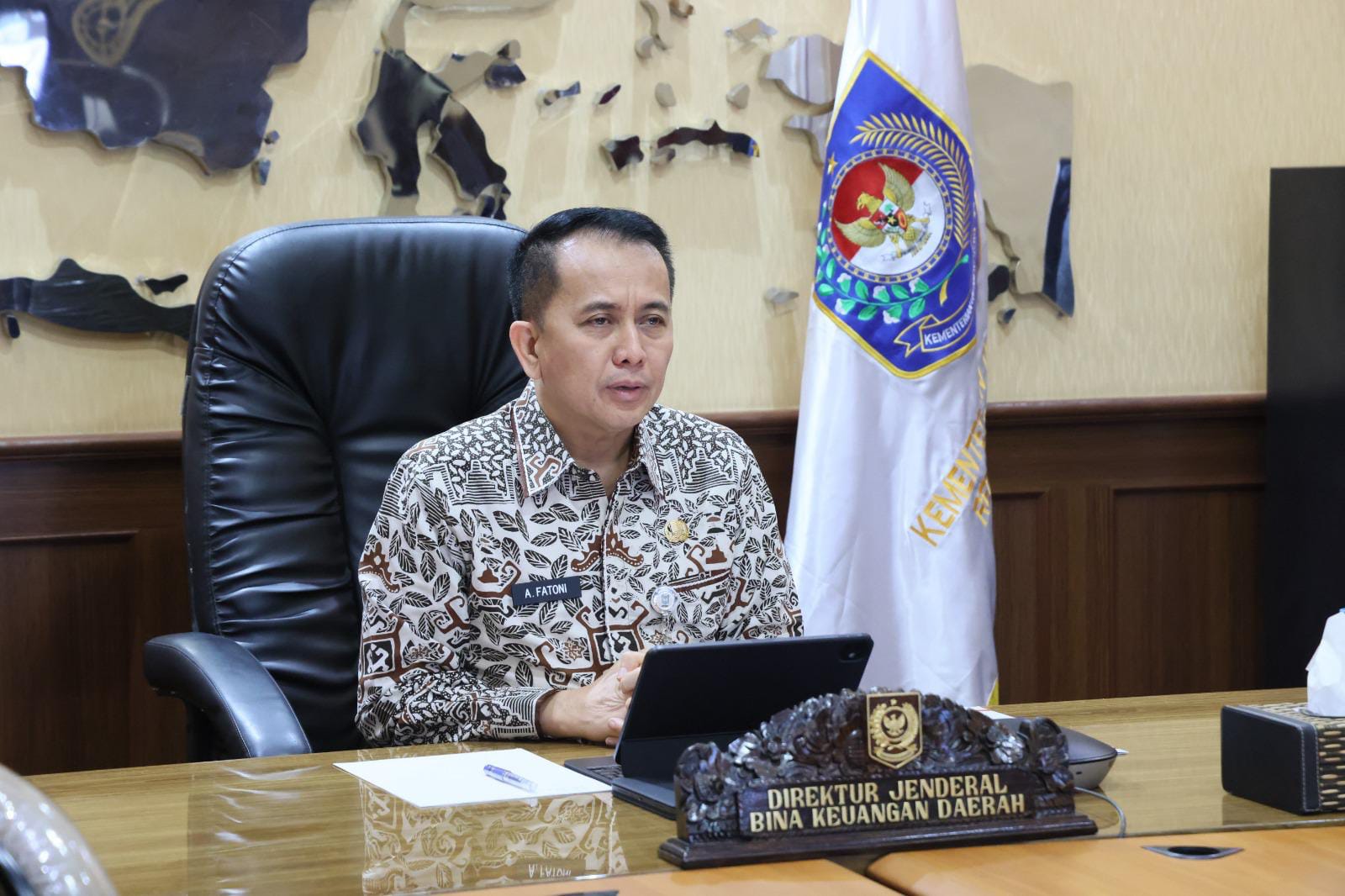
Director-General of Regional Financial Management (Bina Keuangan Daerah) at the Ministry of Home Affairs, Agus Fatoni, is encouraging regional governments to optimise creative financing, including Regional Government Cooperation with Business Entities (KPBU), as an alternative means of financing to accelerate infrastructure development and improve the quality of public services given the current regional fiscal conditions.
Fatoni made these remarks whilst opening the Creative Financing and Funding KPBU Webinar Series with the theme “Innovative Strategies for Regional Infrastructure Financing” on Thursday (16/7) in Jakarta.
According to him, infrastructure needs in the regions continue to rise, whilst regional fiscal capacity is not always able to meet all development needs simultaneously.
“We all agree that infrastructure needs in the regions continue to grow. We need decent roads, bright street lighting, clean water that flows sufficiently and healthily, hospitals that function optimally, and public services that are increasingly good, fast and of high quality,” Fatoni said.
Nevertheless, Fatoni continued, regional governments currently face the challenge of increasingly limited fiscal space. This situation requires regions to seek innovative sources of financing without placing an excessive burden on the regional budget (APBD).
“Today we are talking about finding solutions, finding alternative financing, not merely relying excessively on the APBD. What we want to encourage is a new way of thinking, namely how to find alternative financing, how regions can still build vital infrastructure without having to pay the full cost upfront and without sacrificing fiscal health,” he said.
Fatoni explained that there are various financing alternatives available to regional governments, ranging from optimising regional taxes and levies, regionally owned enterprises (BUMD), regional public service agencies (BLUD), utilising regional assets, inter-regional government cooperation, coordinating corporate social responsibility (CSR), to cooperation with third parties. Among these alternatives, KPBU is considered one of the most relevant schemes to support infrastructure development.
“Specifically, regional government cooperation with business entities is a scheme in which the private sector builds and manages infrastructure whilst the regional government pays in instalments, and payment is only made when the service is genuinely available and of good quality,” he explained.
According to Fatoni, this mechanism provides certainty that government payments are made based on the performance of services received by the public. He gave the example that payment is only made once a facility is genuinely operational and delivering benefits.
“When street lights are on and illuminating the community, only then is payment made. In the water sector or for regional water utilities (PDAM), when water flows into residents’ homes, only then does the regional government pay. Likewise with a hospital operating at full capacity and serving patients — only then are the bills settled. This means it is not merely physical construction, but ensuring that public services genuinely deliver benefits to the community,” he said.
Furthermore, Fatoni emphasised that the KPBU scheme offers several benefits for regional governments. Beyond not burdening the APBD with large sums in the initial phase, construction risks can also be shared with the business entity, thereby maintaining service quality.
“Equally important to emphasise is that regional government cooperation with business entities is not regional debt, and this scheme remains within the APBD framework, supervised and jointly agreed with the regional parliament (DPRD), and designed so as not to disrupt the region’s fiscal sustainability,” he asserted.
Nevertheless, Fatoni reminded that KPBU implementation must still be accompanied by fiscal discipline and thorough planning. Regional governments need to ensure long-term fiscal readiness and involve the DPRD from the earliest stages of project preparation.
“Honesty compels me to also convey that Availability Payment obligations are still recorded as long-term contingent liabilities in regional financial reports. Therefore, fiscal discipline must be maintained, and involving the DPRD from the planning stage is important, not merely a formality at the end of the process,” he said.
To support KPBU implementation in the regions, the Ministry of Home Affairs continues to take various support measures, ranging from improving regulations, drafting standard operating procedures (SOP), facilitating the drafting of regional legal bases, reviewing fiscal readiness, to encouraging the integration of KPBU projects into regional medium-term development plans (RPJMD) and the strategic plans of regional apparatus.
Fatoni also revealed that KPBU implementation in Indonesia continues to show positive developments. Based on national project mapping data, dozens of regional governments have utilised the scheme, particularly in the public street lighting, drinking water, health and other public service sectors.
In his closing remarks, Fatoni invited all regional governments to view KPBU as a policy instrument that can be selectively chosen according to regional development needs.
“Not every project needs to be a KPBU, but for strategic projects of significant value with a direct impact on public services such as street lighting, drinking water, including hospitals and other basic services, KPBU can be a realistic and sustainable solution,” he concluded.
Source: jawawa.id (https://jawawa.id/newsitem/dirgen-of-regional-finance-fatoni-cooperation-with-business-entities-an-alternative-for-infrastructure-1785322347)
Originally published by Media Indonesia (https://mediaindonesia.com/nusantara/916058/dirjen-keuangan-daerah-fatoni-kerja-sama-dengan-badan-usaha-alternatif-pembiayaan-pembangunan-infrastruktur), translated from Indonesian