
Directorate General of EBTKE and GGGI Push for Renewable Energy Potential to Become Regional Investment Projects
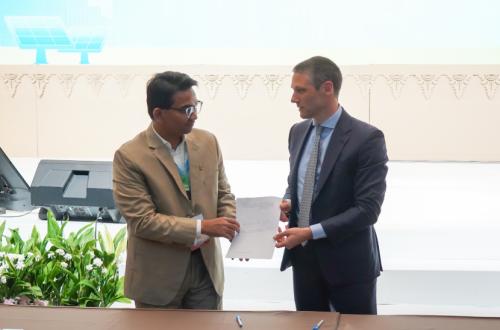
Indonesia possesses a renewable energy potential of approximately 3,687 gigawatts (GW), but its utilisation requires projects that are ready for development and financing at the regional level. This situation has become a primary focus for the Directorate General of New, Renewable, and Energy Conservation (EBTKE) of the Ministry of Energy and Mineral Resources (ESDM), in collaboration with the Global Green Growth Institute (GGGI).
Efforts to translate this potential into investment projects were discussed during two discussion sessions as part of the EBTKE ConEx 2026 series. The discussions covered regional planning readiness, project development, and financing mechanisms capable of unlocking renewable energy investment opportunities.
These opportunities are expanding alongside increasing national ambitions, including the launch of the 100 GWp Solar PV Program in August 2026. However, vast energy potential must be aligned with the specific characteristics, needs, and development plans of each respective region.
This requirement is a central focus of the Renewable Energy–Accelerated Transition in Indonesia (RE-ACT) project, which has been implemented by the Ministry of ESDM and GGGI, with support from the New Zealand Ministry of Foreign Affairs and Trade, since 2021. Over its five years of implementation, RE-ACT has supported the connection between national policy, regional planning and implementation, project development, and access to finance and investment.
One practical application can be seen in South Papua. RE-ACT supported the establishment of the South Papua Regional Energy General Plan (RUED) 2023–2050 and the formation of the South Papua Regional Energy Forum as a collaborative platform for local government and stakeholders. Following the establishment of the RUED, the local government began integrating energy agendas into medium- and long-term development planning. This planning is also used to identify renewable energy development and investment opportunities based on regional potential and needs.
Representing the Head of the Planning Bureau of the Ministry of ESDM, Widya Adi Nugroho stated that renewable energy potential needs to be translated into planning and projects that meet regional needs and have access to funding and investment.
“Indonesia has enormous renewable energy potential, and development opportunities are increasingly opening up. At EBTKE, we support the translation of these national energy potentials and policies into planning and projects that can be developed according to regional needs, while simultaneously mapping out funding and investment mechanisms and opportunities. Collaboration with GGGI through RE-ACT is part of the effort to strengthen this process,” said Widya Adi Nugroho.
Regional perspectives were also discussed during the “Policy to Practice: Renewable Energy in Indonesia” discussion on Thursday, 4 September 2026. Representing the South Papua Department of Manpower, Transmigration, Energy, and Mineral Resources, Lambertus Ignatius Faturan shared experiences regarding the translation of the national energy agenda into the context of regional development. The discussion covered opportunities for renewable energy development according to regional potential and needs, as well as the planning readiness that can serve as a foundation for project and investment development.
Source: jawawa.id (https://jawawa.id/newsitem/directorate-general-of-ebtke-and-gggi-push-for-renewable-energy-potential-to-become-regional-investment-1788526752)
Originally published by Republika (https://esgnow.republika.co.id/berita/tku7a9416/ditjen-ebtke-dan-gggi-dorong-potensi-ebt-jadi-proyek-investasi-daerah), translated from Indonesian