
Directorate General of Dukcapil Tightens Data Security Standards for BPJS Ketenagakerjaan
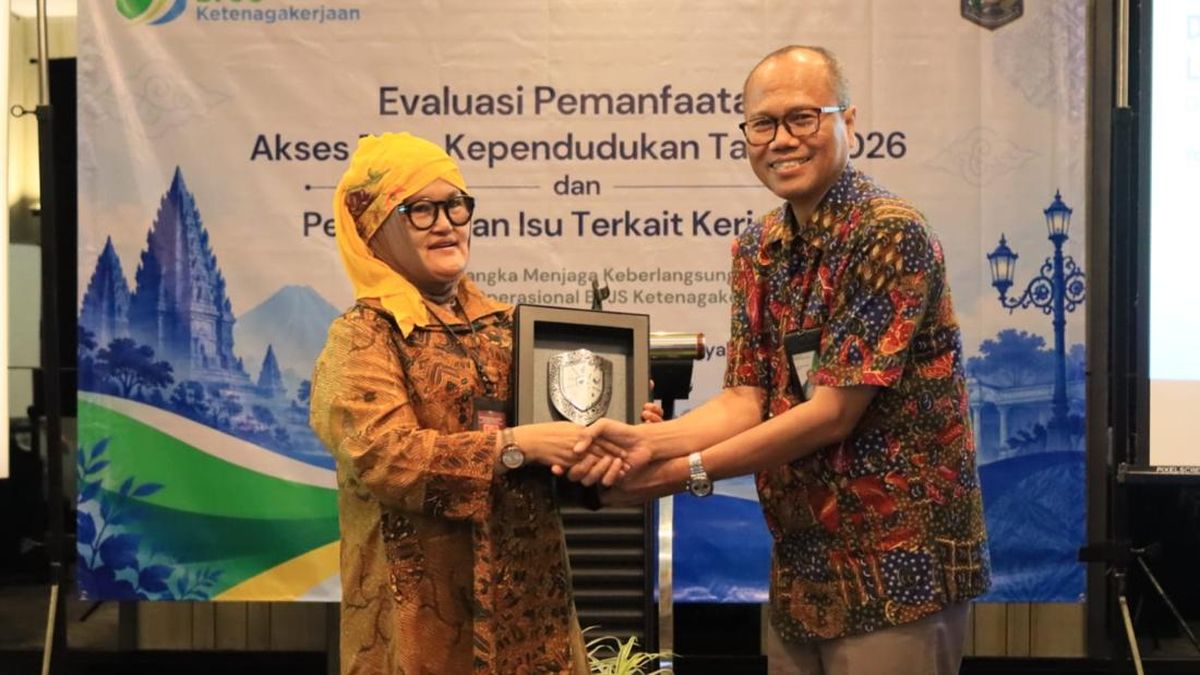
The large-scale use of population data demands increasingly stringent security systems and privacy protections. The Directorate General of Population and Civil Registration (Dukcapil) of the Ministry of Home Affairs has emphasised that the protection of personal data is an absolute principle in every inter-agency data utilisation cooperation.
This assertion was made by the Director of National Population Data Integration at Ditjen Dukcapil, Handayani Ningrum, during an evaluation meeting regarding data utilisation with BPJS Ketenagakerjaan in Yogyakarta, held from 24–26 September 2026.
According to Handayani, cooperation in utilising population data is not merely about the mechanism of data exchange between government agencies. Aspects of security and regulatory compliance must be a primary component of its implementation.
“Data protection is non-negotiable. We must comply with the Personal Data Protection Law (UU PDP) and the Population Administration Law, which is currently being revised and discussed by the House of Representatives (DPR RI),” said Handayani.
As part of the efforts to maintain the confidentiality of individual data and population documents, Dukcapil requires data-utilising institutions to implement the ISO 27001 international information security standard.
This provision also applies to BPJS Ketenagakerjaan. As of August 2026, BPJS Ketenagakerjaan has recorded more than 701 million accesses to National Identification Numbers (NIK).
The high volume of access makes data security a critical aspect of providing services based on population data. Dukcapil maintains that data utilisation must proceed alongside the implementation of adequate governance and security standards.
The joint evaluation with BPJS Ketenlagakerjaan is also part of an effort to align future government data governance. The government, alongside the DPR, is currently preparing several regulations related to national data management, including the Population Administration Bill, the Indonesia One Data Bill, and the Statistics Bill.
Handayani stated that the Indonesia One Data regulation is aimed at strengthening the interoperability of data held by ministries, agencies, and local governments. With an integrated system, data is expected to be utilised to support national development planning and evaluation.
On the other hand, synergy between agencies is also required so that data exchange is not a one-way process. Institutions receiving population data are expected to provide feedback, such as participant reference numbers, which can be used to enrich and refine the national population system.
According to Handayani, managing government data requires inter-agency collaboration, particularly in ensuring that exchanged data remains protected while providing benefits for the delivery of public services.
“Government agencies should not blame one another. Instead, we must protect each other. We must protect the data together,” she asserted.
She emphasised that inter-agency data exchange must ultimately remain based on the protection of the digital rights of the public. Thus, the expansion of population data utilisation must go hand in hand with the strengthening of security, regulatory compliance, and responsible data governance.
Source: jawawa.id (https://jawawa.id/newsitem/directorate-general-of-dukcapil-tightens-data-security-standards-for-bpjs-ketenagakerjaan-1790578766)
Originally published by CNN Indonesia (https://www.cnnindonesia.com/nasional/20260928124122-25-1408997/ditjen-dukcapil-perketat-standar-keamanan-data-bpjs-ketenagakerjaan), translated from Indonesian