
Directorate General for Village Governance Accelerates Village Boundary Affirmation in Sulawesi
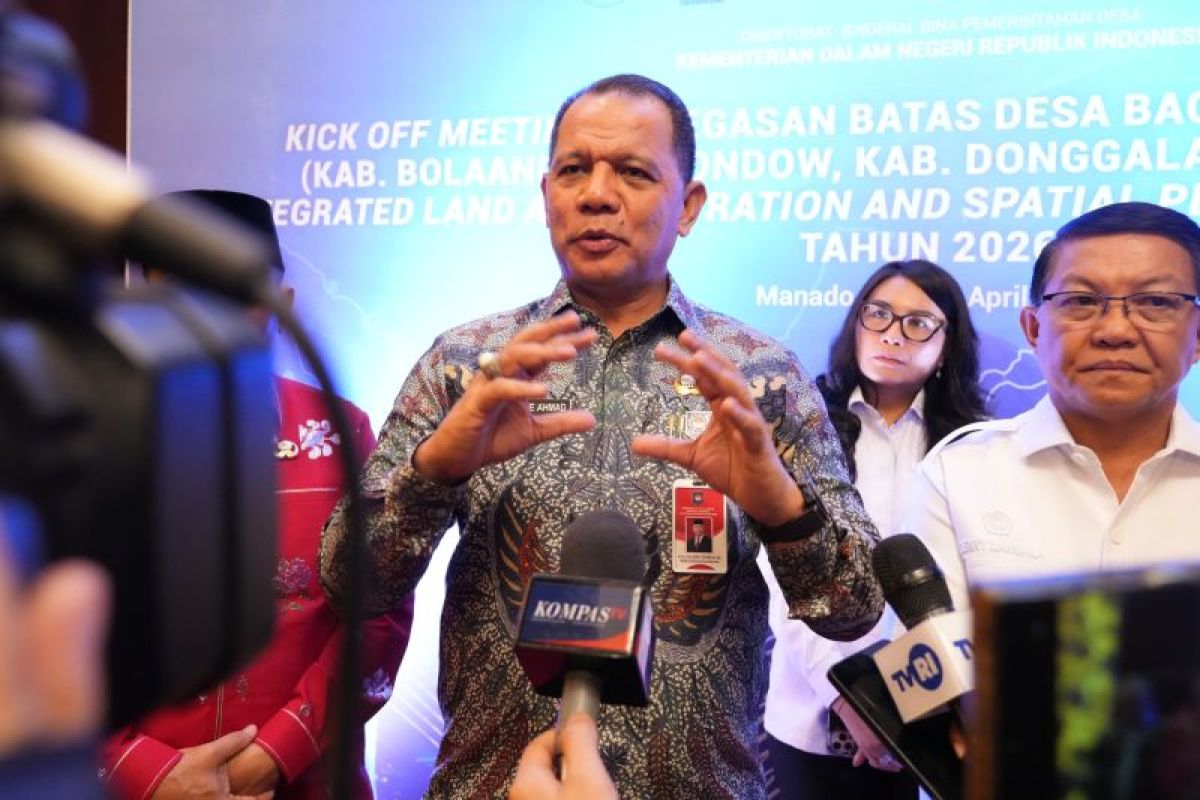
Jakarta (ANTARA) - The Directorate General for Village Governance of the Ministry of Home Affairs is accelerating the affirmation of village boundaries in Sulawesi through the Integrated Land Administration and Spatial Planning Programme (ILASPP). “We hope that the implementation process can run smoothly, so that village communities and village governments can obtain benefits from this activity,” said the Director General for Village Governance of the Ministry of Home Affairs, La Ode Ahmad P. Bolombo, in his statement in Jakarta on Wednesday. This was conveyed by La Ode Ahmad at the opening of the Kick-off Meeting for Village Boundary Affirmation for the ILASPP Government in the 2026 fiscal year. The programme will be implemented over five years from 2025 to 2029. In this programme, the Ministry of Home Affairs collaborates with the Ministry of Agrarian Affairs and Spatial Planning/National Land Agency (ATR/BPN), the Geospatial Information Agency (BIG), and the World Bank. In the first year of activities, three regencies have been designated as locations for accelerating village boundary affirmation, namely Bolaang Mongondow Regency in North Sulawesi, and Donggala and Tolitoli Regencies in Central Sulawesi. La Ode explained that based on the collected data, villages in these three regencies do not yet have definitive village boundaries or there is no regental regulation on village boundaries. Therefore, he requested that the regents of these three regencies and related parties provide full support in implementing the technical assistance activities for village boundary affirmation. The implementation of village boundary affirmation activities includes a series of stages, namely socialisation at the regency and sub-district levels, collection and study of historical and juridical village boundary documents, tracking stages, and so on. “I also convey a message to the regents and related agency officials; we ask for good cooperation and strong commitment in providing guidance and supervision, organising the community with the sub-district and village governments to encourage community participation,” he said. La Ode added that in line with the Village Law, a village is a legal community unit that has territorial boundaries, in order to provide clarity of status and legal certainty over the village area. Thus, villages must have definitive village boundaries. “To support these interests, the Ministry of Home Affairs has established regulations related to guidelines for determining and affirming village boundaries through the Minister of Home Affairs Regulation,” said La Ode. Based on data, the progress of village boundary affirmation reported to the Ministry of Home Affairs regarding the achievement of village boundary resolution across Indonesia is 10,909 villages or 14.49% of the total villages in Indonesia. “However, to date, not all regional governments have submitted official reports to the Directorate General for Village Governance along with supporting data on the results of village boundary affirmation,” he stated.