
Director General of Taxes Issues Circular: Involve Babinsa to Monitor Compliance
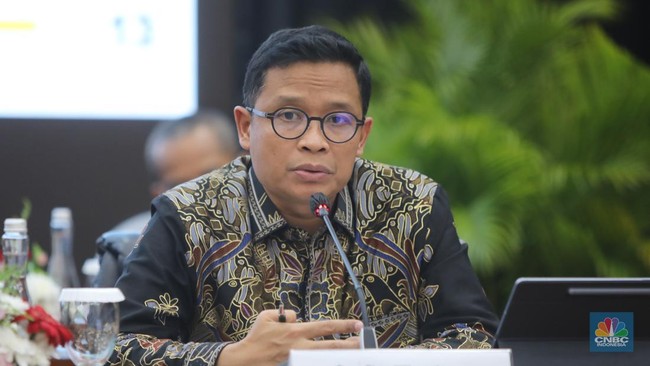
Jakarta, CNBC Indonesia – Director General of Taxes Bimo Wijayanto has issued Circular Number SE-8/PJ/2026, effective since 15 July 2026, serving as a guideline for monitoring taxpayer compliance.
In the circular, Bimo stated that the guideline is necessary for tax officials to achieve sustained taxpayer compliance, in connection with the implementation of the tax self-assessment system.
“In the framework of guidance to taxpayers in connection with the implementation of the tax self-assessment system, supervision of the fulfilment of taxpayers’ tax obligations needs to be carried out, with the aim of achieving sustained compliance,” according to the Director General of Taxes circular, quoted on Friday (17/7/2026).
Such supervision is carried out on taxpayers, both registered and unregistered, and consists of: supervision of registered taxpayers; supervision of unregistered taxpayers; and area supervision.
Supervision of registered and unregistered taxpayers is carried out, among other things, through requests for explanations regarding data and/or information based on data and/or information held by the Directorate General of Taxes.
This includes obligations on tax objects that have and have not been subject to Land and Building Tax (PBB).
For registered taxpayers, supervision is carried out through Periodic Payment Supervision (PPM) and Material Compliance Supervision (PKM) activities, while for unregistered taxpayers, supervision is carried out through extensification activities.
Area supervision is carried out through the collection of economic data within working areas. This is done to encourage improved taxpayer compliance as an effort to broaden the database and gain mastery of the area.
These activities may be carried out by all DGT employees as a means of obtaining data and/or information from various sources, whether through field data collection or non-field data collection.
Field data collection is carried out by visiting the residence, domicile, place of business, and/or freelance work location of taxpayers or related parties to find taxable subjects and/or objects.
Meanwhile, non-field data collection is carried out through the use of information technology and other available administrative means, without the need for direct visits to the location.
Supervision activities by tax officials can be carried out through various methods and approaches, for example visits, canvassing, direct observation, and building information networks, such as through Village Supervisory Non-Commissioned Officers (Babinsa) or Community Security and Order Supervisory Police Officers (Bhabinkamtibmas).
This supervision can also be carried out through assessments using remote sensing technology, web scraping, use of media information, reviews of journals or academic works, and analysis of unidentified data.
It can also be done by examining taxpayers, dissection of economic zones, mirroring the results of audits/investigations/other business processes, taxation partnerships, and various other methods that do not contravene legal provisions.
“Supervision activities on taxpayer compliance begin with systematic identification and data collection stages in order to support effective and measurable supervision functions,” the DGT circular stated.
Source: jawawa.id (https://jawawa.id/newsitem/director-general-of-taxes-issues-circular-involve-babinsa-to-monitor-compliance-1784278315)
Originally published by CNBC Indonesia (https://www.cnbcindonesia.com/news/20260717141622-4-751640/dirjen-pajak-keluarkan-surat-edaran-libatkan-babinsa-awasi-kepatuhan), translated from Indonesian