
Director General of KPM states digital era spokesperson strategy is not limited to a single figure
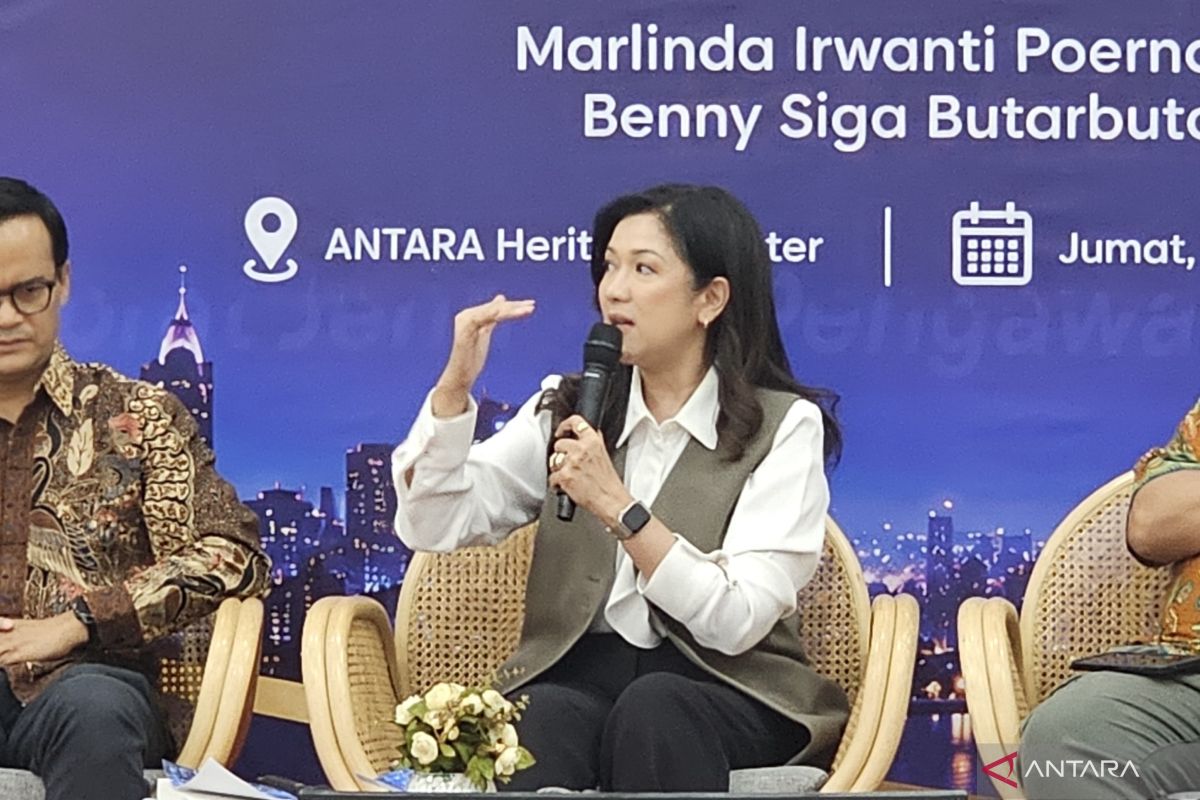
Jakarta (ANTARA) - The Director General of Public Communication and Media (KPM) at the Ministry of Communication and Digital (Kemkomdigi), Fifi Aleyda Yahya, revealed that government communication strategies in the digital era can no longer be solely burdened upon or dependent on a single spokesperson.
According to her, the presence of multiple parties responding to an issue does not constitute an obstacle, given the increasingly vast information landscape created by social media, which requires delivery methods and communication styles different from mainstream and online media.
“The current challenge is that the narrative must be based on single-data facts. So, the data must be the same; the narratives may vary, and the delivery methods may differ, but the facts must remain identical,” said Fifi during the book launch of “SPOKESPERSON: Perspectives on Political Communication Management in the Era of Disruption” at the ANTARA Heritage Center, Central Jakarta, on Friday.
Fifi argued that as long as they are grounded in the same facts, the messages the government intends to convey can be continuously echoed and massively amplified.
The government’s primary target is to create public understanding; therefore, communication must not cease once a government official has finished announcing a regulation.
To achieve collective understanding regarding the PP TUNAS regulation, Fifi stated that the spokesperson strategy employed by Kemkomdigi involves detailing the various impacts of the regulation’s implementation, tailored to specific areas of expertise.
For instance, regarding the impact of excessive digital platform addiction on children, Kemkomdigi engages medical professionals, particularly those in mental health, to comment on the issue, thereby demonstrating the urgency of implementing PP TUNAS.
Beyond introducing various spokespersons in the digital space, Kemkomdigi is also implementing a similar concept in the physical realm, specifically targeting regions with limited digital connectivity.
These spokespersons are presented in the form of public information officers operating under the Directorate General of Public Communication and Media (Ditjen KPM) of Kemkomdigi.
“Those who receive information from these public information officers certainly benefit, which means these officers ultimately serve as our spokespersons,” said Fifi.
Through this communication strategy, Fifi hopes the public will see that the government communicates not only in digital spaces but also reaches physical spaces where people interact daily.
The book “SPOKESperson: Perspectives on Political Communication Management in the Era of Disruption” was written by Benny Siga Butarbutar, who is also the President Director of LKBN ANTARA, alongside Marlinda Irwanti Poernomo.
Both are mass communication practitioners who hope the book will serve as a resource for readers interested in taking on roles as communicators within both public service and private sector institutions.
The hope is that these communicators can perform their roles as spokespersons not merely by explaining an issue, but by creating a tangible impact on society through their messages.