
Director General Fatoni Urges Regions to Optimise Motor Vehicle Tax as Mainstay of Local Revenue
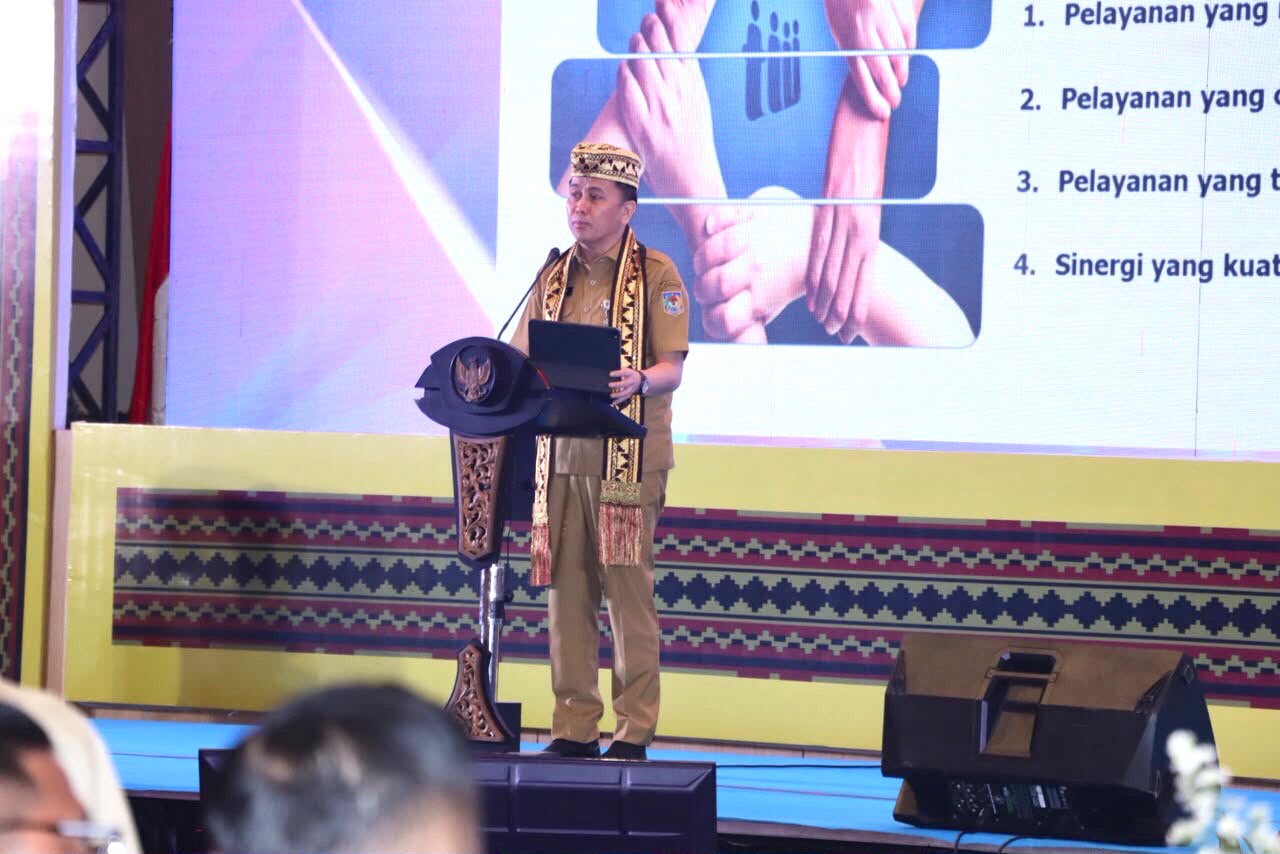
Director General of Regional Financial Development (Bina Keuangan Daerah) at the Ministry of Home Affairs, Agus Fatoni, has affirmed that Motor Vehicle Tax (PKB) and Motor Vehicle Ownership Transfer Duty (BBNKB) remain one of the mainstays of Local Own-Source Revenue (PAD). He therefore called on regional governments to strengthen various strategies to optimise realisation so that regional revenue can be maximised.
Fatoni delivered the remarks whilst opening the 2026 National Samsat Coordination Meeting (Rakornas) in Bandar Lampung, Lampung, on Wednesday (15/7/2026). The meeting was attended by the National Samsat Development Team, regional governments, the Indonesian National Police, PT Jasa Raharja, and various other stakeholders.
According to Fatoni, PKB and BBNKB contribute significantly to regional fiscal capacity. For this reason, their management must be carried out professionally, innovatively, and adaptively to technological developments and the needs of the public.
“PKB and BBNKB are among the main sources of PAD. That is why we must ensure their management becomes increasingly optimal so it can support development financing and public services in the regions,” he said.
Fatoni further revealed that the results of a national evaluation show there is still untapped revenue potential, particularly due to persistently high motor vehicle tax arrears.
He said this situation requires serious attention from all regional governments through improvements in governance as well as strengthening taxpayer compliance through various policies within the authority of regional heads.
Fatoni explained that regional governments can utilise various policy instruments such as tax relief, amnesty programmes, waiving administrative penalties, and providing incentives to raise public awareness in fulfilling tax obligations.
“Regional heads have the authority to take strategic policies according to their respective regional conditions. What matters most is how revenue potential can be optimised without neglecting the quality of services to the public,” he explained.
Beyond fiscal policy, Fatoni believes that increasing PKB and BBNKB revenue must be accompanied by a transformation of Samsat services. In his view, services that are easy, fast, transparent, and digitally based will increase public trust whilst encouraging tax compliance.
He therefore urged all regions to expand the implementation of digital services, e-Samsat, mobile Samsat units, drive-through Samsat, and door-to-door services so that the public has more options for accessing services.
On the other hand, Fatoni emphasised that optimising PKB and BBNKB requires strong synergy between regional governments, the Police, and PT Jasa Raharja as the Samsat Development Team. This collaboration is considered key to building an increasingly effective service system whilst boosting regional revenue.
“All parties share the same goal, namely delivering ever-better Samsat services and increasing public compliance. If this synergy runs optimally, PKB and BBNKB revenue will increase and have a positive impact on strengthening regional fiscal capacity,” he stated.
Fatoni also encouraged provincial and district/city governments to continue sharing best practices in Samsat management. Various innovations that have been successfully implemented in a number of regions are expected to be replicated so as to accelerate the growth of regional revenue.
According to him, the 2026 Rakornas Samsat is an important milestone for uniting the commitment of all stakeholders in strengthening the governance of PKB and BBNKB as strategic instruments for reinforcing PAD.
“With increasingly strong synergy, increasingly modern services, and rising public compliance, PKB and BBNKB will remain the regions’ mainstay in strengthening fiscal independence and supporting sustainable development,” Fatoni concluded.