
Direct Wuhan-Indonesia Shipping Route Strengthens Central China Connectivity
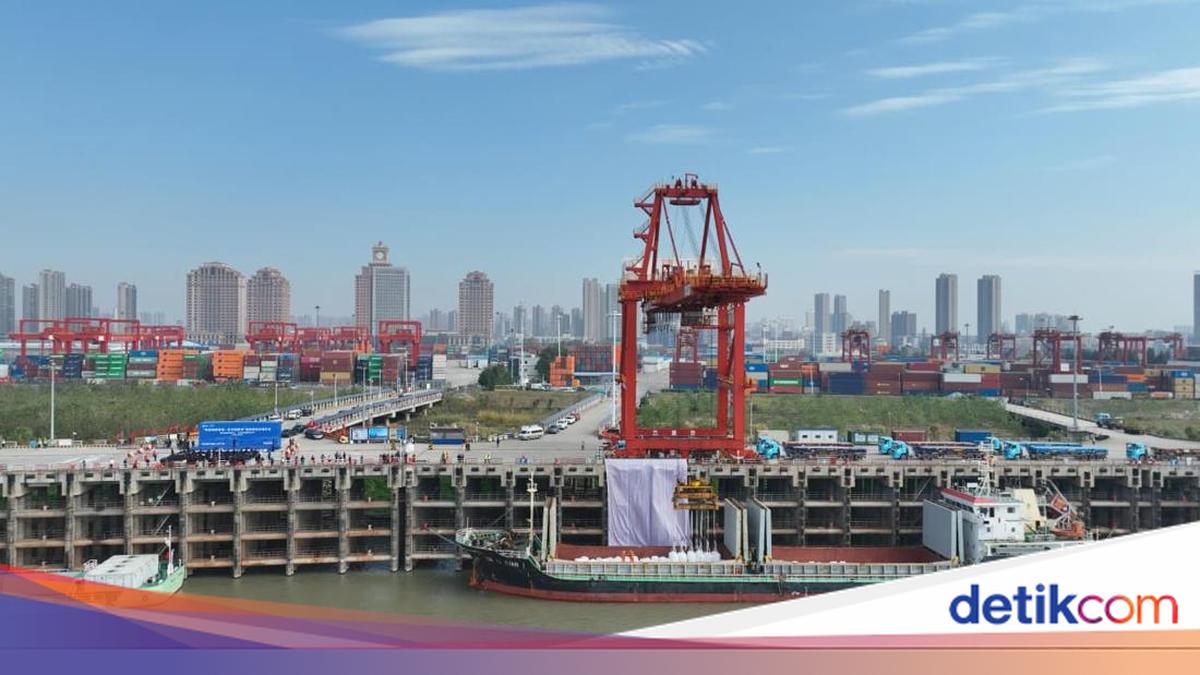
On 16 June, the vessel Lanning 19 departed from Yangluo Port in Wuhan, bound for Sambalagi Port in Indonesia, carrying more than 10,000 tonnes of equipment and materials. This sailing marked the 81st voyage since the direct river-sea Wuhan-Indonesia route opened on 30 November 2024. All shipments have contained essential materials required for GEM’s development projects in Indonesia.
Counting both inbound and outbound journeys, the number of trips on the Yangluo Port Wuhan-Indonesia route has exceeded 100, with total transport volume reaching 620,000 tonnes and trade value amounting to US$1.4 billion. This figure accounts for more than 50 per cent of trade between Hubei Province and Indonesia. The route provides more efficient logistics access for central China to connect directly with Southeast Asia.
The direct Indonesia-Yangluo Port Wuhan shipping route was initiated by the Hubei Provincial Committee of the Communist Party of China and the Hubei Provincial Government, with support from maritime and port authorities. The aim is to overcome cross-border logistics barriers long faced by enterprises in Hubei.
Previously, most import and export goods from Hubei had to transit through coastal ports such as Shanghai, Huangpu, or Ningbo, resulting in longer transit times and higher costs. After the direct route opened, vessels can sail from the Yangtze River through the East China Sea and South China Sea directly to Indonesia. Delivery time has been reduced by more than seven days, while logistics costs can be cut by over 300 yuan per tonne. This efficiency significantly enhances the competitiveness of inland Chinese enterprises in international markets.
Besides Indonesia, ships on this route can also call at ports in the Philippines, Malaysia, and Singapore, opening broader access for central Chinese companies to enter Southeast Asian markets.
The route has now established a balanced two-way logistics pattern. According to GEM Chairman Xu Kaihua, 240,000 tonnes of nickel resources and other strategic raw materials valued at US$1.1 billion have been shipped from Indonesia to Wuhan to date. Meanwhile, equipment and materials sent from Wuhan to Indonesia have reached 380,000 cubic metres, worth approximately US$300 million.
This efficient logistics corridor not only guarantees the supply of critical resources for China’s new energy industry but also promotes the export of Chinese manufacturing equipment and technology.
The opening of the route is closely linked to the deep involvement of Hubei enterprises in Indonesia’s industrial development. In recent years, Hubei-based companies such as GEM have invested in building high-tech industrial parks based on green nickel resources in Indonesia. These investments have driven the transformation of nickel processing towards the new energy sector and provided crucial support for the global new energy industry supply chain.
Beyond economic and trade cooperation, GEM has also invested nearly US$50 million to establish the Indonesia-China Joint Master’s and Doctoral Engineering Education Programme, the Bandung Joint Research Laboratory, and the Indonesia-China Advanced Engineer Academy. To date, these programmes have produced 266 local engineering and professional personnel. Through collaboration in education and science, GEM is helping to strengthen people-to-people ties between the two countries, making it a flagship project of the Belt and Road Initiative cooperation between Indonesia and China.
As economic relations between the two countries grow closer, the Hubei-Indonesia General Chamber of Commerce was officially established in October 2025. The organisation is expected to strengthen synergy and development within the Hubei business community in Indonesia.
From infrastructure connectivity and industrial chain collaboration to deeper cultural exchange, a new chapter of cooperation between the Yangtze River and the Indonesian archipelago is being written. The regular operation of the direct Wuhan-Indonesia shipping route is not only transforming the economic openness pattern of central China but also providing fresh impetus for China-ASEAN economic and trade cooperation under the Regional Comprehensive Economic Partnership framework.