
Diplomacy Lessons from Rachmat Gobel
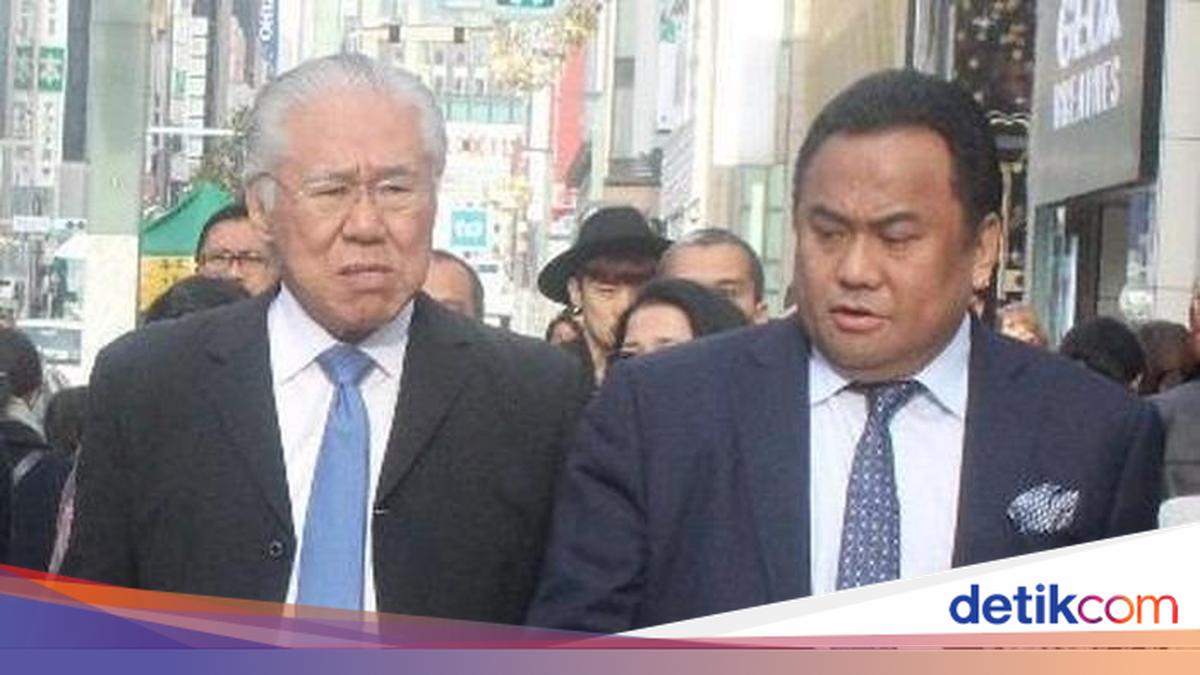
When an Indonesian student in Tokyo appeared nervous while translating a conversation between officials of the two countries, Rachmat Gobel did not immediately take over. He let the conversation proceed for a while, listening carefully to every sentence. Only after sensing that some word choices did not fully capture the nuances of Japanese diplomacy did he give a subtle signal and begin translating himself.
That incident crossed my mind again upon receiving the news that Rachmat Gobel passed away in the early hours of Friday (10/7/2026).
In late November 2017, I had the opportunity to join Trade Minister Enggartiasto Lukita on a three-day working visit to Tokyo, Japan. The delegation included Rachmat Gobel, who was then serving as the President’s Special Envoy to Japan. He had previously served as Trade Minister from 2014 to 2015 before the ministry’s leadership was handed over to Enggartiasto. Both were from the NasDem Party.
During those three days, I observed how two aides to President Joko Widodo performed different yet complementary roles. Enggartiasto led various official discussions on trade and investment. Meanwhile, Rachmat brought an added value that few others possessed: a deep understanding of Japan, from its language, culture, and etiquette to the networks he had built over decades.
One meeting was with former Japanese Prime Minister Yasuo Fukuda, who was then Chairman of the Japan-Indonesia Association (Japinda). The Indonesian Embassy assigned an Indonesian student on a scholarship at Waseda University to act as the interpreter.
The student appeared calm, but occasional nervousness showed on his face. It was understandable. Interpreting a conversation in the presence of a former prime minister and high-ranking officials from both countries was no simple task.
It was there that I witnessed an ability I had only previously heard about from others.
Rachmat’s Japanese flowed naturally. He was not merely fluent in speaking; he understood the levels of language, the choice of diction, and the nuances of politeness that are an integral part of Japanese culture. He knew when a sentence needed to be delivered directly and when a softer expression was required so the meaning was conveyed without diminishing respect for the person he was speaking to.
This ability was not acquired overnight. Rachmat had studied at Chuo University in Tokyo and then underwent practical training at the Matsushita Group before building the Gobel Group and establishing a long-term partnership with Panasonic. Japan was not just a market or a business partner for him. The country had become part of his life’s journey.
However, what left the deepest impression occurred after the meeting ended. Instead of immediately leaving the room, Rachmat approached the student. He put his arm around the student’s shoulder and smiled.
“Your Japanese is already good. But for diplomacy, the choice of words and the way you deliver them must follow Japanese culture. You cannot just use the language taught in textbooks,” he said.
The student nodded respectfully. “Thank you, Sir. I will continue to learn.”
To me, that sentence did not sound like a reprimand. On the contrary, I saw a senior guiding a junior. He corrected without belittling, while motivating without being patronising.
I observed another lesson in the subsequent meetings. Several times, discussions required additional explanations from Rachmat. However, before speaking, he always turned first to Enggartiasto, as if seeking approval. Only after receiving a signal did he convey his views.
This gesture might seem simple, but to me it was very meaningful. Rachmat understood his position as the President’s Special Envoy and respected the Trade Minister’s authority as the head of the delegation. He knew when to step forward and when to give space to others.
Their relationship also felt close outside the formal forums. During lunch, Rachmat seemed to act as the host. He selected various traditional Japanese dishes. “If you want truly top-notch wagyu, I’ll take you to my favourite restaurant tonight,” he said. Enggartiasto laughed.
That night, I chose to stay in my hotel room to write several news articles that had to be sent immediately to the editorial office in Jakarta. The next morning, Enggartiasto teased me. “Hey, why didn’t you join us last night? The restaurant choice was truly top-notch,” he said, glancing at Rachmat. I just laughed. “Ah, it’s too much trouble for me to eat using chopsticks all the time. I’d rather write the news.”
During the three-day working visit, the delegation met with various important figures in Japan. These included the President and CEO of Mitsubishi Corporation Takehiko Kakiuchi, Liberal Democratic Party (LDP) Secretary-General Toshihiro Nikai, leaders of Keidanren which represents around 100 major Japanese companies, and the board of directors of the Aeon Group.
In every meeting, I saw the same pattern. Enggartiasto led the official diplomacy, while Rachmat strengthened it through personal closeness, cultural understanding, and the networks he had built over many years.
This impression was felt even more strongly during the Indonesia-Japan Business Forum. Instead of immediately offering various investment incentives, Rachmat first invited the Japanese business leaders to recall the long history of relations between the two countries.
He reminded them how Japan had once been an important partner for Indonesia in the early days of its development. The Gelora Bung Karno sports complex, Hotel Indonesia, Sarinah, the TVRI building, the Ampera Bridge, and various other projects stood as symbols of the close cooperation that had been forged over decades.
His message was simple but struck home. Solid business relationships are not built solely on trade figures or the size of investment values. Their foundation is trust.
Nearly nine years later, I have only now truly understood the significance of the event when Rachmat corrected the Indonesian student’s translation in Tokyo.