
Diplomacy Is No Longer Solely the Central Government’s Concern: Cities Now Have a Strategic Role
MAKASSAR — Diplomacy is no longer solely the concern of the central government. Amid increasingly complex global dynamics, local governments are also expected to actively build international relations to attract investment, expand trade and promote regional development.
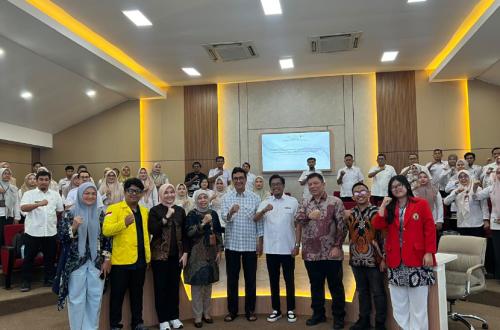
The strategic role of local governments in international relations was among the issues discussed at a city diplomacy capacity-building workshop held at Makassar City Hall on Wednesday (21 October 2026). It was organised by the Department of International Relations at the Faculty of Social and Political Sciences of the University of Indonesia (FISIP UI), the Department of International Relations at Hasanuddin University’s FISIP (Unhas), and the Makassar City Government.
Asra Virgianita, PhD, a lecturer in the Department of International Relations at FISIP UI, said local governments needed to take a more active role in forging international partnerships as the global landscape changed.
International developments today affect not only relations between countries but also people’s lives at local level. Climate change, urbanisation and global economic competition are among the issues that city governments must address.
Local governments therefore need the capacity to build international partnerships that match their regions’ development needs and priorities.
These views were discussed at a workshop entitled “Strengthening Capacity, Advancing City Diplomacy”, which aimed to strengthen Makassar City Government officials’ ability to plan, manage and evaluate international cooperation.
Professor Fredy Buhama Lumban Tobing of the Department of International Relations at FISIP UI said cities had become important actors in global governance. Their position is supported by their proximity to the public, enabling them to respond more directly to a range of urban issues.
In this context, local government officials are on the front line in representing their cities’ interests and potential internationally.
Fredy outlined the concept of paradiplomacy: the involvement of local governments in international relations, including through sister-city partnerships and transnational city networks such as United Cities and Local Governments (UCLG) and C40.
Such involvement must nevertheless operate within the framework of national law, including Law No. 37 of 1999 on Foreign Relations.
According to Fredy, city diplomacy cannot consist solely of official meetings or the signing of memoranda of understanding. Cooperation must lead to tangible programmes that benefit the public, particularly in trade, investment, tourism and education.
Makassar’s experience shows that city governments have opportunities to expand their international networks. The city has established a sister-city partnership with Gold Coast, Australia, as well as partnerships with Japan on waste management and in the automotive sector.
However, these opportunities also bring implementation challenges. At the workshop, representatives of the Makassar City Government’s Cooperation Division said partnership offers from Japan, South Korea and Malaysia continued to arrive. Some had yet to progress beyond the Letter of Intent (LoI) stage because of lengthy bureaucratic processes.
This is a reminder that city diplomacy requires not only the ability to communicate with foreign partners but also bureaucratic readiness to follow up on agreements.
Fredy stressed the importance of simplifying administrative processes, improving inter-agency coordination and creating a safe, welcoming environment for tourists and investors.
Attracting investment, he said, could not be left to a single local government agency. All agencies needed to work together to turn international partnership opportunities promptly into programmes aligned with development needs.
Makassar Mayor Munafri Arifuddin, in remarks read by Firman Hamid Pagarra, Assistant III for General Administration at the Makassar City Regional Secretariat, expressed appreciation for the collaboration between UI and Unhas.
The Makassar City Government hopes that strengthening officials’ capacity will encourage more inclusive and sustainable international cooperation. Every partnership should align with the city’s development agenda, vision and mission.
During the discussion, participants from the Investment and One-Stop Integrated Services Agency asked how paradiplomacy could generate investment that benefits the public rather than merely produce ceremonial activities.
Meanwhile, representatives of the Protocol and Leadership Communications Division raised the issue of “intermestic” affairs—the connection between domestic issues and a region’s image and international relations.
The discussion underscored the importance of officials’ ability to understand global dynamics while linking them to local issues and community needs.
The workshop continued with group discussions and case studies on Makassar’s partnerships. It was attended by officials from several local government agencies, including the Cooperation Division, the Investment and One-Stop Integrated Services Agency, and the Protocol and Leadership Communications Division.
Through this collaboration, the International Relations departments of UI and Unhas, together with the Makassar City Government, hope to better equip local officials to practise city diplomacy. This would enable local governments not only to respond to the effects of global change, but also to build international partnerships that strengthen competitiveness and improve public welfare.
Source: jawawa.id (https://jawawa.id/newsitem/diplomacy-is-no-longer-solely-the-central-governments-concern-cities-now-have-a-strategic-role-1792669882)
Originally published by Republika (https://news.republika.co.id/berita/tnb2ge393/diplomasi-tak-lagi-cuma-urusan-pemerintah-pusat-kota-kini-punya-peran-strategis), translated from Indonesian