
Dino Patti Djalal: Indonesian Democracy Still Functioning, But...
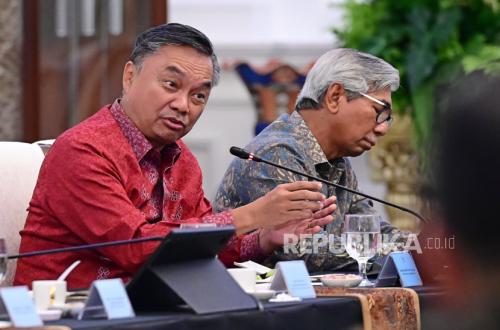
JAKARTA — Dino Patti Djalal, founder and chairman of the board of the Foreign Policy Community of Indonesia (FPCI), assesses that Indonesian democracy is still functioning after nearly three decades of reformasi. However, he warned the government and public against complacency, as various challenges to civil liberties and institutional quality continue to loom.
“We are still a functioning democracy,” Dino told reporters on the sidelines of the Indonesia Youth Democracy Forum (IYDF) on Wednesday (22/7/2026).
In his view, Indonesian democracy, which has been running for around 28 years, is a “work in progress” that must be continually safeguarded. He said strengthening institutions is the primary requirement so that democracy does not depend on a strong leader figure.
According to Dino, Indonesia’s political experience shows that a system overly oriented towards a leader figure produces weak institutions. He also believes civil society plays a vital role as a bulwark when democracy comes under pressure.
“When our democracy was wobbling, what kept it together — its stabiliser — was civil society,” he said.
Dino added that a number of democratic pillars must continue to be upheld, from press freedom and freedom of expression to an open and fair arena of political competition, as well as a government willing to accept criticism. He also urged that corruption and money politics be suppressed, and that political parties genuinely represent the aspirations of the people rather than becoming an elitist system.
“I do not feel that our democratic condition is entirely fine,” he said.
The former deputy foreign minister also touched on his personal experience after posting criticism of government policy on social media that subsequently went viral. According to him, initial attacks from accounts he described as buzzers were eventually drowned out by responses from netizens that emerged organically.
“I never felt offended, because I never took it personally,” he said.
Dino said the phenomenon shows that organically grown public opinion remains strong and reflects public aspirations that the government needs to heed. He views the non-constructive use of buzzers as unhealthy for democracy, as it has the potential to turn citizens against one another.
“If there are things the government needs to explain, it should be done by the government itself,” he said.
He praised Sugiono, whom he considers more active in explaining foreign policy to the public, including responding to various inputs he has raised. Regarding the role of social media, Dino believes digital platforms provide space for the public, especially young people, to voice anxieties and criticisms that previously had no outlet.
“Here’s the thing — all of this actually existed before. Young people, even citizens who felt despondent, angry, frustrated. It’s just that there was no platform. So they only talked about it or felt it at home or in their own circles. What’s different now? Now their voices can be seen and heard by others. So there’s nothing new, really, in terms of the plurality of public opinion. And in my view, that is also something for the government to take as input,” he said.
In his view, social media is an important indicator for reading public aspirations and cannot be entirely controlled, as similar dynamics occur in various democratic countries.
However, Dino cautioned that a number of legal provisions could potentially narrow the space for freedom of expression if applied carelessly. He cited the article on insulting the president, which he said requires clear boundaries between criticism and insult.
“Freedoms are becoming more limited now. If we look at the current Criminal Procedure Code, there are articles that, if used or misused, could further castrate freedom of expression. So we must use them wisely. Take the article on insulting the president — but what is the definition? Where is the line? Is it criticising or insulting? So we must be wise, and the police must also be wise when receiving complaints or reports of that kind,” he said.
He expressed hope that law enforcement officials will act judiciously in receiving and processing reports related to citizens’ expressions on social media, so that freedom of expression remains protected within Indonesia’s democratic system.