
Digitalisation: The Breathing Tube for Aceh's Economy
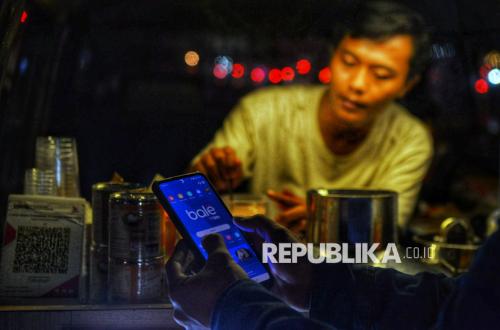
Natural disasters always leave deep scars: severed bridge access, halted socio-economic activity, damaged infrastructure, and other impacts that bring life to a temporary standstill. In Aceh, the massive floods and landslides of November 2025 tested our resilience. As water submerged settlements across 16 districts and cities, one critical question often overlooked emerged: how do we keep the ‘breath’ of the economy flowing when physical access is completely paralysed? Our memories may be thrown back to the 2004 Tsunami tragedy. At that time, all communication, logistics and banking lines were completely dead, forcing us to survive in prolonged uncertainty. However, today’s Aceh should be far more resilient. If it was once heavily dependent on cash transactions, various non-cash payment options are now available as artificial respiration to save the livelihoods of survivors. The hope is that these innovations can bridge a faster recovery through various payment system channels and infrastructure. In reality, when the connecting bridge in North Aceh or the emergency bridge in East Aceh collapsed, hundreds of points in the interior were physically isolated, but they must not be financially isolated. This is where the crucial role of digital payments emerges to save Aceh’s economic breath. It provides sovereignty for citizens to determine their own urgent needs, whether specific medicines or baby supplies, without having to queue for hours or scramble at aid posts. Bank Indonesia, through strengthening the digital ecosystem, has indirectly prepared a financial ‘oxygen tank’ so that residents do not lose purchasing power when ATMs are submerged in mud. In traditional markets that are beginning to recover, buying and selling activities have been facilitated by non-cash channels such as QRIS and transfers, which can sustain the livelihoods of small traders. After the November disaster, many MSME players lost their cash capital because it was wet, damaged or lost. With digital transactions, they can immediately trade without worrying about soggy change or the security risk of storing cash in emergency tents. This is a small example that recovery, however it unfolds, begins with the ability of ordinary people to transact independently again. The spirit of mutual cooperation among the Acehnese people has now found a new form. Through digital-based zakat, infaq, and sadaqah (Ziswaf) channels, compassion from outside the region can flow instantly without geographical barriers. Digitalisation shortens the distance between a donor’s good intentions and a hungry stomach at the disaster site. The transparency of the digital trail also answers the classic anxiety about accountability, ensuring every rupiah truly reaches the crisis points that need it most. However, maintaining this economic breath is not without major challenges. Dependence on technology demands telecommunications infrastructure that is ‘resilient’, or even ‘flood-proof’. The recent disaster provided a lesson that power outages and the collapse of telecommunication towers in remote areas are fatal blockage points. Without stable internet, the sophistication of payment systems loses its meaning. We need to ensure financial services keep ‘breathing’ through backup technology such as flexible satellite internet at evacuation points.