
Digitalisation of government is not just about adding apps, says deputy minister
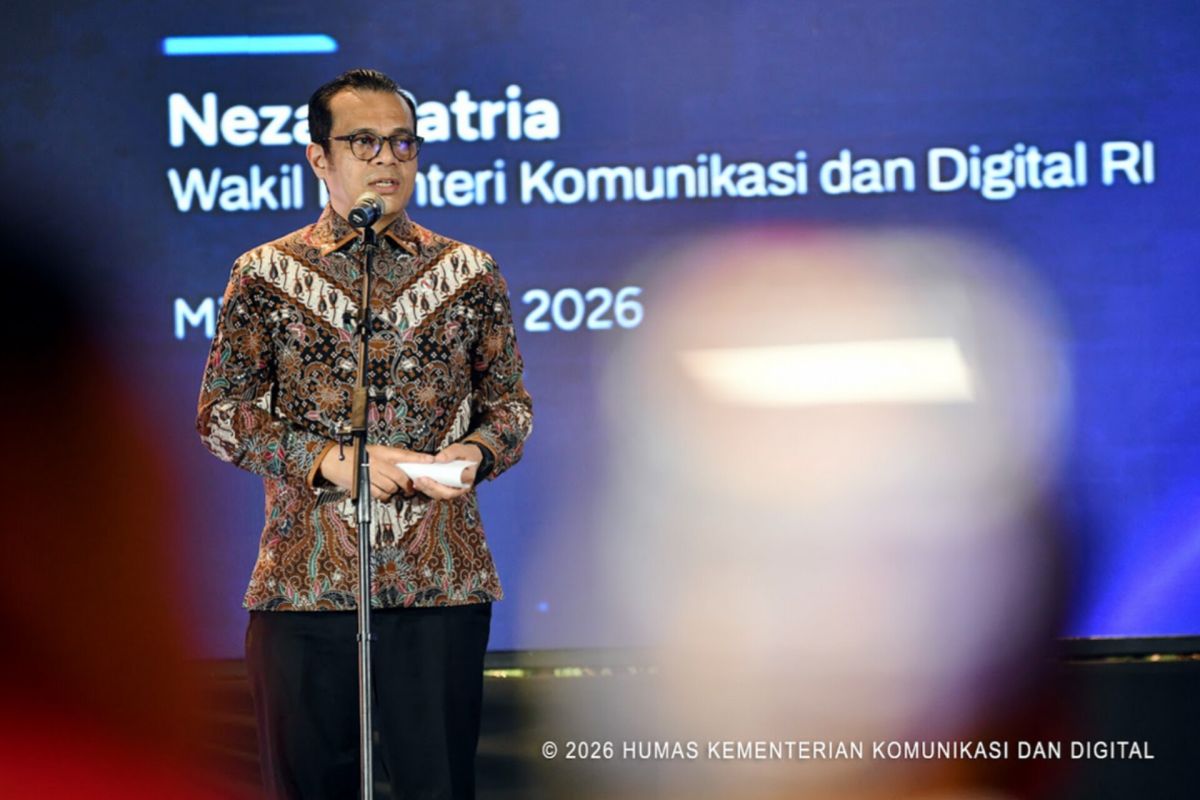
Jakarta (ANTARA) - The Deputy Minister of Communication and Digital, Nezar Patria, has asserted that the success of digital transformation within the government is not measured by the quantity of new applications, but by the ability to provide fast and efficient public services to the community.
He stated that digitalisation must serve as an instrument to resolve public issues rather than being treated as a purely administrative task.
“Digitalisation does not mean merely creating applications to assist us administratively, but also involves our mindset in problem-solving, implementing solutions, and providing the best service to the public,” said Nezar during the opening of the Digital Leadership Academy (DLA) 2026 training programme on Tuesday.
With increasingly sophisticated technology, public servants in government agencies must not only understand technology but also be capable of utilising it to provide optimal and targeted solutions for community services.
The Deputy Minister stated that technology must be integrated as a component to facilitate decision-making processes and problem-solving, thereby improving the quality of public services.
In order for Indonesia to develop public servants with this mindset, the Ministry of Communication and Digital has introduced a digital leadership training programme titled the Digital Leadership Academy.
Targeting government leaders at both central and regional levels, the programme is expected to produce competent digital leaders.
Furthermore, these government leaders are being trained in strategic competencies regarding digital transformation, cybersecurity, data governance, artificial intelligence, and the integration of government services.
Deputy Minister Nezar emphasised that the success of digital transformation is ultimately not determined by the sophistication of the technology possessed, but by the ability of leaders to utilise digital technology to produce real change in this digital era.
He expressed hope that the participants of the Digital Leadership Academy would be able to act as engines of change within their respective agencies, delivering public services that are faster, more efficient, transparent, and increasingly responsive to the needs of the community.