
Digitalisation of Birth Certificates to Boost Child Rights and Data Accuracy, Says BPS
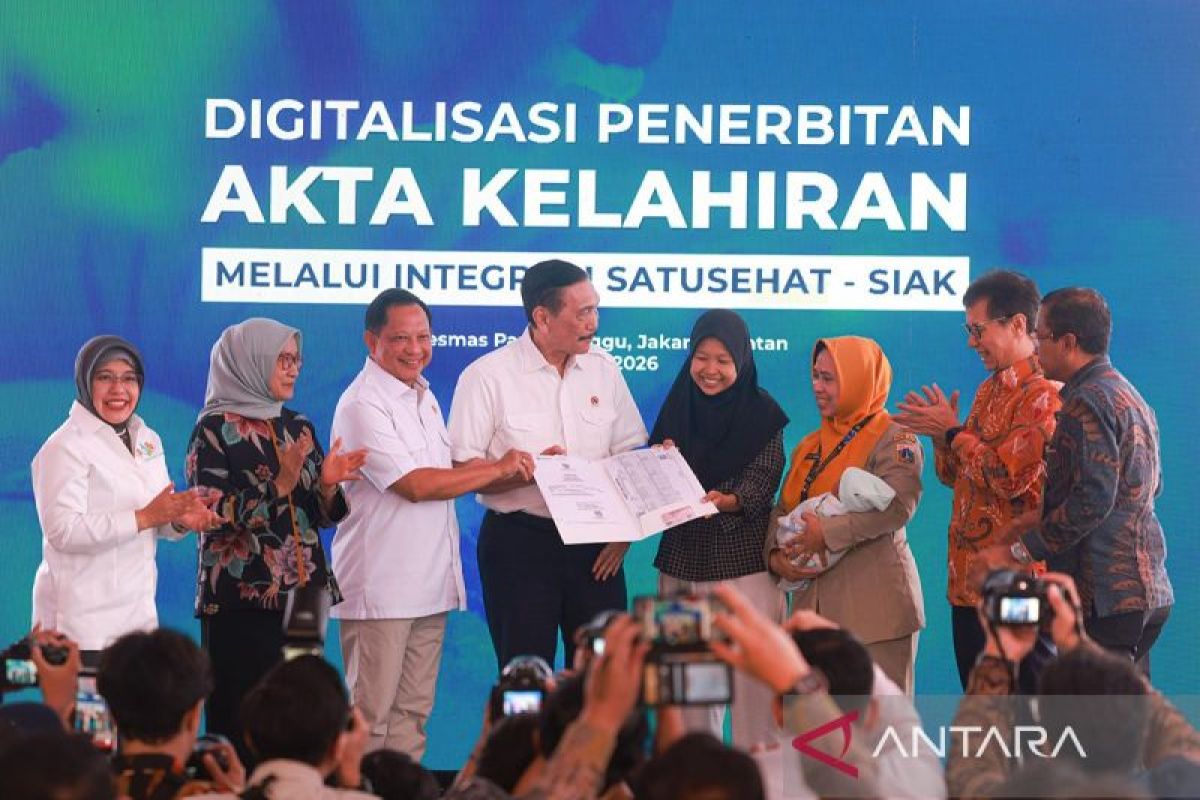
Jakarta (ANTARA) - Statistics Indonesia (BPS) has stated that approximately six per cent of Indonesian children aged 0-17 years do not yet possess a birth certificate. The integration of the SatuSehat platform with the Civil Registration Information System (SIAK) for the digital issuance of birth certificates is expected to improve recording accuracy while helping to fulfil children’s rights.
Head of BPS Amalia Adininggar Widyasanti said in Jakarta on Tuesday that the March 2026 National Socio-Economic Survey (Susenas) showed 94.6 per cent of children already have a birth certificate. She explained the importance of official identity for children, noting that without proper documentation, children are vulnerable to becoming victims of human trafficking, sexual violence, and child labour.
Amalia noted there is currently a gap of up to five years between a child’s birth and the issuance of a birth certificate, as people often only process the document when preparing for school. “With the digitalisation of birth certificates, this can reduce the time lag between a baby’s birth and the subsequent issuance of the birth certificate,” Amalia said.
BPS supports the digitalisation of birth certificates and hopes the initiative will improve vital statistics. Based on the Intercensal Population Survey (SUPAS), Indonesia’s Total Fertility Rate (TFR) currently stands at 2.13. According to Amalia, this is a good figure as it indicates balanced population growth, which must be maintained to achieve the Golden Indonesia 2045 vision.
With the connected system, birth certificates can be issued directly, either in printed or digital form, by the health facility where the baby is born. On the same occasion, Minister for Administrative and Bureaucratic Reform Rini Widyantini stated that this ecosystem simplifies matters for the public, as they no longer need to fill out various forms from different government agencies. She said technology should eliminate complexity and make the government’s presence felt by the community. “Hopefully, all Indonesian people will be able to experience a single, integrated public service, so that one country has one experience, meaning that wherever people are, they can feel the same service,” said Minister Rini Widyantini.