
Digital Transactions Surge, But MSMEs Struggle for Profit! Here is the Cause
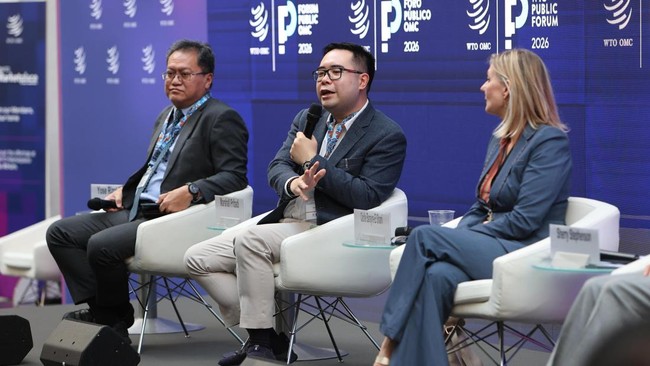
Digital trade is expanding at an accelerating pace. However, the growth in transaction volume has not automatically been accompanied by the establishment of digital trust.
Privy CEO, Marshall Pribermadi, stated that while digital trade digitalisation is moving very quickly, the speed and volume of transactions have yet to be matched by digital trust. According to Marshall, the need for digital trust is becoming increasingly critical as economic activity in the digital space rises. The issue is not merely how to make transactions secure, but how to ensure that the identities of the parties involved, the actions taken, and the transaction processes can be verified and proven.
“Digital trust is not just about securing transactions. We need certainty regarding who is performing the transaction, what is being done, and whether the process can be proven,” he said.
Since 2025, purchase orders and goods delivery documents on the LKPP government procurement platform, e-Katalog, have utilised certified electronic signatures. This implementation covers more than 300,000 business entities registered as providers. Certified electronic signatures have also been integrated into the Coretax system for signing tax invoices and withholding tax slips.
“Orders are signed, goods delivery is signed, and tax invoices are signed, all by verified identities. That chain of trust is now complete and operating on a national scale,” Marshall added.
According to Marshall, Indonesia did not start building digital trust from scratch. Indonesia already possesses the Indonesian Root Certificate Authority (RCA) operated by the Ministry of Communication and Digital, with an ecosystem that includes one government CA and ten non-government CAs.
Therefore, the next challenge is to expand the utilisation of this infrastructure so that more digital transactions can occur with a higher level of trust.
“Indonesia is not starting from zero. The foundation of digital trust is already available. The challenge now is how to expand its use so that more digital transactions can take place with a better level of trust,” Marshall explained.
For Marshall, the benefits of digital trust extend beyond transaction security. When the validity of transactions and data integrity are maintained, transaction data can serve as a basis for unlocking economic activities and access to funding.
This discussion extends to the issue of informal businesses and Micro, Small, and Medium Enterprises (MSMEs). According to Marshall, doubts regarding business identity, the strength of transaction documents, and the ability to verify transactions can limit the relationship between business actors and consumers, partners, and financial institutions.
“Many informal business actors do not lack potential. They face trust issues. When identities and transactions cannot be properly verified, their access to consumers, business partners, and financing becomes limited,” he said.
In his presentation, Marshall linked this issue to the global trade finance gap. He cited 2025 Asian Development Bank data, which states that the trade finance gap has reached US$2.5 trillion. Financing applications from MSMEs are reportedly rejected at a rate of 41 per cent, compared to approximately 7 per cent for multinational corporations.
In Indonesia, approximately 66 million MSMEs are said to contribute about 61 per cent to GDP and absorb about 97 per cent of the workforce, yet their contribution to exports is around 16 per cent. The MSME financing gap in Indonesia is estimated to reach US$234 billion, based on data cited from the IFC.
Marshall believes that verified digital identity is one of the foundations for building this trust. However, identity alone is not enough. Mechanisms are still needed to ensure that a single transaction or invoice is not used to obtain repeated financing. One identified need is a shared registry among lenders.
“For micro-businesses, a verified digital identity is the cheapest collateral they have ever owned. Banks do not reject the risk. Banks reject because they cannot verify who they are,” said Marshall.
Consequently, Marshall is pushing for mutual recognition and the interoperability of trust services. These services include certificates, electronic signatures, electronic seals, and trust lists. He proposed that this interoperability should become part of the implementation of the WTO E-Commerce Agreement and the ASEAN DEFA.
“Trade is happening. Payments are happening. The next challenge is ensuring that trust can also operate across national borders,” he explained.
According to Marshall, building cross-border trust cannot be achieved by one country acting alone. Mechanisms built domestically need to be recognisable and usable within the broader digital trade ecosystem.
“We have built it domestically. But making this trust valid across borders is not something one country can do alone, and that is why I am in this room,” he said.
For Marshall, the development of digital trade ultimately requires a system that is not only fast and connected but also trustworthy. Digital trust is positioned not merely as a technological security layer, but as part of the infrastructure supporting economic activity.
“Digital trust must be viewed as part of the economic infrastructure. When transactions can be trusted, more business actors can connect to markets, supply chains, and sources of financing,” he said.
In the context of global trade, this need is becoming increasingly widespread. Trust no longer stops at the relationship between two parties within one country; it needs to be recognised when transactions cross borders.
Source: jawawa.id (https://jawawa.id/newsitem/digital-transactions-surge-but-msmes-struggle-for-profit-here-is-the-cause-1789973656)
Originally published by CNBC Indonesia (https://www.cnbcindonesia.com/market/20260921112942-17-769495/transaksi-digital-melesat-tapi-umkm-minim-cuan-ini-penyebabnya), translated from Indonesian