
Digital technology unveils hidden world at Yingxian Wooden Pagoda
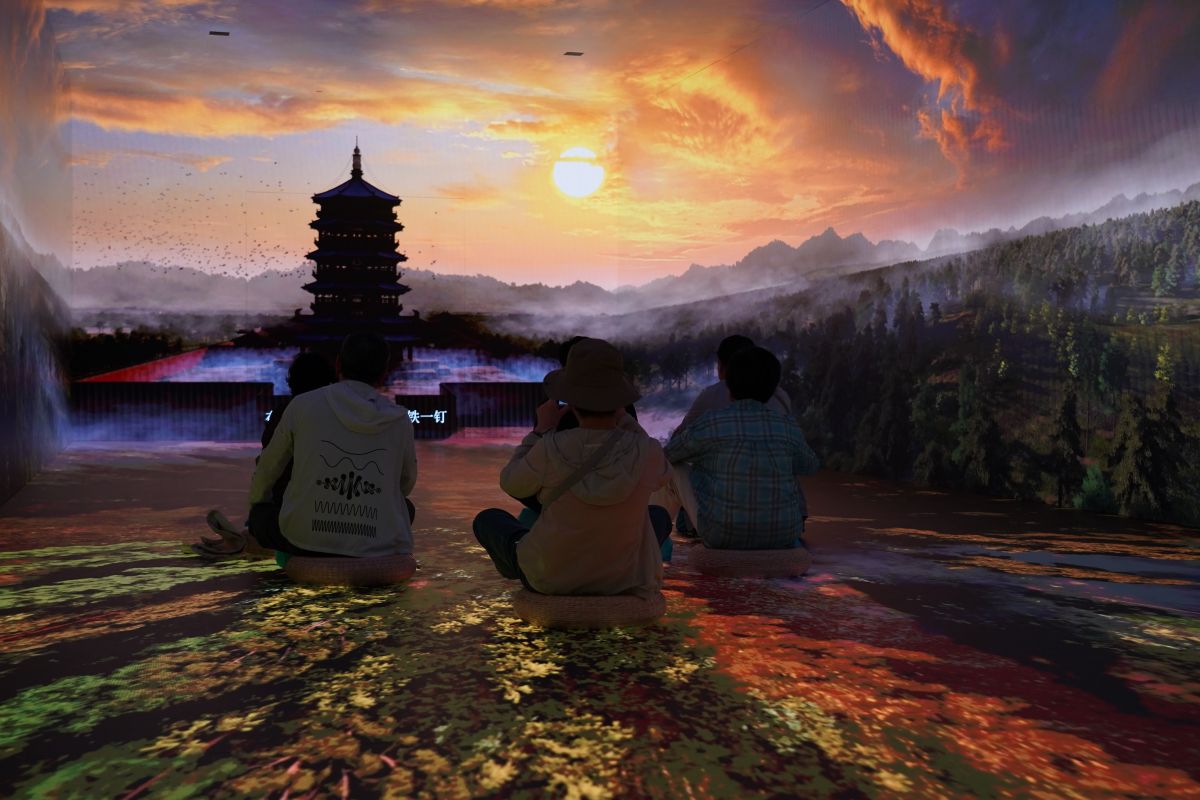
A newly opened digital immersive experience space at the Yingxian Wooden Pagoda scenic area in Shanxi Province, northern China, offers visitors a virtual journey through the iconic structure, allowing them to explore areas that have been closed to the public for more than a decade. Located in the southeast corner of the scenic area, the experience room requires no headsets or wearable devices. Upon entering, visitors are transported to a virtual version of the pagoda and guided floor by floor through an immersive audiovisual presentation. ‘Sunlight’ appears to illuminate the interior corridors, while statues, plaques, and staircases look remarkably realistic, creating the sensation of actually standing inside the ancient building. ‘It was absolutely stunning and made up for the disappointment of not being able to climb the pagoda,’ one visitor wrote on social media. ‘Fantastic. Finally, I can see the hidden treasures inside the tower,’ read another comment. To enhance the visual experience, the project employs glasses-free three-dimensional (3D) imaging technology. For instance, when introducing the three types of ‘dougong’, the traditional interlocking wooden bracket system characteristic of Chinese architecture, the structures are highlighted with lights, magnified, and seemingly presented right before the viewer’s eyes. The Yingxian Wooden Pagoda has nine storeys, including hidden ones, and is recognised as the world’s oldest and tallest multi-storey wooden pagoda still standing and largely accessible. However, due to damage from warfare and historical structural changes, the pagoda gradually developed a noticeable tilt. To ensure its preservation, cultural heritage authorities closed visitor access to the upper levels more than a decade ago. To balance conservation needs with public demand for access, the Yingxian Wooden Pagoda partnered with various institutions to develop the ‘AI Plus Multimodal Immersive Experience at Yingxian Wooden Pagoda’. ‘The main advantage of this project is the use of a five-screen CAVE system that creates a fully immersive floating experience,’ said Yang Yinkai, whose company was responsible for the project’s digital presentation. Throughout the virtual ascent, visitors are guided by a combination of anthropomorphic narration, floating graphic displays, and full-scene animations, providing a comprehensive introduction to the pagoda’s history, architecture, and cultural significance. ‘Many plaques hanging high above visitors’ heads, as well as restoration inscriptions hidden in corners, are difficult to see clearly even during an in-person visit,’ Yang said. ‘But in this immersive space, every detail can be viewed up close.’ ‘After visiting the exhibition, I gained a much deeper understanding of the pagoda and felt a greater responsibility to help protect it,’ said Zhang Yuhao, a student who visited the site. The digital transformation of the Yingxian Wooden Pagoda reflects a broader trend in China’s cultural heritage sector, with advanced technology increasingly used to preserve and showcase historical treasures. Currently, visitors can virtually enter the tomb of Xu Xianxiu, a nobleman of the Northern Qi Dynasty (550-577) in Taiyuan, and enjoy murals depicting the luxurious lifestyle of the nobility of that era. They can also ‘float’ inside Xiaoxitian Temple in Xixian County to closely observe its famous hanging sculptures. Elsewhere, short animated films help audiences explore scenes of urban life in Bianjing, the capital of the Northern Song Dynasty (960-1127), as depicted in the murals of Yanshan Temple in Fanshi County. Digital preservation, cultural heritage revitalisation, AI-assisted restoration, and immersive visualisation are becoming increasingly important tools in China’s efforts to protect its cultural heritage. By breaking the boundaries of space and time, digital technology opens new dimensions for cultural preservation and public engagement, ensuring ancient treasures can continue to inspire future generations.