
Digital Tax Is Not a New Tax, DJP Says Remittances Will Not Be Taxed
Jakarta, CNBC Indonesia — The Directorate General of Taxes (DJP) at the Ministry of Finance has stressed that plans to implement the Foreign Digital Transaction Tax Collection System (SPP-TDLN) do not constitute a new tax. Nor will the scheme automatically subject all overseas transactions, including money transfers and remittances, to value-added tax (VAT).
The clarification follows remarks by Hashim Djojohadikusumo, chairman of the Advisory Board of the Indonesian Chamber of Commerce and Industry (Kadin), who said banks, financial technology (fintech) companies and e-commerce platforms would begin collecting digital tax on 9 November 2026.
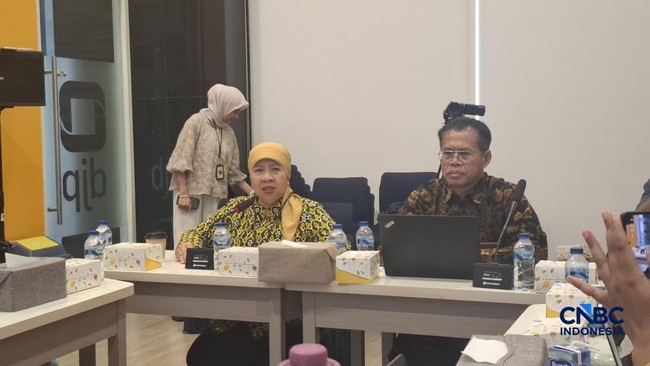
DJP Director of Extension, Services and Public Relations Inge Diana Rismawanti explained that SPP-TDLN is a mechanism to organise VAT collection on overseas digital transactions more systematically and using technology.
“SPP-TDLN is a government measure to organise VAT collection on overseas digital transactions in a fairer, more orderly and technology-based manner,” Inge told the media on Monday (2 November 2026).
Inge stressed that the policy would not change the VAT rate and was not intended to tax all overseas transactions. Collection would apply only to overseas digital transactions that qualify as VAT-taxable objects under tax regulations.
Accordingly, fund transfers and remittances would not automatically be subject to VAT. SPP-TDLN is also not designed to collect VAT on personal money transfers or money sent by members of the public.
DJP also said the mechanism was designed to prevent double taxation. If VAT on an overseas digital transaction has already been collected by an appointed e-commerce operator (PMSE), it will not be collected again through SPP-TDLN.
For consumers, the mechanism is intended to simplify tax administration. People will not need to make their own VAT payments and filings for overseas digital services on which tax is due.
Not all banks and fintech firms have been appointed
In response to Hashim’s statement that all state-owned and private banks, fintech firms and platforms such as Shopee, Lazada and GoTo would become tax collectors from 9 November, DJP did not confirm that scope.
Inge said other prospective tax collectors, or issuers, were still undergoing a stabilisation period. New appointments would be announced once all preparatory stages had been completed.
“Other prospective issuers are currently in a stabilisation period. We will provide information about the appointment of new issuers through DJP’s official channels once all preparation stages have been completed,” she said.
Before full implementation, SPP-TDLN was tested in a sandbox environment and went through a stabilisation period. These stages were intended to ensure the readiness of the system, business processes, data exchange and integration with the parties involved.
On 25 September 2026, Director General of Taxes Bimo Wijyanto appointed six institutions as issuers under the SPP-TDLN scheme.
They comprise five banks belonging to the state-owned Banks Association (Himbara): PT Bank Rakyat Indonesia (Persero) Tbk, PT Bank Mandiri (Persero) Tbk, PT Bank Negara Indonesia (Persero) Tbk, PT Bank Tabungan Negara (Persero) Tbk and PT Bank Syariah Indonesia Tbk.
DJP also appointed PT Fintek Karya Nusantara, or LinkAja, as an issuer.
Hashim had previously said the government was committed to broadening tax collection to increase the state’s fiscal capacity. One measure he cited was expanding the digital tax collection scheme.
At the opening of Kadin’s 2026 National Leadership Meeting in Jakarta on Thursday (29 October 2026), Hashim said government and private banks, fintech firms and e-commerce companies including Shopee, Lazada and GoTo would start collecting and remitting tax on 9 November 2026.
“Digital taxation, digital tax, will soon be implemented, on 9 November. All government banks, private banks and all fintech firms, including Shopee, Lazada, GoTo and others, must collect and remit tax that has not been collected so far,” Hashim said.
Hashim described the expanded tax collection as part of efforts to improve the government’s fiscal capacity. He claimed that nearly Rp10,000 trillion in Indonesian wealth was moving through the black market and remained beyond the reach of the tax authorities.
He said Indonesia’s state revenue-to-gross domestic product (GDP) ratio was still around 12 per cent, lower than that of several other countries he cited.
Source: jawawa.id (https://jawawa.id/newsitem/digital-tax-is-not-a-new-tax-djp-says-remittances-will-not-be-taxed-1793681469)
Originally published by CNBC Indonesia (https://www.cnbcindonesia.com/news/20261103090113-4-781776/pajak-digital-bukan-pajak-baru-djp-tegaskan-remitansi-tak-dikenakan), translated from Indonesian