
Digital Social Protection to Minimise Inaccuracies in Welfare Distribution
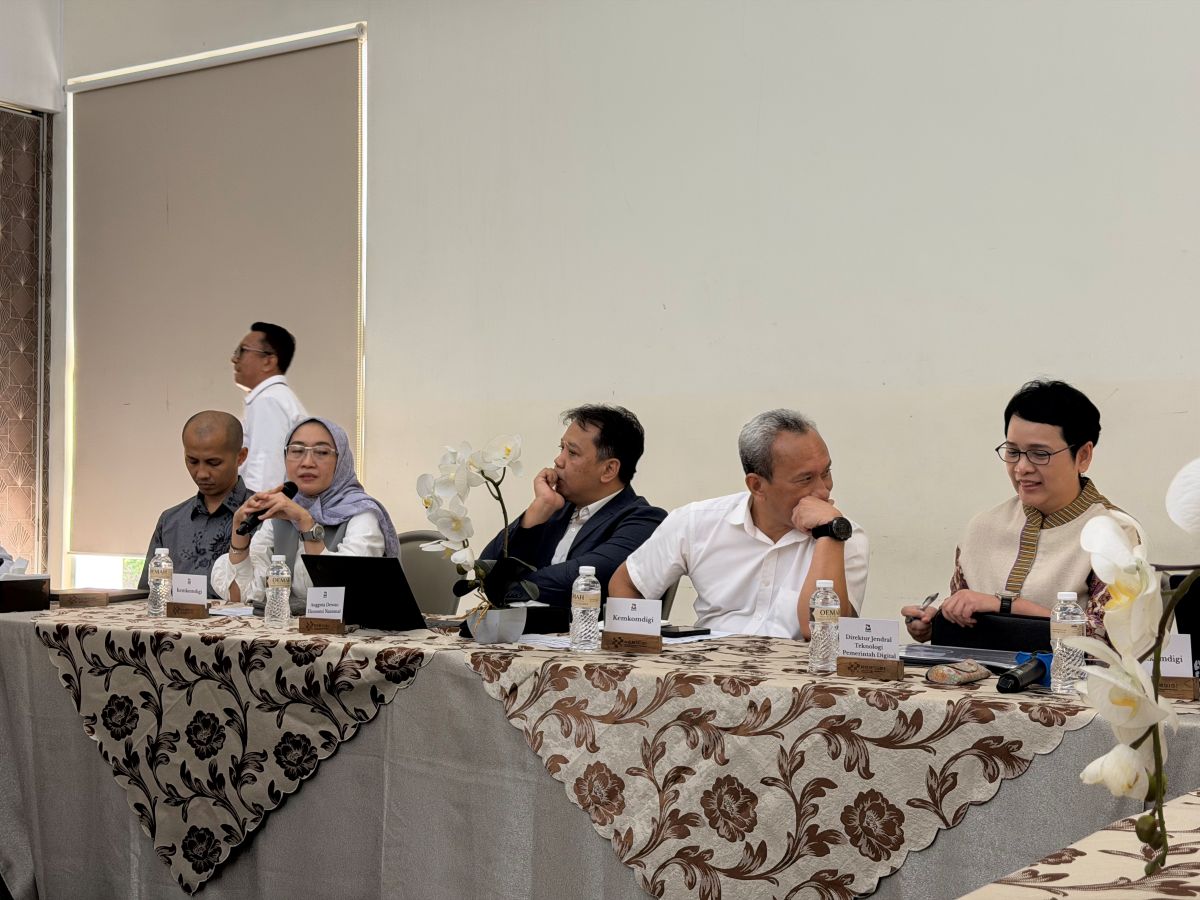
Arief Anshori Yusuf, a member of the National Economic Council and Chairman of the Government’s Digital Transformation Acceleration Committee (KPTDP), stated that the distribution of social protection programmes for the public is currently experiencing targeting inaccuracies. He noted that exclusion errors—where eligible individuals do not receive aid—reach as high as 70% in certain areas, while inclusion errors—where ineligible individuals receive aid—stand at approximately 40%. He also highlighted that the error rate for PBI JK (health insurance subsidies) reaches 40%.
Despite the existence of the National Socio-Economic Integrated Data (DTSEN) containing 93 million family records, the determination of socio-economic deciles remains imprecise as the system produces probabilities rather than definitive data. To mitigate this, the government is developing Digital Public Infrastructure (DPI) through ‘Digital Social Protection’. This development focuses on three core components: Digital Population Identity (IKD), a Government Service Support System (SPLP) for data exchange, and digital payments.
Mira Tayyiba, Director General of Digital Government Technology at the Ministry of Communication and Digital Affairs (Komdigi), explained that Digital Social Protection is designed to make the selection of social assistance recipients more accurate using up-to-date data. The process is people-centric, involving stakeholder socialisation and the use of local agents to assist with registration via IKD. To prevent fraud, the government emphasises using official government domains to protect citizens from data theft.
The system allows citizens to apply for social assistance using only their National Identity Number (NIK), providing results and the ability to file appeals. The SPLP system facilitates this by connecting data from various sources, including Civil Registry (Dukcapil), BPJS Health, BPS/DTSEN, ATR/BPN, BPJS Employment, and the Traffic Police (Korlantas/Samsat).
A pilot programme was conducted in Banyuwangi in September 2025, where nearly 60% of the 350,000 residents registered. The expansion of the Digital Social Protection trial is scheduled for May 2026, covering 42 regencies and cities, including Medan, Surabaya, Makassar, and Denpasar, depending on the readiness of local leaders and the activation of Digital Population Identities (IKD).