
Digital Radicalism Disguised as Aid, Minister Warns
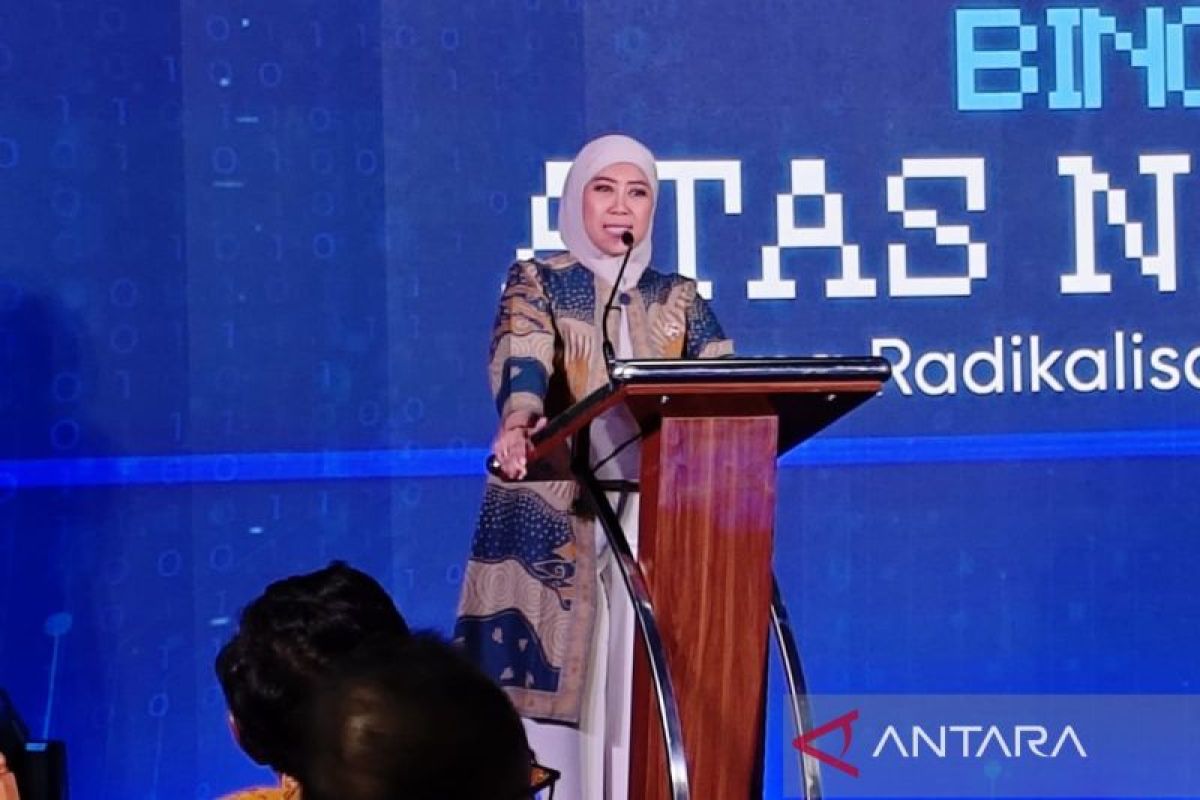
Jakarta (ANTARA) - Minister of Communication and Digital Affairs (Menkomdigi) Meutya Hafid said a new pattern of radicalisation in the digital sphere has emerged, with recruitment carried out by promising help in order to build victims’ trust.
She explained that the spread of radical ideology no longer relies on incitement to hatred or violence, but rather on approaches that appear benign, such as offering assistance, building closeness, and promising a better life. Once trust has been established, the victim is gradually steered towards extremist beliefs.
“Violence begins with an outstretched hand, help with medical treatment, debt repayment, the delivery of personal assistance, followed by promises of welfare. Only after trust is formed are they directed towards extremist ideology,” Meutya said in Jakarta on Wednesday.
According to her, radical groups are now exploiting subtler and more personal approaches to influence prospective victims, especially children and vulnerable groups.
“So, promises of welfare, for example, such as a promise of free schooling, and over there they are instead told to marry,” Meutya said.
Meutya also revealed that in May, the National Counter-Terrorism Agency (BNPT) thwarted attempts to recruit 112 children through a single digital platform.
The finding shows that radical groups continue to exploit the digital sphere to find new targets using increasingly hard-to-detect methods.
In her assessment, changes in children’s behaviour caused by exposure to online content do not happen suddenly. Behavioural change occurs gradually, so it often goes unnoticed by families.
“Bit by bit, the relationship with parents grows distant. The stories that used to be shared openly become fewer and fewer, until eventually there is no communication at all. That is when we are often too late in realising that a serious change has taken place,” she said.
According to Meutya, technological developments make radicalisation increasingly difficult to recognise. The power of narratives combined with algorithms in the digital sphere can shape an information environment according to users’ preferences.
As a result, a person can continue receiving information that reinforces their beliefs, even when it does not match the facts.
“When narrative and algorithm unite, they create an algorithmic illusion, so that facts are eventually defeated by emotion or belief,” Meutya said.