
Digital Port Transformation Will Determine Indonesia's Future Position
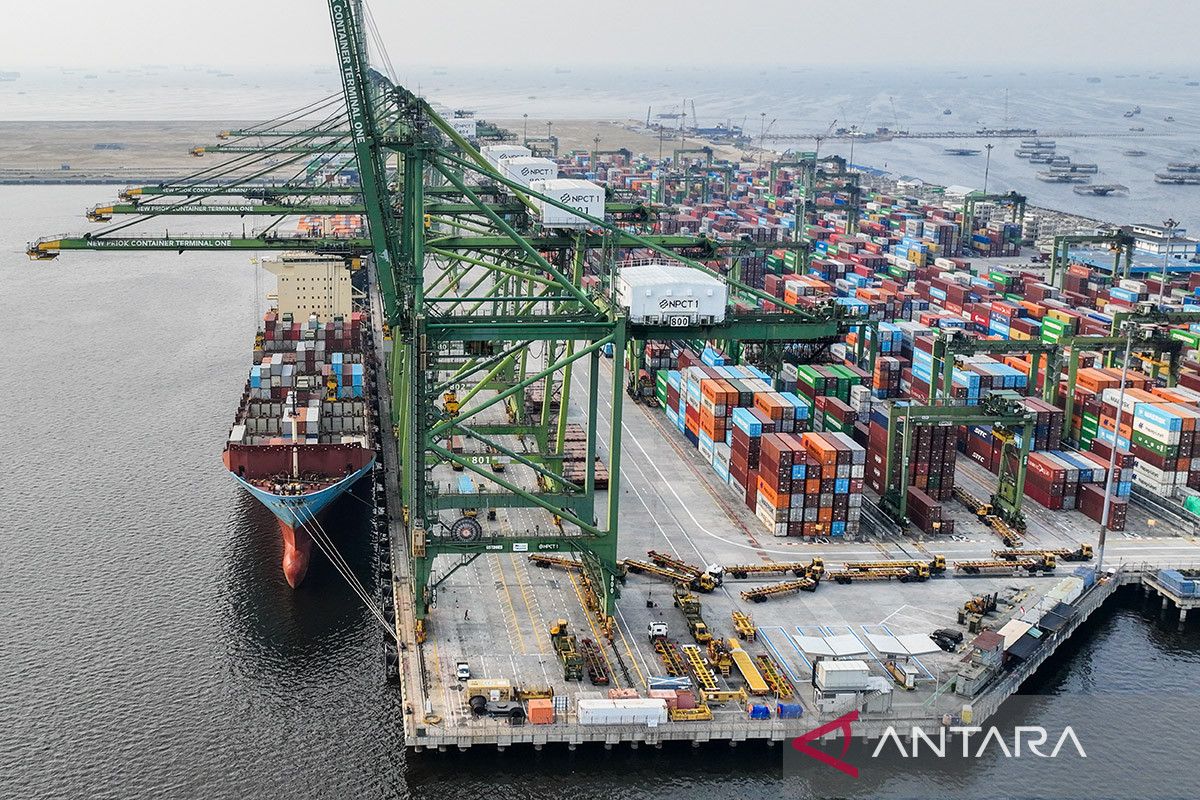
Amid increasingly fierce global economic competition, ports are no longer seen merely as places where ships berth, cargo is loaded and unloaded, or commodities enter and leave a country.
Modern ports have transformed into data centres, logistics integration hubs and, at the same time, decision-making centres that determine the efficiency of a nation’s supply chain.
For Indonesia, which has more than 17,000 islands and whose territory is two-thirds water, the digital transformation of ports is no longer a choice but an urgent necessity.
For years, Indonesia has faced the classic challenge of high logistics costs, relatively long vessel waiting times, and coordination that is not yet fully integrated between port operators, shipping lines, logistics companies and government agencies.
This condition has made the distribution of goods inefficient, particularly to the eastern regions of Indonesia, which depend heavily on maritime transport.
In the digital economy era, these problems can no longer be solved simply by adding berths or expanding container yards. What is needed is a change in the way of working through the use of digital technology.
Port digitalisation is essentially an effort to make the entire operational process more connected, automated and data-driven. Information on vessel arrivals, berth availability, container positions, weather conditions and even the flow of logistics vehicles can be monitored in real time through an integrated system.
This means decisions are no longer taken based solely on estimates or experience, but on accurate and up-to-date data. According to a UNCTAD study, the port of the future will function not only as a transport node but also as an information node capable of coordinating the various parties in the supply chain more efficiently.
The success of a number of countries shows that digitalisation can significantly change the face of the port industry. One of the most frequently cited examples is the Port of Rotterdam in the Netherlands.
As the largest port in Europe, Rotterdam has developed the digital twin concept: a digital replica of the entire port area that combines data on vessels, infrastructure, weather, water depth and even sea current conditions in a single integrated platform.
The system enables operators to predict vessel arrival times more accurately, optimise berth usage and reduce waiting times at the port. Rotterdam is even targeting the development of a port ecosystem that supports semi-autonomous and autonomous vessel operations in the coming decade.