
Digital Media and the Collapse of Human Authenticity
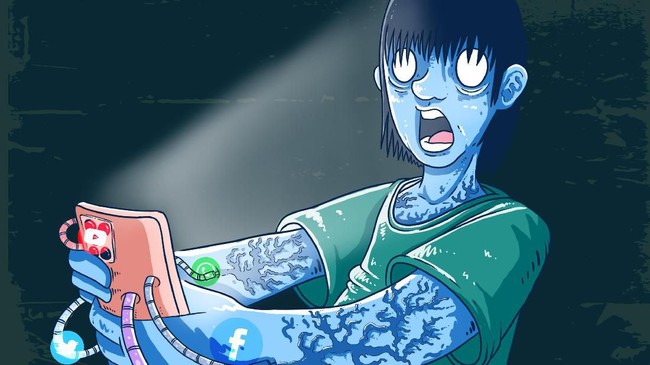
How much unconsciousness does society experience when engaging with digital media?
First, people are unaware that the reality they consume—as social media posts—is the result of algorithms tailored to their previous choices. Fans of crime stories who follow information from digital media perceive reality as filled with crime and threats. This contrasts with the world presented to fans of motivational topics. The world feels full of hope, telling stories of success for those who do not give up, making it seem worth living with enthusiasm.
Both are real realities. But because of algorithm operations, their presence is adjusted to individual tendencies, and they are assumed to be the reality experienced by other fans.
Second, people are unaware that product offers from shopping platforms—which appear diverse and offer free choice—are the result of a blend of behaviour left behind as a digital path. Purchase history, product search topics through search engines and artificial intelligence, along with comments on other users’ products, are all factored in. The shopping class one occupies—whether lower, middle or upper class shopper—is blended into choice tendencies. It is not freedom being offered at all, but an urge that cannot be refused. Consumption choices are the result of surveillance.
Third, people are unaware that self-expression shown on digital platforms—and eventually seeping into real life—is the result of manufactured values and norms agreed upon by digital media users. Do not imagine that the agreement was formed through free dialogue in the public sphere. Rather, it was formed through ‘like and hate’ mechanisms in digital relations.
For behaviour that has been confirmed as values and norms, its reinforcement will harvest praise: likes, reposting, or explicit comments of appreciation. Conversely, when a violation of the agreement occurs, it will be met with negative reactions in the form of abusive comments, insults, and even cancel culture.
Regarding this third type of unconsciousness, Maya Maliutina and Nataliia Shust, 2025, in ‘AI-Generated Content and The Crisis of Authenticity: Deepfakes, Synthetic Media, and Social Trust’ report their research findings. They state that the presence of new digital media—including AI-based deepfakes—has caused a change in the way information is produced and consumed.
This then adds to the way society recognises reality. In the era before the widespread use of digital media, believing required prior experience. Seeing, hearing, inhaling, tasting, touching—sensing first—then believing.
But in the digital era, that requirement of experience is no longer demanded. AI machine learning algorithms—which can manipulate or produce synthetic images—are used to manufacture reality. Reality identically imitates the natural. Deepfakes imitate real people, events or occurrences.
Unfortunately, the implication of this additional source of reality causes the collapse of authenticity. Authenticity collapse. It begins by changing belief and understanding about ‘the authentic’ in presence through digital communication.
Social trust—the foundation of social cooperation and respect for social institutions—which was originally built on verifiable information, changes entirely with the presence of information manufacturing devices. Reality can be constructed without any requirement of reference in the real world.
This is what Jean Baudrillard, 1981, in his book ‘Simulacres et Simulation’ called hyperreality. In the context of digital media, hyperreality is produced through the manufacture of algorithmic models. Autonomous algorithms that formulate generative reality present images or narratives that have no origin. Their existence without physical reality cannot be verified. They are merely signs or symbols that replace the presence of direct experience.
The implication—digital media presenting this type of information very frequently—blurs the boundary between actual reality and manufactured reality. Partly because of its rapid presence in large quantities. Partly because its form is very identical to the real. Therefore, when values and norms appear as manufactured products, their expression is also similar: algorithmic conformity.
For example, when someone must respond to a post about a commotion on a toll road. A luxury car driver hits another driver whose vehicle is more modest. The beating occurred because the luxury car driver was not given the opportunity to overtake. Because the person does not realise they are facing a deepfake, they condemn the luxury car owner.
The response is given without proper understanding of the context. They are ‘forced’ by the algorithm that has mapped the response. The packaging of the post and its narrative has been adjusted to the conflict algorithm: luxury car owners are often arrogant. And arrogance must be condemned. Clearly, filter bubbles and echo chambers manufacture their attitude. It becomes the collapse of their authenticity.
The implicative projection of Maliutina and Shust’s research above is in line with previous research conducted by James Oliver, 2025. In his research titled ‘The War for Reality: Artificial Intelligence, Human Agency, and the Collapse of Truth’, it is stated that AI, with its extraordinary capacity to distort reality, enables mass behaviour modification.
All of this culminates in an inevitable epistemic collapse. Epistemic collapse is marked by the disbelief of all things that appear through media. This includes social media posts, mediated statements and events, and values and norms transmitted by digital media.
This unavoidable state is reached when the production of synthetic information—manufactured information—becomes dominant.