
Digital Infrastructure Accelerates Smart Transformation in the Railway Industry
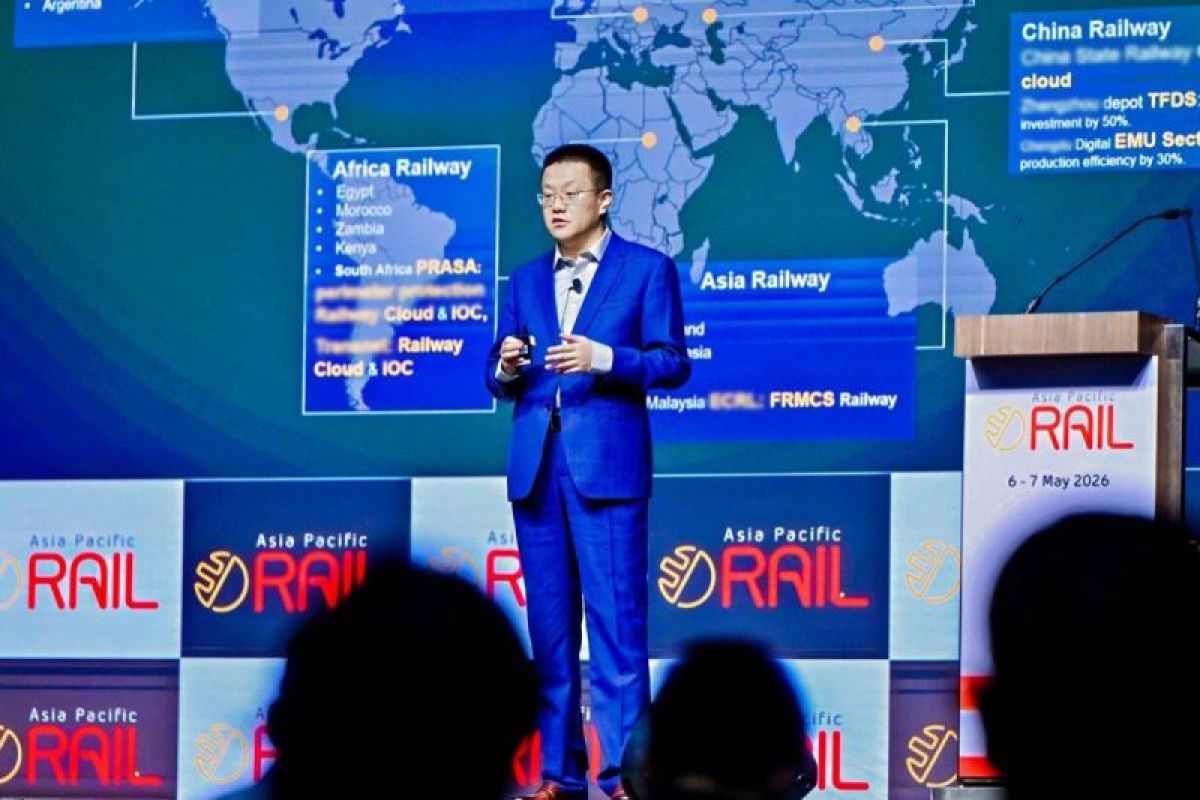
Bangkok, (ANTARA/PRNewswire) - Huawei, a leading provider of ICT solutions in the global market, participated in Asia Pacific Rail 2026 (APR26) in Bangkok, showcasing its latest intelligent railway technologies to support digital transformation in the industry. At the largest railway exhibition in the Asia-Pacific region, Huawei presented the theme “Accelerating Rail Digital Intelligence,” attracting more than 500 stakeholders from various countries. Huawei also held a “Huawei Roundtable Discussion 2026,” bringing together global experts and industry partners to discuss the future of the railway sector.
Huawei showcased a range of its latest digital solutions to support safer, more efficient, and sustainable passenger and logistics transportation services. One example is the Rail Broadband solution based on FRMCS, providing low-latency and high-reliability connectivity for critical operational activities. Supported by AI Inspection solutions for railways, Huawei helps railway operators build asset data and network fault samples that are highly beneficial. Through continuous active learning processes, these solutions help railway operators adapt to changing operations and market conditions, supporting the future of global mobility.
In a presentation titled “Leading Digital Infrastructure to Empower Rail Intelligence,” Raymond Zuo stated, “Huawei has launched a new innovation strategy for the railway industry called iRAIL, based on a vision for industry development until 2035. Through smart solutions, we help the railway industry become more reliable and automated, providing integrated services for passengers and logistics customers, and supporting long-term business growth. At the same time, we are expanding the focus of the railway industry, from fixed infrastructure to mobile equipment, passenger and freight transportation, diversified businesses, to construction processes based on the latest ICT solutions.”
From an operational perspective, Ethan Lee said, “Safety management systems are shifting from a reactive approach to predictive and preventative approaches, and now increasingly oriented towards AI and advanced data analysis. AI and advanced data analysis fundamentally transform the safety, reliability, and durability aspects of global railway networks.”
Meanwhile, in a discussion session on signaling systems, Sanford Sheng stated, “Safety and efficiency are key prerequisites in railway construction and planning. Railway communication systems are now evolving from conventional VHF radio and GSM-R to next-generation FRMCS. The development of dedicated private networks for ETCS train control is becoming increasingly important. The implementation of unified FRMCS standards from UIC also helps address the challenges of interoperability across systems and cross-border train roaming.”
Currently, Huawei supports more than 300 urban rail lines worldwide, while Huawei’s Smart Railway solutions have been implemented on over 180,000 kilometers of railway networks. In the future, Huawei will continue to develop solutions and technologies tailored to industry needs. Through collaboration with global partners, Huawei is accelerating digital transformation in the rail transportation sector towards a safer, more efficient, and sustainable mobility system.
For more information: https://e.huawei.com/en/industries/railway
SOURCE Huawei