
Digital ID Key to Accelerating Public Services and Social Aid Distribution
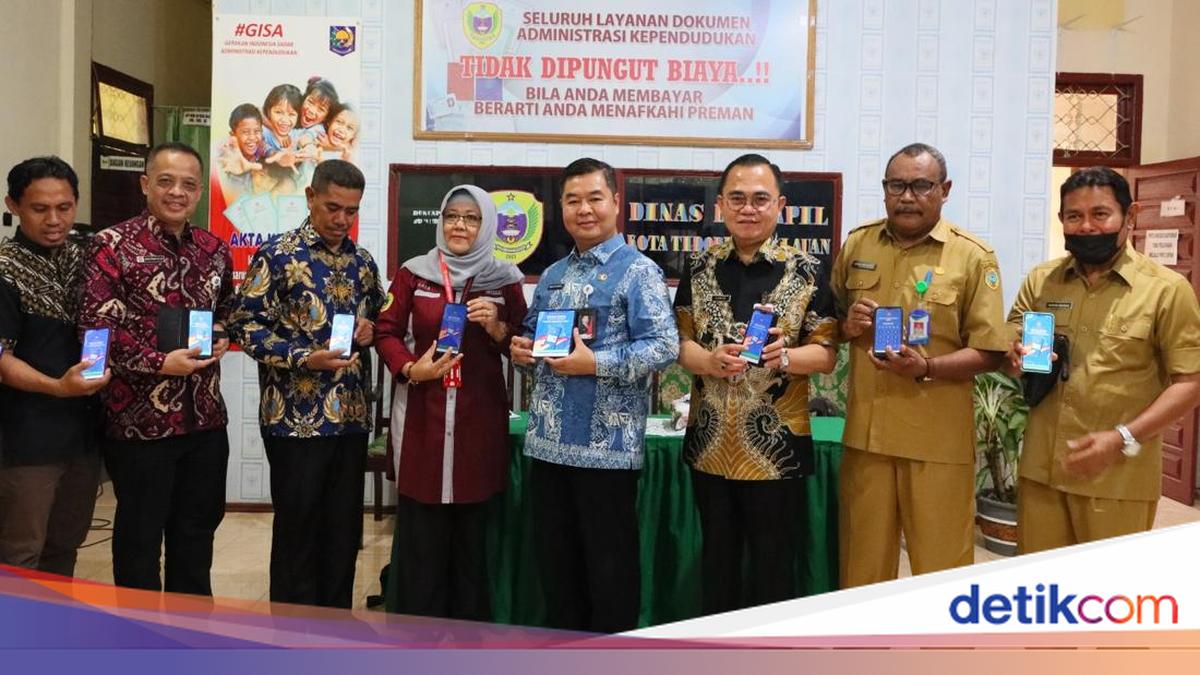
The Ministry of Home Affairs, through the Directorate General of Population and Civil Registration (Dukcapil), is accelerating the implementation of the Digital Population Identity (IKD). This strategic move is directed at fully supporting the implementation of Digital Public Infrastructure (DPI) and the national digital transformation of governance.
Minister of Home Affairs Tito Karnavian stated that the completeness of the population database is the main key. According to Tito, Dukcapil currently manages the most advanced and complete population registration system in Indonesia.
“The population data held by Dukcapil is the most complete data in Indonesia. It contains residents’ identities, family data, marital status, occupation, and biometrics such as fingerprints, iris scans, and face recognition. All of this data forms the basis for government policy making,” said Tito in a written statement on Wednesday (12/8/2026).
As of 31 July 2026, the IKD application has successfully attracted 21,152,840 active users across the archipelago. This application functions as a digital ID to display the electronic form of the e-KTP, Family Card (KK), and other important documents.
Citing official data from Dukcapil, there are a number of civil registration service features that can be accessed by the public online through the IKD. The details of these administrative features include requests for printing Family Cards (KK) and Indonesian citizen biodata, applications for relocation certificates and separate or split KK orders, checking blood type information, issuing birth certificates for Indonesian citizens (both those who already have a NIK and those who do not) and death certificates, and submitting changes to education data and non-permanent resident status.
This digital transformation and the completeness of these features are believed to bring fresh momentum for the smooth governance of social assistance (Bansos) distribution. Dukcapil Director General Teguh Setyabudi stressed that the validity of community data is the lifeblood of social protection programmes.
“The digital transformation we are building must start from valid and integrated population data. When data is accurate, public services become faster and easier, and social assistance can be distributed in a targeted manner,” explained Teguh.
In addition to supporting government programmes, the implementation of IKD also provides a range of practical benefits for daily public activities. The three main uses of the IKD system for the public include Type 1 QR Code Scanning, where residents share their population data QR code with service providers, Type 2 QR Code Scanning, where residents scan the service provider’s QR code directly using the IKD application, and Single Sign-On (SSO), where residents verify data while securely opening the service provider’s application using IKD authentication.
Strategic synergy is also being continuously built by the Ministry of Home Affairs with the National Energy Council (DEN). DEN Chairman and Chairman of the Government Digital Transformation Acceleration Committee (KPTDP) Luhut Binsar Pandjaitan specifically emphasised the urgency of cross-sector collaboration.
“The integration of population data must be supported by the development of an integrated ecosystem so that data utilisation is more comprehensive. Supporting facilities and infrastructure can be optimised through domestic products,” Luhut explained.
Going forward, Dukcapil has prepared a roadmap for IKD updates to make the ecosystem increasingly sophisticated and inclusive. The development plans include providing a Remote Onboarding feature based on Liveness Detection technology and preparing Digital Folder storage space. Data sharing facilities based on owner consent and accessibility features for persons with disabilities are also focuses in the upcoming improvement agenda.