
Digital Behavioural Shift Remains a Challenge for AI-Powered Public Services
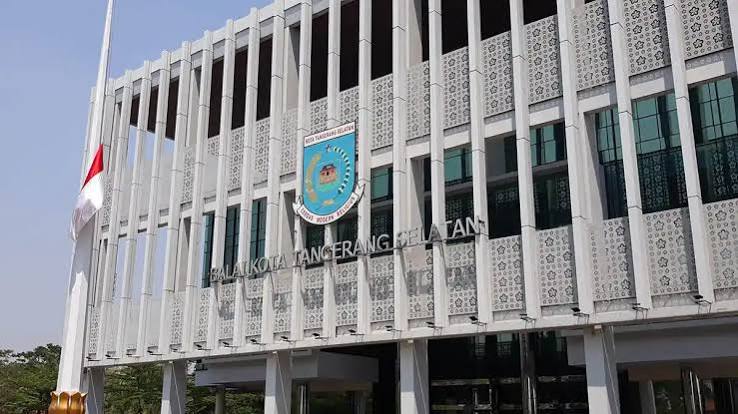
The Communication and Informatics Office (Kominfo) of South Tangerang City has released a comprehensive evaluation report on the operations of its AI-based virtual assistant, Helita, and the super app Tangsel ONE. The assessment, covering the period from 30 April to 15 June 2026, shows reliable technological performance but reveals a significant gap in the community’s cultural readiness for digital adoption.
Head of the South Tangerang Kominfo Office, TB Asep Nurdin, stated that while the Helita system’s infrastructure, which carries the slogan ‘Satu Akses, Satu Data, Satu Tangsel’ (One Access, One Data, One Tangsel), works very optimally, shifting public behaviour from analogue to digital remains a major challenge. ‘Technologically and infrastructurally, the Helita system works very reliably. However, the evaluation data shows there is a big homework in shifting the community’s culture from analogue to digital, especially in licensing services and physical complaint handling,’ Asep said on Friday (19/6/2026).
During the 47-day evaluation period, Helita handled 974 conversations comprising 10,257 messages. The virtual assistant achieved an average response time of 429 milliseconds and a user satisfaction rating of 4.3 out of 5 stars. All key performance indicators met standard thresholds, including system availability which reached 93.33 percent against a minimum target of 90 percent.
Based on conversion funnel data, the office identified an anomaly in the digital behaviour of South Tangerang residents. Licensing was the second most popular topic, accounting for 25.8 percent or 251 conversations, with citizens actively consulting about document requirements and the SIMPONIE online licensing account application process. However, this high initial enthusiasm did not translate into independent completion. Only 4 users finished creating a SIMPONIE account via Helita, a conversion rate of 1.6 percent, and just 9 users independently submitted licensing documents.
‘People tend to be more comfortable using AI for the initial consultation stage, while for the document fulfilment process, simplification is needed so as not to trigger hesitation midway,’ Asep explained. A similar gap appeared in public service and complaint handling, where 98.1 percent of reports concerned physical domestic issues such as rubbish accumulation, security disturbances, and threats from wild animals, with only 1.9 percent relating to digital problems.
The evaluation also highlighted slow internal bureaucratic responses. Of 93 technical digital complaint tickets submitted by the public, 90 tickets, or 96.8 percent, remained open and untouched by the relevant regional apparatus organisations (OPD). ‘This is a strong indication that the internal handling process at the OPD level needs to be accelerated,’ Asep stressed. In response, the office plans to revamp educational content on Helita with short video tutorials and tighten supervision to ensure OPDs resolve outstanding public complaints promptly.