
Different Paths, the Same Destination
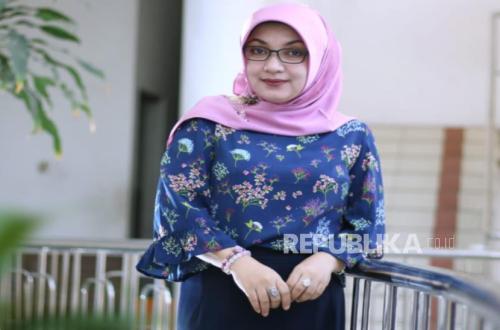
Today, 28 October 2026, Indonesia marks the 98th anniversary of Youth Pledge Day. The occasion feels close to home for me, as our three children are all still in their youth. Tomorrow, Thursday 29 October 2026, we will take our youngest daughter, Neisya Reehanna, to Yogyakarta International Airport once again. At the end of August 2025, we saw her off to Australia to take part in the International Science Fair, ASMS-ISF 2025. This time she is travelling further, to Kyoto, Japan, to attend the Japan Super Science Fair (JSSF) 2026, which runs from 31 October to 4 November.
JSSF is organised by Ritsumeikan High School in Kyoto as part of Japan’s Super Science High School programme, launched by the government in 2002. Over five days, students from various countries present their research, take part in poster sessions and problem-solving workshops, and exchange cultures.
Neisya and two fellow students will present their research, titled “Enhancing the Operational Longevity of Butterfly Pea Flower (Clitoria ternatea L.) Dye-Based DSSCs via Bilimbi (Averrhoa bilimbi L.) Interfacial Passivation”. Put simply, the research tackles a very practical question: how to make natural-dye-based solar cells last longer.
Their findings are still at an early stage, but what is especially worth noting is the research journey itself. Initial experiments with mangosteen peel did not produce the expected absorption pattern, so the team had to change materials and start again. It brings to mind a lesson I have previously written about in this column: discoveries often emerge from plans that have to change.
I see the same pattern in research supervision and presentation seminars at Universitas Amikom Yogyakarta. Good research begins with a real problem, is tested using clear methods, reported honestly—including its limitations—and concludes with recommendations for what should happen next. This principle applies equally to high-school students in a laboratory and doctoral students writing a dissertation.
Seen from a distance, Neisya’s journey is just one of three different paths taken by our children. Our eldest, Naufal Rasendriya, is pursuing International Relations. Najwa Rashika chose Aerospace Engineering and is now continuing her master’s studies at ITB. Neisya, the youngest, is drawn to chemistry and hopes to study pharmacy. Interestingly, none of them has followed the Computer Science path that we pursued.
In the news today, we also see young people choosing different ways to express their concern. Some take to the streets to voice their aspirations; others work in academic settings, laboratories and scientific forums; and still others represent Indonesia at international events. Their approaches differ, but all show that young people are never truly silent in the face of their times.
These different paths call to mind the events of 28 October 1928. At the close of the Second Youth Congress, young people and students from various regional organisations pledged one homeland, one nation and one language. They came from different backgrounds but found a shared aspiration.
Different paths need not divide us; the uniqueness of each person can lead towards the same destination. We continue to learn that everyone has their own individual qualities, and that a parent’s role is not to dictate the path. Our task is to encourage, support and facilitate.
To encourage means giving young people the confidence to try, even when the outcome is uncertain. To support means being there when things do not go as planned—for example, when an experiment has to be repeated from scratch. To facilitate means opening doors, whether by giving time, access or simply driving someone to the airport.
The same principle applies at university. The students in lecture halls at Universitas Amikom Yogyakarta each bring their own strengths. Some are sharp at programming logic, others excel at design, data analysis, communication or leadership, while some only discover their interests in their final semesters.
Good lecturers and supervisors do not try to make them all the same. Our task is to recognise each person’s potential, then encourage, support and facilitate it. This is particularly clear when supervising theses and dissertations. Students are more likely to persevere through a long process when their topic reflects their own interests and strengths than when it has been chosen to suit their supervisor.
As Director of the Institute for Research and Community Service, I see facilitation as part of the institution’s role, too. Research grants, scientific forums, publication guidance and collaborative networks are ways for a university to open doors. But a door only matters if someone is willing to step through it, driven by their own curiosity.
Our students are the young people of today. If the youth of 1928 championed a common language so the nation could speak with one voice, today’s young people face a different challenge: speaking the language of science so Indonesia’s voice can be heard at forums around the world.
Allah Almighty says: “Say, ‘Everyone acts according to their own disposition.’ And your Lord knows best who is most rightly guided.” (QS Al-Isra’: 84)
May Neisya and her friends have a safe journey and a successful presentation. May every child, and every student, find the path that is right for them, alongside parents and educators willing to encourage, support and facilitate. Happy Youth Pledge Day. Wallāhu a’lam.