
Differences Between IDX Short Selling Rules and Other Global Exchanges
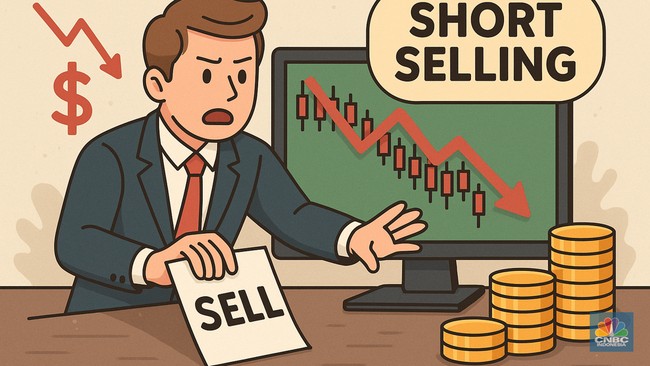
Short selling has officially come into effect at the Indonesia Stock Exchange (IDX) as of today, Thursday (1/1-10-2026). In this initial phase, the facility is only available for five stocks and can only be facilitated by two securities companies.
While short selling is used globally to take positions when stock prices are expected to decline, regulations vary across different exchanges. The United States, South Korea, Japan, Hong Kong, the United Kingdom, and Vietnam all have their own provisions, ranging from eligible stocks and lending mechanisms to transaction price limits and oversight.
Understanding Short Selling
According to the Financial Services Authority (OJK), short selling is a transaction involving the sale of securities that the seller does not possess at the time the transaction is executed. This provision is stipulated in OJK Regulation (POJK) Number 6 of 2024 regarding the Financing of Securities Transactions by Securities Companies for Clients and Short Selling Transactions by Securities Companies.
In a short selling transaction, investors borrow shares through a securities company to sell them in the market at the current price. When the stock price falls, the investor can repurchase the shares at a lower price to return them according to the securities lending mechanism. The difference between the selling price and the repurchase price becomes the investor’s profit after accounting for transaction and borrowing costs. Conversely, if the stock price rises, the investor must repurchase the shares at a higher price, potentially leading to losses.
Short Selling Rules at the IDX
During the initial implementation phase, short selling transactions at the IDX are limited to five stocks and can only be facilitated by PT Semesta Indovest Sekuritas (MG) and PT Ajaib Sekuritas Asia (XC). The five stocks available for short selling are PT Astra International Tbk (ASII), PT Bank Central Asia Tbk (BBCA), PT Barito Pacific Tbk (BRPT), PT Bumi Resources Tbk (BUMI), and PT Indofood Sukses Makmur Tbk (INDF).
Investors cannot use the short selling facility immediately. They must have held a regular securities account for at least six months, open a special account for short selling transactions, and sign a securities lending agreement with the securities company. Securities companies are also required to consider the availability of shares for transaction settlement.
Key provisions include:
A minimum initial margin of 50% of the short selling transaction value or IDR 50 million, whichever is higher.
For the first transaction, a minimum total financing margin of 150% of the short selling transaction value.
The margin value must be maintained at a minimum of 135% of the market value of the short position. If it falls below this level, the securities company is required to request margin replenishment.
Customers have a maximum of three trading days to restore the margin ratio to at least 135%. If not met, on the fourth trading day, the securities company must execute a purchase of securities to close part or all of the position.
If the margin ratio falls below 120%, the securities company must immediately purchase securities until the ratio returns to at least 135%.
The short selling sell order price must be equal to or higher than the last transaction price on the Exchange.
Thus, the restrictions on short selling in Indonesia lie not only in the tradable stocks but also encompass collateral, availability of securities, and the price at which sell orders are entered.
How Rules Differ in Other Exchanges?
Short selling rules in other exchanges use different approaches. Some emphasise stock availability before transactions, some only restrict prices after a sharp decline, while others focus on the transparency of short positions.
United States
In the United States, short selling is regulated, among other things, through Regulation SHO issued by the Securities and Exchange Commission (SEC). Under Rule 203(b)(1), broker-dealers must generally meet a locate requirement before executing a short sale. Brokers must have borrowed the shares, have an agreement to borrow, or have reasonable grounds to believe that the shares can be borrowed and delivered at the time of transaction settlement.
The difference with Indonesia is most apparent in terms of pricing. The IDX sets price limits from the moment the short selling order is placed, whereas in the US, price restrictions based on Rule 201 of Regulation SHO only become active when a stock drops at least 10% from the previous day’s closing price. Once this threshold is triggered, short sales generally cannot be executed at a price equal to or lower than the national best bid. This restriction applies until the end of that trading day and throughout the following trading day. This means the US mechanism tends to allow prices to move more freely under normal conditions, tightening short selling only when selling pressure becomes significant.
Japan
Japan also uses a 10% decline as a trigger for short selling price restrictions. Once a stock price falls 10% from its reference price, the uptick rule comes into effect until the end of the following trading day. If the last transaction price is lower than the previous transaction, short orders must be placed above the last price. Conversely, if the last price rises, short sales can still be conducted at the last price or higher. Unlike the IDX, which immediately sets price limits on every short selling transaction, Japan only activates restrictions after a specific decline occurs.
Hong Kong
In Hong Kong, short selling is regulated through the provisions of Hong Kong Exchanges and Clearing Limited (HKEX) and is only permitted for securities included in the Designated Securities list. Transactions must also be covered short sales, meaning the seller must…
Source: jawawa.id (https://jawawa.id/newsitem/differences-between-idx-short-selling-rules-and-other-global-exchanges-1790848492)
Originally published by CNBC Indonesia (https://www.cnbcindonesia.com/research/20261001141437-128-772518/ini-perbedaan-aturan-short-selling-bei-dengan-bursa-negara-lain), translated from Indonesian