
Diamond Prices Plunge to 20-Year Low: Here’s What’s Behind the Fall
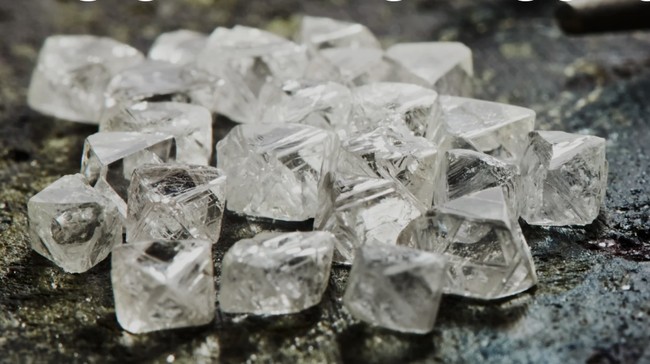
Jakarta, CNBC Indonesia – The sparkle of diamonds is fading. Natural diamond prices have fallen to levels not seen in more than two decades, weighed down by a glut of supply and the growing popularity of lab-grown diamonds.
Data from diamond trading platform Rapaport Group, cited by CNBC International, show that the average price of a 1-carat diamond is now US$3,898, or around Rp69.7 million. That is a 51% drop from the 2021 average of US$8,007, or around Rp143.2 million.
The Diamond Standard index, which tracks investment-grade diamond prices, also declined. It briefly touched 2,490 in early August, its lowest level on record, before edging above 2,500 at the end of September.
Wholesale natural diamond prices are currently around 30–40% below their 2021 peak.
Post-pandemic oversupply
The first factor behind the decline is an abundance of mined diamonds. Overproduction during the Covid-19 pandemic left the market with large inventories throughout 2023 and 2024.
“There is a lot of pessimism around natural diamonds,” Diamond Standard chief executive Cormac Kinney told CNBC International. He said that after the problem of excess inventory, the market was hit by falling sales as a result of lab-grown diamonds.
Pressure has also been felt further up the supply chain. De Beers, one of the world’s largest diamond producers, reported that its average realised price for rough diamonds fell 32% year on year to US$105 per carat in the first half of 2026. Its average rough-diamond price index fell 16%.
Lab-grown diamonds are far cheaper
The second factor is lab-grown diamonds, which have the same chemical and physical properties as natural diamonds. They are made by applying heat and pressure to a carbon seed, or by using carbon-containing gas in a vacuum chamber.
The main difference is price. CNBC International’s search of the Brilliant Earth marketplace found that a near-colourless lab-grown diamond with an excellent cut was selling for about US$450 (around Rp8 million). A natural diamond with similar specifications was priced at US$2,800–3,200 (around Rp50.1 million–Rp57.2 million). In general, lab-grown diamonds can cost up to 90% less than mined stones.
The price gap is encouraging consumers to switch. According to The Knot’s 2026 Real Weddings Study, engagement rings with a lab-grown diamond as the centre stone accounted for 61% of engagement-ring sales in 2025, a 239% increase since 2020.
The lab-grown diamond market is projected to expand to nearly US$92 billion by 2034, more than 200% above its 2025 value of US$29.46 billion, according to Fortune Business Insights.
China has emerged as a major production centre. Shanghai Diamond Exchange president Lin Qiang said China produces more than 60% of the world’s man-made diamonds. Lab-grown diamond exports through the exchange rose 65.3% year on year to 1.41 billion yuan in the first half of 2026.
The price correction is being felt particularly strongly in India, which cuts and polishes nearly 90% of the world’s rough diamonds, according to the Gem & Jewellery Export Promotion Council (GJEPC). India’s exports of cut and polished diamonds fell 8.52% to US$12.16 billion in fiscal year 2026, following a 16.8% decline in fiscal year 2025 to their lowest level in nearly two decades.
The natural diamond industry is beginning to respond in an effort to stem the price decline. De Beers, a subsidiary of Anglo American, announced in July that it would suspend production at its flagship Venetia mine in South Africa for more than two years. At least two other diamond mines also announced permanent closures in 2026.
Kinney said the supply disruptions were beginning to lift wholesale prices for certain grades, which he described as the start of a recovery.
Rapaport data also point to a slowing decline. The 1-carat diamond price index was flat in August after falling for 13 consecutive months, while the 0.30-carat and 0.50-carat indices rose by 1.6% and 1.8%, respectively.
However, the decline has not affected all diamonds equally. De Beers said demand for large, high-quality natural diamonds remained solid, while smaller, lower-quality stones continued to face pressure from synthetic diamonds.
Why isn’t jewellery getting cheaper?
Falling prices for loose diamonds do not automatically make diamond jewellery cheaper. Jewellery prices also depend on the precious metal used for the setting, such as gold or platinum, as well as manufacturing and retail costs.
In India, for example, domestic gold prices rose 12% in August alone to 158,854 rupees per 10 grams, according to the World Gold Council. In the second quarter of 2026, domestic gold prices were 59% higher than a year earlier. The rise in gold prices has partly offset the decline in diamond prices.
Industry participants have also cautioned that diamonds are not an ideal investment. There is no standard spot market because every diamond is different, and liquidity is low. According to a CaratX report, diamonds can remain on the secondary market for more than a year and, when sold, often fetch less than half their original retail price.
Analysts instead suggest that investors seeking exposure to the lab-grown diamond trend consider shares in jewellery companies such as Signet Jewelers, Brilliant Earth and Pandora. Signet shares rose 21% in 2026.
Source: jawawa.id (https://jawawa.id/newsitem/diamond-prices-plunge-to-20-year-low-heres-whats-behind-the-fall-1791964250)
Originally published by CNBC Indonesia (https://www.cnbcindonesia.com/market/20261014135616-17-776116/harga-berlian-anjlok-ke-level-terendah-20-tahun-ini-biang-keroknya), translated from Indonesian