
Dharmawangsa Train Serves 180,784 Passengers, KAI Strengthens Subang Access on Java's North Coast Route
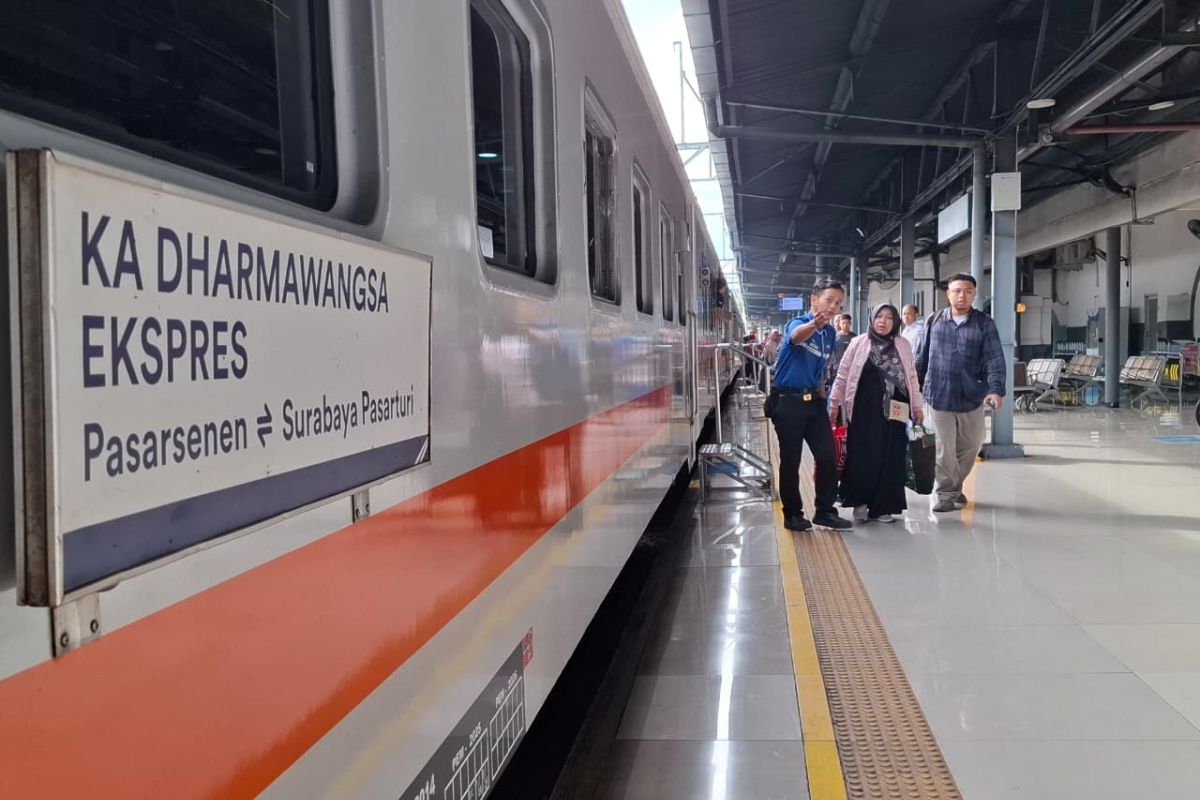
PT Kereta Api Indonesia (Persero) is continuing to strengthen long-distance services on Java’s northern route through the Dharmawangsa Train, which operates the Pasar Senen–Surabaya Pasarturi round trip. Between January and May 2026, the Dharmawangsa Train served 180,784 passengers, an increase of 5.87 per cent compared to the 170,760 passengers recorded during the same period in 2025.
Vice President of Corporate Communication at KAI, Anne Purba, stated that the Dharmawangsa Train has become a popular travel choice for the public on the Jakarta–Surabaya corridor via Java’s north coast. The service connects various important cities, including Bekasi, Subang, Cirebon, Tegal, Pekalongan, Semarang, Cepu, Bojonegoro, Lamongan, and Surabaya.
“The Dharmawangsa Train offers a comfortable travel option on Java’s northern route. This service connects many key areas and supports customer mobility for family trips, work, education, and tourism,” said Anne.
The Dharmawangsa Train serves passengers with Executive and Modified New Generation Economy classes. In Executive class, the carriage has 50 seats in a 2-2 configuration facing the direction of travel. The seats are equipped with reclining and rotating backrests, adjustable armrests, and footrests to enhance comfort on long-distance journeys.
In Economy class, the Dharmawangsa Train uses Modified New Generation Economy carriages produced by the Manggarai Workshop. Each carriage consists of 72 captain seat-style chairs in a 2-2 configuration facing the direction of travel. The seats feature reclining backrests, armrests, central air conditioning, and a more comfortable travel space compared to older generation economy carriages.
“The Modified New Generation Economy is part of KAI’s service improvement efforts to provide customers with a better travel experience. This rolling stock is the result of internal development through the Manggarai Workshop,” Anne explained.
On the Surabaya Pasarturi–Pasar Senen route, the Dharmawangsa Train stops at Surabaya Pasarturi, Lamongan, Babat, Bojonegoro, Cepu, Ngrombo, Semarang Poncol, Weleri, Pekalongan, Tegal, Brebes, Tanjung, Babakan, Cirebon Prujakan, Haurgeulis, Pegaden Baru, Bekasi, Jatinegara, and Pasar Senen.
Among these stations, Pegaden Baru Station plays a vital role for the community of Subang Regency. Located in Pagaden, this station serves as the main access point for long-distance train services for the residents of Subang, an area covering 2,051.76 square kilometres with a population of 1,675,519 people. Via Pegaden Baru, Subang residents can travel directly to Jakarta, Cirebon, Semarang, and Surabaya without having to depart from other, more distant cities.
Subang has a distinctive geographical position, stretching from the northern region connected to the Pantura highway and the Java Sea, through the central region which serves as the centre of government and community activity, to the southern region known for its highlands, plantations, and natural tourism. This regional character creates diverse mobility needs for Subang’s residents, ranging from work, education, and family travel to trade and tourism.
Historically, Subang also has deep roots as an agricultural, plantation, and important transit area in West Java. Historical records from the Subang Regency Government mention that prehistoric findings exist in several areas, including Pagaden. During the colonial period, the Subang area also developed as a plantation region and a strategic logistics route. In today’s context, the presence of Pegaden Baru Station strengthens the connectivity of Subang’s community with major cities along Java’s north coast.
According to KAI data, passengers boarding at Pegaden Baru Station from January to May 2026 reached 26,369, an increase of 9.10 per cent compared to the 24,169 passengers in the same period of 2025. Meanwhile, alighting passengers totalled 26,616, a 10.66 per cent increase from the 24,053 passengers in the previous year.
In total, boarding and alighting activity at Pegaden Baru Station reached 52,985 passengers between January and May 2026, a 9.88 per cent increase compared to the 48,222 passengers in the same period of 2025. This growth indicates that Pegaden Baru is increasingly needed as a travel hub for the Subang community, both for departing the area and receiving arrivals from other cities.
“Pegaden Baru is an important access point for the people of Subang. The growth in boarding and alighting passengers shows that train services are becoming more relevant for residents’ mobility, especially for long-distance travel that is more efficient, scheduled, and connected to many cities,” said Anne.
Subang also has growing tourism potential. From Pegaden Baru Station, passengers can continue their journey to the centre of Subang city, the Ciater hot springs tourist area, tea plantations, agro-tourism, mountain nature tourism, distinctive Subang cuisine, and destinations in the northern region such as the Patimban area and the Pantura coast. The presence of the Dharmawangsa Train expands travel options for tourists wishing to visit Subang while also making it easier for Subang residents to reach Jakarta, Cirebon, Semarang, and Surabaya.
For the Dharmawangsa Train journey from Surabaya Pasarturi to Pasar Senen, the train departs from Surabaya Pasarturi at 23.00 WIB and arrives at Pasar Senen at 09.20 WIB. At Pegaden Baru Station, the Dharmawangsa Train arrives at 07.37 WIB and departs at 07.39 WIB.
“Through Pegaden Baru Station, the Dharmawangsa Train provides direct access for the people of Subang to Jakarta, Cirebon, Semarang, and Surabaya without needing to depart from another city. This connectivity opens up wider opportunities for residents to access education, health services, employment, and economic activities. KAI wants the presence of trains to be an integral part of the community’s daily mobility,” Anne concluded.