
Dharmais Cancer Hospital states NGS helps doctors determine more precise cancer therapies
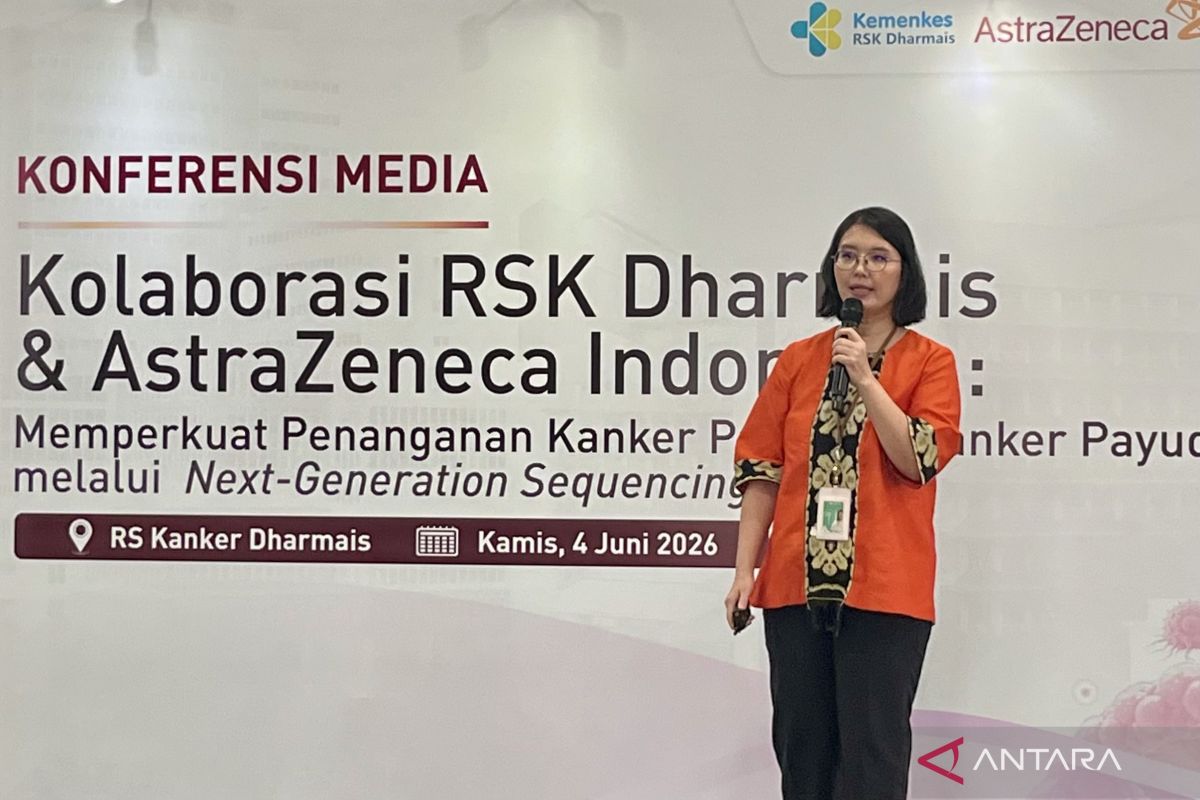
Jakarta (ANTARA) - Dharmais Cancer Hospital has stated that Next Generation Sequencing (NGS) technology can assist doctors in determining more accurate and personalised cancer therapies by identifying biomarkers and the genetic profiles of patient tumours.
Dr Christine Sugiarto, a clinical pathology specialist and oncology consultant at Dharmais Cancer Hospital, stated during a press conference in Jakarta on Thursday that cancer treatment approaches have shifted from a ‘one-size-fits-all’ method to a biomarker-based approach. This shift is due to the fact that every patient may respond differently to therapy, even when diagnosed with the same type of cancer.
“Patients with the same cancer diagnosis can achieve different therapeutic outcomes. Some respond well, some do not respond, and some even experience deterioration. Therefore, current treatment approaches are shifting towards being biomarker-based,” said Christine.
Biomarker testing is necessary to identify genetic changes in cancer cells, which helps doctors determine therapies tailored to the specific characteristics of each patient’s disease. Christine noted that genetic testing has actually been used in cancer management for a long time; however, previously, testing was conducted separately for each gene intended for analysis.
Through NGS technology, various genes can be examined simultaneously in a single test, making the diagnostic process more efficient compared to conventional methods.
“With one sample and one panel, many genes can be examined at once. This makes therapeutic decision-making faster while requiring fewer samples,” she said.
Dharmais Cancer Hospital is now utilising a precision oncology genetic mutation panel capable of identifying biomarkers in various types of cancer, including breast and lung cancer. The panel covers approximately 45 genes relevant to supporting molecular cancer examinations.
According to Christine, the use of an automated system from the beginning to the end of the examination process also helps reduce analysis time, which previously could take up to several weeks.
“Currently, examinations can be completed within a maximum of 10 days, and the results can be immediately utilised by doctors to determine patient therapy options,” she said.
NGS testing can be performed using either tumour tissue samples or blood through the liquid biopsy method.
Christine emphasised that precision treatment cannot be separated from precision diagnostics, as understanding the genetic profile of cancer serves as the foundation for determining the appropriate therapy for patients.