
Dharma Pongrekun Emerges Again, Now Challenges Outbreak Regulations Before the Constitutional Court
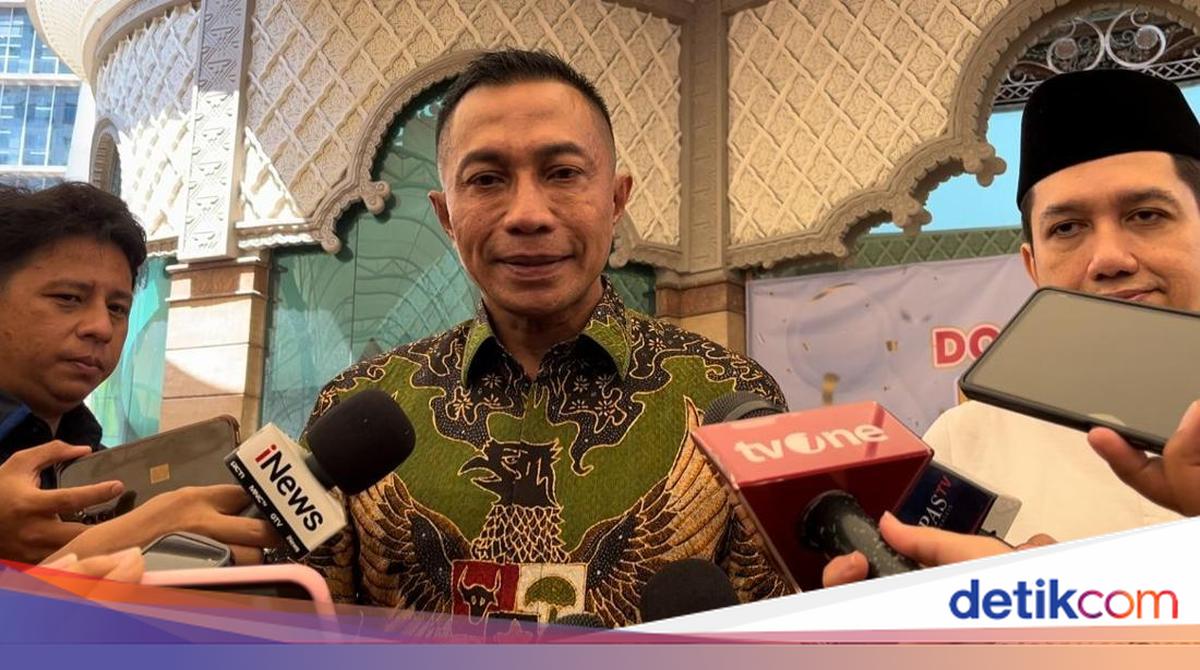
Dharma Pongrekun reemerges. After a long silence, he suddenly filed a suit with the Constitutional Court (MK). The former Deputy Head of the National Cyber and Crypto Agency (BSSN) is challenging the Health Act before MK. He asks MK to strike down the ban on obstructing the handling of Public Health Emergencies (KLB) or outbreaks.
According to the MK’s official website on Tuesday (19 May 2026), Dharma’s suit is registered under number 172/PUU-XXIV/2026. There are several articles of the Health Law that Dharma is challenging before MK.
Articles of the Health Law Challenged before MK
- Article 353 paragraph (2) letter g of Law No. 17/2023 on Health. The text:
- The criteria for KLB as referred to in paragraph (1) consist of:
- other criteria set by the Minister.
- Article 394 Health Act:
Every Person must comply with all activities to tackle KLB and outbreaks carried out by the Central Government and Local Government.
- Article 395(1):
Every person who becomes aware of a sick person or suspected sick person due to a disease or health problem that has the potential to cause KLB or outbreaks must immediately report to village/kelurahan authorities and/or nearest health service facilities.
- Article 400:
Every person is forbidden to obstruct the implementation of KLB and outbreak management.
- Article 446:
Every person who does not comply with the implementation of KLB and Outbreak management and/or deliberately obstructs it as referred to in Article 400 shall be punished by a maximum fine of Rp 500 million.
Request MK to declare Health Act incompatible with the 1945 Constitution
In his petition, Dharma states those articles potentially harm him. He argues the articles injure his constitutional rights.
“The validity of the aforementioned articles directly infringes the petitioner’s constitutional rights to personal protection and sense of security, including bodily autonomy, as guaranteed by Article 28G(1) of the 1945 Constitution,” he said in his petition.
He says the phrase ‘hindering’ in Article 400 is too broad. It could create legal uncertainty.
“The lack of adequate limitations, in the form of objective indicators, scientific parameters, or effective supervisory mechanisms, makes the power vulnerable to subjective and arbitrary use. This becomes crucial given that determining a Public Health Emergency (KLB) has wide legal consequences, including emergency budget allocation, movement restrictions, and potential restrictions on civil rights,” he said.
Next, Dharma says Article 394 Health Act is coercive. No explanation of scope; oversight mechanism unclear.
“Under such conditions, citizens, including the Applicant, are placed in an uneven position before the state, because they are required to submit to a norm that cannot be predicted, non-transparent, and potentially arbitrarily applied,” he said.
Next, Dharma contends that