
Dewa Masraman Tradition in Paksebali Klungkung Begins with Communal Megibung Feast
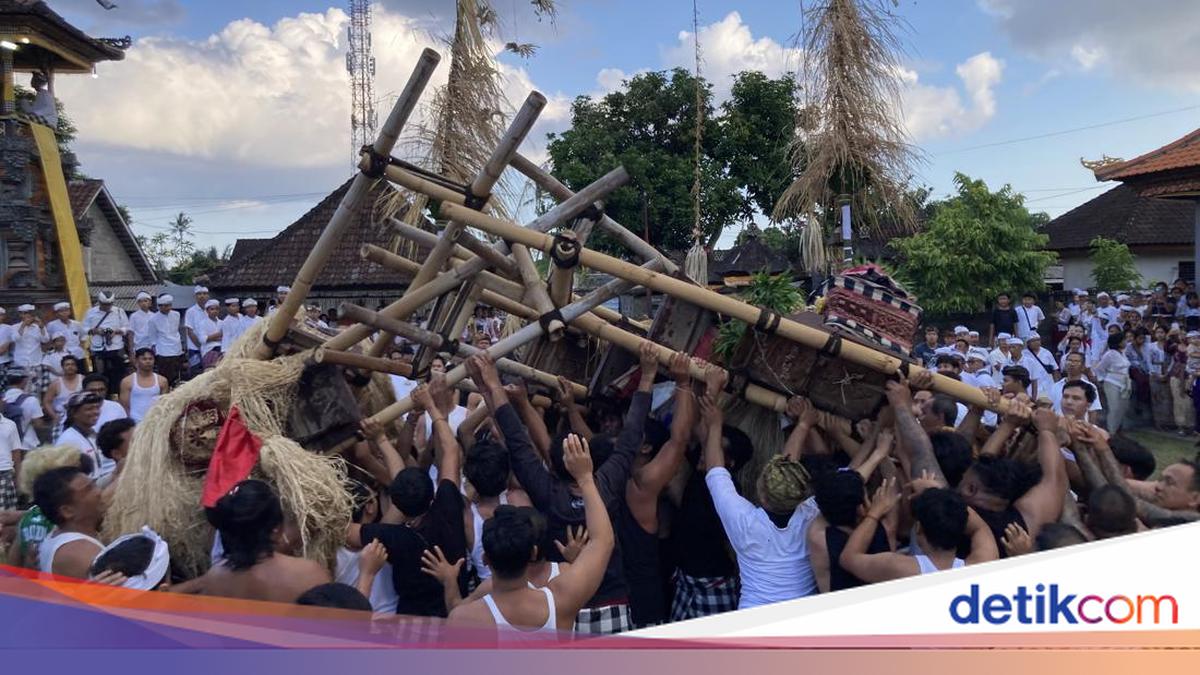
The Dewa Masraman tradition, a sacred ancestral ritual, was held by the krama of Banjar Timbrah at Pura Panti Timbrah in Paksebali Village, Dawan District, Klungkung, Bali, on Saturday, coinciding with Saniscara Kliwon Kuningan. The event began with a megibung tradition, where residents sat together in small circular groups called sela to enjoy traditional Balinese dishes such as lawar and satay served on woven bamboo mats. Komang Mudiarte, the Kelian of Pura Panti Timbrah, explained that the megibung symbolises togetherness, unity, and gratitude before the main procession. Following the meal, the community proceeded to a nearby river for a purification ritual, escorting seven decorated sacred palanquins, known as jempana or joli, to a holy water source. The peak of the ritual saw hundreds of youths energetically carrying the jempana around the temple grounds to the sound of fast-paced gamelan music, before engaging in a chaotic yet joyful mock battle where the palanquins were pushed and collided into one another. Despite the intense physical clashes, the atmosphere remained one of happiness without anger or resentment. Komang noted that the term ‘Masraman’ means to have fun or be affectionate, reflecting the community’s joy in escorting the deities and ancestors back to heaven. He emphasised that the ritual is preserved purely as a sacred ancestral tradition and is not commercialised as a tourist attraction, although visitors are welcome to observe. The tradition has been officially recognised as an Intangible Cultural Heritage of Indonesia by the Ministry of Education and Culture.