
Development of Pertamina's Unconventional Oil and Gas Seen as Potential to Boost Oil Production
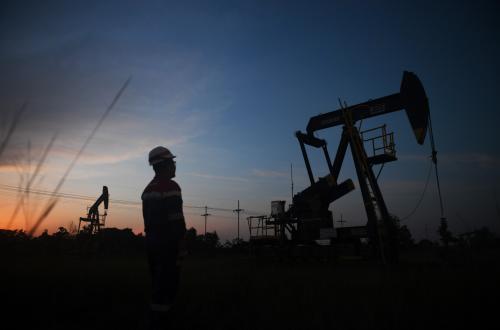
The development of unconventional oil and gas (MNK) in the Rokan Block by Pertamina Hulu Rokan (PHR) is considered to have the potential to increase Indonesia’s oil production. The development of MNK is also said to be able to extend the life of reserves and support national energy security.
Komaidi Notonegoro, Executive Director of the Reforminer Institute, stated that MNK development holds great potential, citing the United States as an example of a country that successfully increased oil production after developing such resources.
“MNK is a game changer for oil and gas. This is similar to the US, where MNK became a differentiator due to its significant potential, making the US one of the world’s largest oil producers after developing MNK in the 2000s,” Komaidi told reporters on Monday (21/9/2026).
According to Komaidi, the potential for MNK in Indonesia is quite large. However, its development faces challenges due to rock characteristics that differ from conventional oil and gas sources, requiring more suitable drilling technologies and production methods.
These conditions mean that economic aspects must be taken into account in MNK development. The technology used must be capable of producing output at competitive costs to ensure sustainable development.
Komaigu assesses that the development of MNK in the Rokan Zone is also an effort to test Pertamina’s capability in developing unconventional oil and gas resources. He noted that MNK development requires complex technology, making collaboration with parties possessing relevant expertise and technology essential.
“If I am not mistaken, Pertamina is conducting research and technology education cooperation for MNK with mining universities in the US. Whether the technology is proprietary or shared with other parties, PHR has proven it can handle everything from planning to execution. This means PHR possesses the reliability to produce MNK,” said Komaidi.
If PHR’s MNK development succeeds, Komaidi believes these additional resources could extend Indonesia’s oil and gas reserve-to-production ratio. This situation could also open longer prospects for the national oil and gas industry.
“The concern for oil companies is the failure to find new reserves. This automatically means the lifespan of the company will soon come to an end,” said Komaidi.
Komaidi hopes that utilising MNK potential can support national energy security. He noted that the development of new oil and gas resources in Indonesia currently faces many challenges as they are located in deep-sea areas, particularly in eastern Indonesia.
“Meanwhile, some MNK wells are still located on land. Therefore, it is expected that production costs, or at least technically, will not be as difficult as in deep-sea operations, making it a viable hope for strengthening Indonesia’s energy security,” said Komaidi.
Previously, PT Pertamina Hulu Rokan (PHR), as part of Pertamina’s Upstream Subholding, signed the Rokan MNK Production Sharing Contract (PSC) through its subsidiary, PT PHE Rokan Nonkonvensional. This agreement marks an important stage in the development of Rokan MNK as one of the initial projects for unconventional oil and gas development in Indonesia.
The development of Rokan MNK began with the drilling of Gulamo DET-1 in 2023. This activity was followed by the drilling of Kelok DET-1 in 2024 as part of the study of unconventional oil and gas potential in the North Aman structure.
Source: jawawa.id (https://jawawa.id/newsitem/development-of-pertaminas-unconventional-oil-and-gas-seen-as-potential-to-boost-oil-production-1789973814)
Originally published by Republika (https://ekonomi.republika.co.id/berita/tlpagw416/pengembangan-mnk-pertamina-dinilai-berpotensi-tingkatkan-produksi-minyak), translated from Indonesian