
Development of B50 and E20 to Strengthen Energy Security
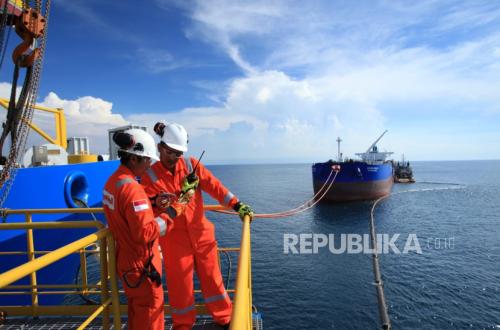
JAKARTA — The development of B50 biodiesel and bioethanol blends from E20 to E50 is considered a strategic move to strengthen national energy security. The policy could reduce reliance on fuel imports while creating opportunities for growth in industries and the wider economy based on domestic resources.
Professor Bonar Tua Halomoan Marbun of the Bandung Institute of Technology (ITB) said the government’s efforts to develop biofuels were a positive step towards safeguarding energy security and reducing dependence on foreign supplies.
“On the basis of fundamental theory, the Government’s strategy to maintain energy security and minimise imports is a noble effort and deserves praise,” Bonar said on Thursday (5 November 2026).
Bonar, a professor in the Drilling, Production and Oil and Gas Management Expertise Group at ITB’s Faculty of Mining and Petroleum Engineering, explained that the B50 programme uses a blend of 50 per cent palm-oil-based fatty acid methyl ester (FAME) and 50 per cent diesel.
He said using domestic palm oil and diesel production could reduce the need to import finished diesel. B50 therefore offers the prospect of making greater use of domestic resources while increasing the independence of energy supplies.
“Indonesia would no longer import diesel fuel. Looking only at the finished product, Indonesia would no longer import diesel from abroad and would be self-sufficient,” he said.
Bonar also said B50 development should be accompanied by stronger supporting industries, particularly to meet demand for methanol. He estimated that producing B50 biodiesel would require 2.5 million tonnes of methanol a year, while domestic production capacity currently stands at only about 600,000 tonnes.
He said expanding national methanol production was important to ensure biodiesel development generated greater added value for domestic industry. The readiness of biofuel storage and distribution infrastructure also needed attention, particularly outside Java.
“Biodiesel’s tendency to absorb moisture requires special storage facilities and precise blending. Meanwhile, the development of E20 to E50 needs to take account of vehicle-engine compatibility, fuel quality standards and the sustainability of bioethanol supplies,” he said.
Professor Murpin Josua Sembiring of Ciputra University in Surabaya also backed the development of biofuels. He said B50 and E20 to E50 were complementary energy-diversification strategies that could reduce fossil-fuel consumption.
B50 is intended to replace some diesel use, while E20 to E50 targets petrol consumption. Bioethanol development could also reduce Indonesia’s exposure to energy-import risks and global geopolitical uncertainty.
“The synergy makes sense, but it must be assessed holistically against oil prices, palm-oil prices, extreme weather, feedstock supplies and subsidy requirements,” Murpin said.
He added that bioethanol development could create a new source of economic growth by boosting agricultural activity and processing industries, as well as generating jobs in rural areas. The bioethanol feedstock supply chain could also expand markets for agricultural produce.
However, Murpin cautioned that farmers must share in the economic benefits. The Government should ensure fair purchase contracts, transparent pricing, access to finance and farmers’ participation in the industry’s value chain.
“Farmers must be winners, not cheap suppliers,” he stressed.
Murpin said the success of E20 to E50 should also be measured by reductions in petrol imports and foreign-exchange savings. Economic assessments should include ethanol production costs, infrastructure investment, subsidies, logistics and the impact on the state budget.
“Success should not be measured by project-launch ceremonies, but by lower imports, prosperous farmers, affordable prices, resilient industry and protection of the state budget,” he said.
Earlier, Bahlil Lahadalia, Coordinating Minister for Downstreaming and Energy Transition and Minister of Energy and Mineral Resources, announced plans for the phased development of bioethanol, from E20 to E50. He outlined the plan at a limited meeting with President Prabowo Subianto at Merdeka Palace in Jakarta on Tuesday (3 November 2026).
Bahlil said the Government had prepared a strategic plan for bioethanol development through cooperation across ministries, particularly the Energy and Mineral Resources Ministry and the Agriculture Ministry, to ensure upstream feedstock readiness.
“We have prepared the strategic plan for E20 through to E50. The Agriculture Minister and I are working together, because the upstream side involves collaboration between the Agriculture Ministry and the Energy and Mineral Resources Ministry,” Bahlil said.
Bahlil also confirmed that the mandatory B50 biodiesel programme would go ahead. The policy forms part of the Government’s strategy to increase the use of domestic energy, reduce dependence on fossil-fuel imports and raise the value added of national resources.
Source: jawawa.id (https://jawawa.id/newsitem/development-of-b50-and-e20-to-strengthen-energy-security-1793847117)
Originally published by Republika (https://ekonomi.republika.co.id/berita/to0awv522/pengembangan-b50-dan-e20-perkuat-ketahanan-energi), translated from Indonesian