
Developing New Quantum Chips, Microsoft Targets Commercial Quantum Computers Ready Within 3 Years
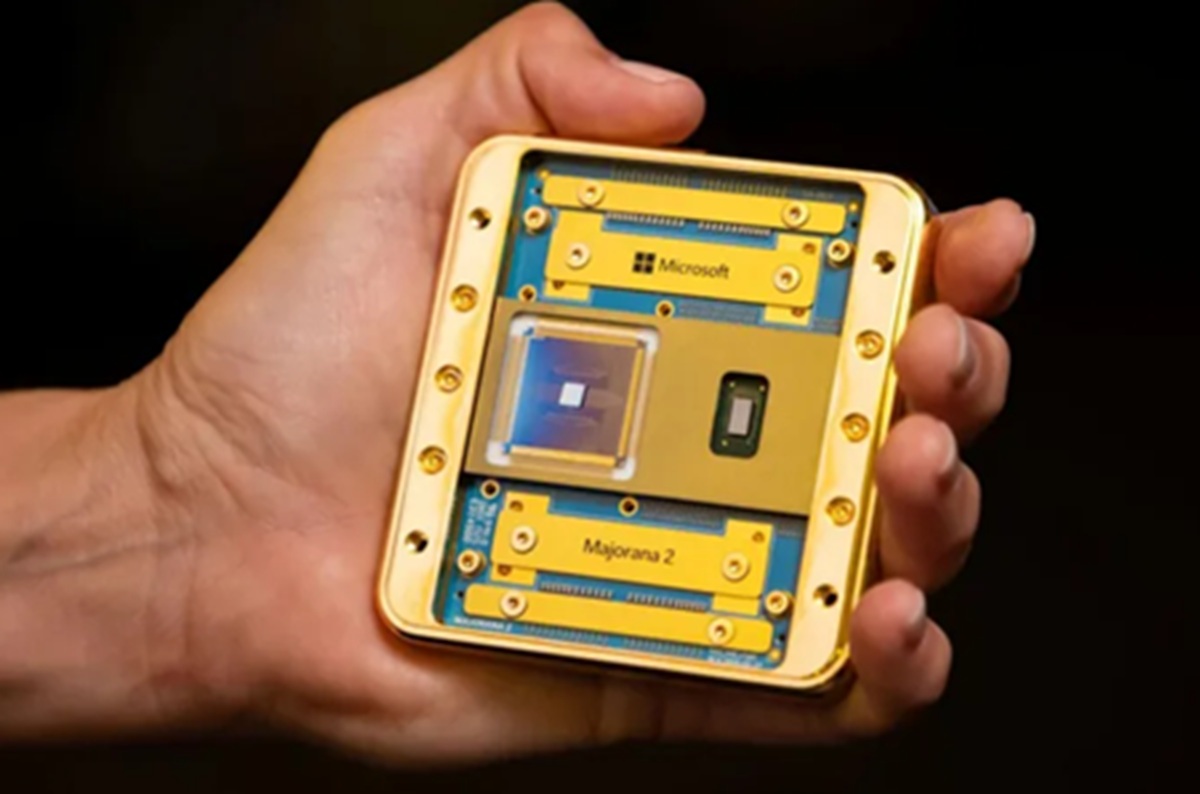
Technology giant Microsoft has announced that its latest quantum chip possesses a much higher level of reliability compared to previous versions. This breakthrough is claimed to pave the way for the creation of quantum computers capable of solving commercial problems within the next three years.
In quantum computing, the qubit is the core component that promises to solve intricate problems that current conventional computers cannot handle. Unfortunately, qubits are notoriously fragile and unstable. Through its latest chip, Majorana 2, Microsoft has successfully enabled qubits to persist for an average of 20 seconds, a massive leap from the Majorana 1 version which lasted only milliseconds. This makes the new chip 1,000 times more reliable.
“We will have a quantum machine in 202 long that can solve commercially viable and sensible problems,” said Zulfi Alam, Corporate Vice President of Microsoft Quantum. However, this target still requires massive progress, considering such machines require millions of qubits, while Microsoft’s current chip possesses only 12 qubits.
For 20 years, Microsoft has pursued a quantum approach known as “topology.” This method utilises the properties of quasi-particles first predicted by Italian physicist Ettore Majorana in the 1930s, by exploiting new states of matter beyond solid, liquid, and gas. The increased effectiveness of this second-generation chip is largely due to scientists replacing aluminium with lead as a superconductor.
While this announcement is promising, Microsoft’s claims are difficult to assess independently as the company keeps full details secret for commercial confidentiality. The published papers have also not yet undergone the peer-review process by independent experts. Microsoft previously faced intense scepticism from experts after being forced to withdraw a paper from the journal Nature in 2018 due to erroneous claims.
However, Jason Zander, Executive Vice President of Microsoft Quantum and Discovery, emphasised his team’s commitment to scientific transparency. “We support it 100%,” said Zander. “We highly value the rigour of scientific review. We welcome the debate that is always a part of physics… the main thing I want to say to people is, please read the paper and see what is there, talk to the experts to whom we have provided in-depth information.”
If this timeline is realised, Microsoft’s quantum computers could potentially solve environmental and food security problems that usually take decades, such as eliminating microplastics or creating better fertilisers. Zander views this technology as a future collaboration between humans, Artificial Intelligence (AI), and quantum computing to accelerate solutions for society.
“If you look at the removal of forever chemicals, eliminating microplastics, things like that, those are things that traditionally, if we needed 15, 20, or 30 years to figure them out, that is a very long time,” said Zander. “This is not about replacing humans; it is about giving humans tools that can help them accelerate that process, which will actually help society, I think.”