
Developers Reveal Why Subsidised Housing Sales Are Struggling
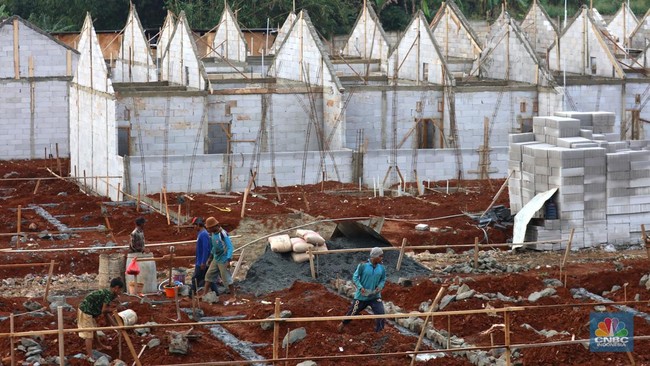
The Association of National Housing Developers and Marketers (ASPRUMNAS) has acknowledged that selling houses for low-income communities (MBR) is becoming increasingly challenging. The association attributes this to weakened public purchasing power and rising interest rates.
Muhammad Syawali, General Chairman of ASPRUMNAS, stated that sluggish subsidised housing sales are driven by the public’s declining purchasing power, particularly as many people are not yet fully aware of the importance of owning a home. Additionally, interest rates continue to climb over time.
“The economic sector is indeed quite heavy, and bank selection processes are stricter. This is to maintain a lower non-performing loan (NPL) ratio,” he said on the sidelines of the 13th Anniversary and National Working Meeting of ASPRUMNAS in Jakarta, Monday (20/7/2026).
Therefore, ASPRUMNAS is urging all parties to educate the public on the importance of owning a private residence.
On the other hand, property developers must also contend with the challenge of soaring construction costs. The prices of various building materials continue to rise, while the maximum selling price for subsidised houses has not been adjusted. Ultimately, this situation puts increasing pressure on developers’ business margins, especially as they are still required to provide houses with building quality, infrastructure, and environmental facilities that meet government standards.
Syawali noted that the current maximum price for subsidised housing is no longer in line with market conditions. For illustration, the price cap for subsidised houses in the Greater Jakarta area (Jabodetabek) is around Rp 185 million, while in Java and Sumatra it is Rp 166 million, and in Kalimantan it is approximately Rp 183 million. The government is advised to re-evaluate these prices to ensure the sustainability of the subsidised housing ecosystem.
Beyond price adjustments, ASPRUMNAS is also urging regional governments to accelerate the housing development permit process. Easier licensing is believed to speed up the construction of residential areas, encourage investment, and create new economic growth through increased trade and service activities around these housing zones.
Despite the various challenges, ASPRUMNAS remains committed to an aggressive target of building 50,000 subsidised housing units in 2027. This figure represents a surge of approximately 500% compared to the previous target of 9,000 units.
Furthermore, Syawali stated that his organisation will strengthen the quality of human resources in the property sector by establishing a skills training institute (LPK) for marketing, development, and construction personnel. For ASPRUMNAS, improving the competence of industry players is a crucial step to maintain the quality of subsidised housing and support the government’s target of accelerating the provision of decent housing for all citizens.