
Developers Cry Foul as Purchased Land Becomes Unbuildable Due to New Regulations
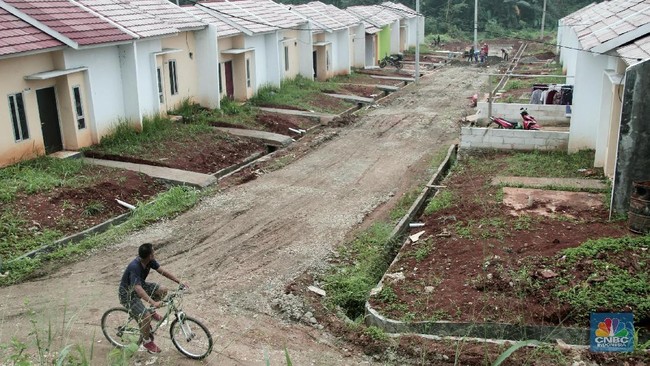
The issue of Protected Paddy Field (LSD) designation remains a major obstacle to the development of subsidised housing. This situation is believed to be disrupting the supply of land available for development, particularly in regions with high housing demand.
Many developers have already purchased land within zones permitted for residential construction, only to find their status changed due to LSD regulations. Consequently, several developers are facing capital difficulties as they are unable to build or sell houses on these plots.
“It is not exactly a collapse, but they are being suffocated; they are at their limit. They are merely exhausting their existing land, but the land they have already purchased is being hit by LSD regulations,” said Deddy Indrasetiawan, General Chairman of the Indonesian Housing and Residential Developers Association (APERSI), to CNBC Indonesia.
This means a number of developers have purchased land that previously aligned with regional spatial planning as residential zones, but has since been categorised as LSD, rendering it unusable.
“We did not purchase the land to change its function. We checked the regional spatial planning and it was a yellow zone, a residential zone. However, the regulations are reportedly being applied retrospectively, which is very confusing for us,” added Deddy.
The greatest challenges are expected to occur in West Java and Banten. These two regions are major hubs for subsidised housing development, meaning any changes in spatial planning policy will directly impact developer activities.
“The most difficult areas, according to the Director General of Spatial Planning at the Ministry of ATR/BPN, are West Java and Banten—specifically Banten, particularly Tangerang Regency,” he noted.
APERSI assesses that the uncertainty regarding land status is beginning to affect the performance of the subsidised housing sector. Meanwhile, developers continue to face other hurdles, ranging from licensing processes to the limited availability of build-ready land.
“Certainly, as colleagues can see that the achievement of subsidised housing targets in the first semester has dropped by 24% compared to last year. This is due to land availability, as well as rising licensing costs and material prices,” he concluded.