
Detained and Photographed Upon Entering KTP Building, Turns Out It Violates the Law
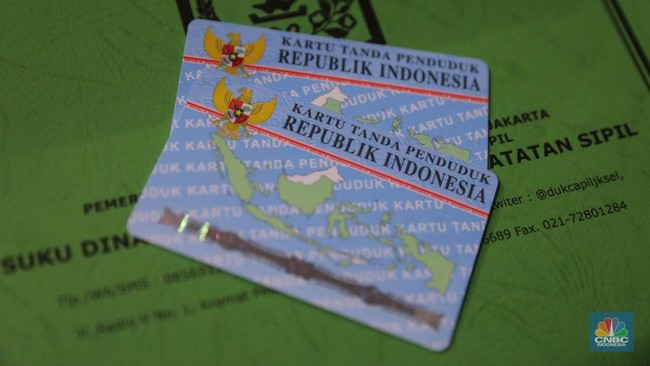
Jakarta, CNBC Indonesia - When intending to enter office buildings or other public facilities, visitors are often asked to hand over their ID cards. Faces are also frequently photographed as part of the building’s security procedures.
However, this mechanism actually violates the principles of personal data protection. This was revealed by Researcher from the Institute for Studies and Advocacy of Society (ELSAM), Parasurama Pamungkas.
“Well, the collection of personal data that is actually not relevant to the activity we are doing, such as entering a tower or registering an account, is actually non-compliance by the controller with the principles of personal data protection,” said Parasurama to CNBC Indonesia recently.
Parasurama stated that such data collection can be categorised as a violation because it does not meet several basic principles. One of them relates to the purpose of data collection, which should be limited and relevant.
He assessed that data controllers do not meet the validity element. This is because the personal data collected is not always relevant to the purpose of the data collection, and it even has the potential to be used for other interests.
Indonesia itself has privacy regulations through the Personal Data Protection Law since 2022. This law strictly regulates the rights of Indonesian citizens as data owners and establishes sanction threats for companies and government institutions that neglect to protect personal data.
Unfortunately, the implementation of the law is still hampered because the government has not established a personal data protection supervisory body as mandated by the law. That supervisory body should have been established one year after the law was enacted, which falls on 17 October 2024.
“Then using it for other purposes, and it also loses the legal basis to continue or process the irrelevant data,” he said.
Building managers should be able to find ways other than collecting ID cards or facial scans, in this case, methods that do not pose risks to the public. Building managers must also provide options so as not to limit the public’s activities in accessing the place.
Parasurama emphasised that privacy should be provided by default and by design. Protection of privacy must also be carried out by managers of restricted areas, including buildings.
“Well, that is actually part of a data violation, personal data protection. Because this is similar to digital platforms, how we can enjoy a platform without ads by paying, for example,” he explained.
Contacted separately, Cybersecurity Expert from Vaksincom, Alfons Tanujaya, explained that selfies and ID cards are not recognised identification tools according to the Directorate General of Population and Civil Registration (Dukcapil).
For the security aspect, Alfons said that it depends on data management, such as how they store the data, whether it can be ensured to be secure or not.
“Then whether it is safe or not depends on the data manager, how they store that data. If they do not store it securely, if the data leaks, it’s done,” said Alfons.
“What is not finished will also leak, the data along with the photos, the face, the selfie, which can then be processed with AI, remade,” he explained.
Source: jawawa.id (https://jawawa.id/newsitem/detained-and-photographed-upon-entering-ktp-building-turns-out-it-violates-the-law-1777272691)
Originally published by CNBC Indonesia (https://www.cnbcindonesia.com/tech/20260427110514-37-730092/masuk-gedung-ktp-ditahan-dan-difoto-ternyata-melanggar-undang-undang), translated from Indonesian