
Destry: Synergy with government does not mean BI loses independence
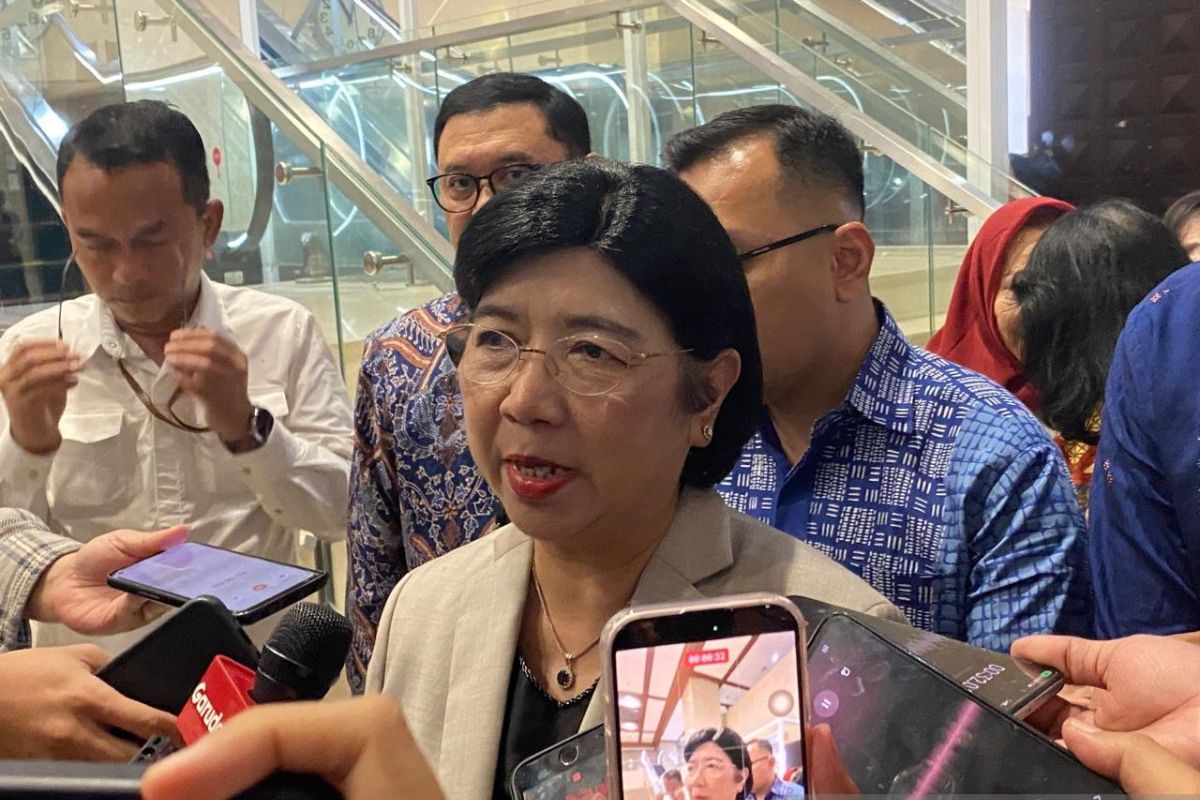
Jakarta (ANTARA) - Bank Indonesia (BI) governor candidate Destry Damayanti has emphasised that synergy with the government to drive economic growth does not reduce BI’s independence in carrying out its authority.
“Don’t misunderstand synergy. Synergy does not mean we lose independence, no. Because we move together in the same direction, of course in accordance with our respective authorities,” said Destry during a fit and proper test in Jakarta on Wednesday.
In general, Destry explained that BI fundamentally supports the government in achieving higher economic growth. The Financial Sector Development and Strengthening Law (UU P2SK) has also mandated BI to create a conducive economic climate to encourage real sector growth and job creation.
“So our task is how we try to keep the economic climate conducive, meaning stability is maintained, then supply-demand growth is strong and so on, and financing availability is also there. This is our homework,” she explained.
Destry explained that such synergy is necessary because current economic conditions face unusual challenges. According to her, policy cannot rely on just one instrument to maintain stability while simultaneously promoting quality economic growth.
She cited conditions in developed countries such as Europe and the United States, which face slowing economic growth while at the same time still facing inflationary pressures due to rising commodity prices and supply chain disruptions.
According to her, these conditions mean central banks need to balance policy because rising inflation cannot be responded to simply by raising interest rates when economic growth is also slowing.
“This is a situation where if they only talked about inflation rising they could immediately say, okay, raise interest rates. But this is not the case; they are also facing an economic slowdown, which is why they have to balance,” said Destry.
In the Indonesian context, she said BI carries out this balancing through a policy mix that includes monetary policy, macroprudential policy, payment systems, and supporting policies.
One such supporting policy is deepening the money and foreign exchange markets. According to her, deepening these markets is important to strengthen rupiah stability while providing a source of financing for the economy.
“Because Indonesia is growing, especially with the government’s 8 percent target, it will certainly need substantial financing,” said Destry.
Efforts to maintain stability, according to Destry, also cannot be achieved through monetary policy alone.
She cited BI’s decision in the Board of Governors Meeting (RDG), when pressure on the rupiah increased but BI considered that economic growth was still below its potential level.
“Because we see that we have homework: our growth is still below its potential level,” she said.
Therefore, BI uses supporting policies through deepening the money and foreign exchange markets, among others by providing incentives and lowering hedging costs to encourage capital inflows.
According to Destry, these measures also encouraged fund inflows into Bank Indonesia Rupiah Securities (SRBI) and Government Securities (SBN), which ultimately increased the supply of foreign exchange in the market.
For information, Destry Damayanti, who currently serves as Acting Governor of BI, is the sole candidate for BI Governor proposed by President Prabowo Subianto based on a Presidential Letter (Surpres) to the Indonesian House of Representatives (DPR RI).
Destry has served as Acting Governor of BI following the voluntary resignation of Perry Warjiyo from the position of BI Governor for personal reasons on 25 July 2026.
On the same day, Wednesday, Commission XI of the DPR RI held a fit and proper test for the candidate for Senior Deputy Governor of BI, namely Aida S. Budiman.
Meanwhile, the fit and proper test for the candidate for Deputy Governor of BI is scheduled to take place on Thursday (27/8). For the position of Deputy Governor of BI, two names have been proposed, namely Solikin M. Juhro and M. Anwar Bashori.