
Destry Faces Growth, Stability Challenge as First Woman to Lead Bank Indonesia
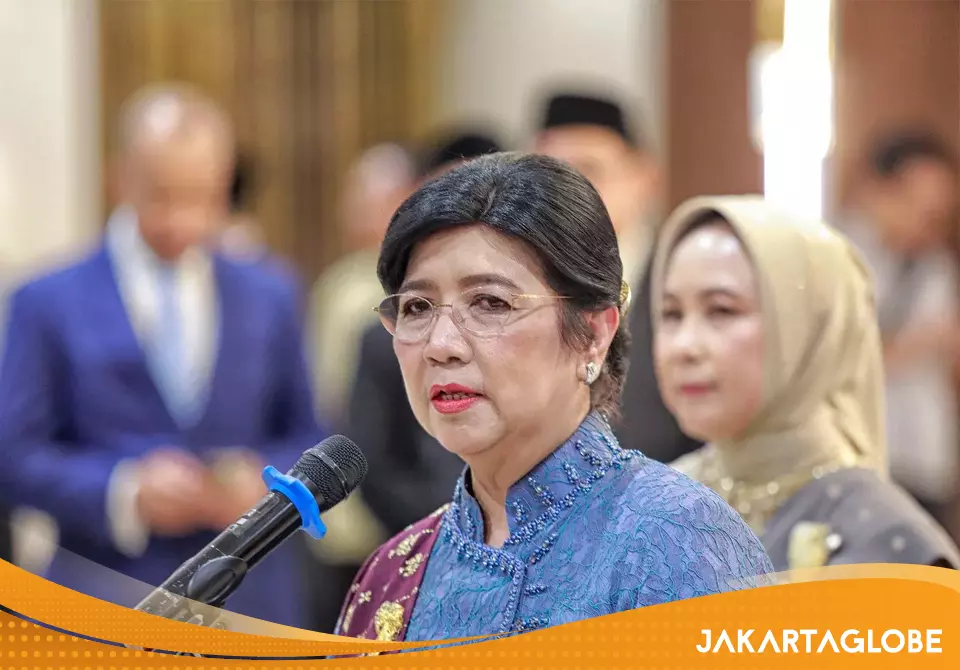
Destry Faces Growth, Stability Challenge as First Woman to Lead Bank Indonesia
Jakarta. Destry Damayanti starts her five-year term as Bank Indonesia’s first female governor facing the challenge of keeping the economy stable while supporting stronger growth.
Destry acknowledged that Indonesia’s growth remains below its potential but said inflation and the fiscal deficit remain under control.
“From the economic growth side, we are behind Vietnam. But our characteristics are different from Vietnam, and our complexity is also different,” Destry said at the 100 Indonesian Economists Forum in Jakarta on Thursday.
Indonesia’s economy grew 5.45% in the first half of 2026, compared with more than 8% growth in Vietnam. Destry said Indonesia was still growing below its optimum level and called for closer cooperation among the government, Bank Indonesia, businesses and economists to lift growth.
“We are still moving below our optimum level,” she said, adding that the government, Bank Indonesia, businesses and economists must work together to push growth higher.
Destry, who was sworn in on Wednesday, is the first woman to definitively lead Bank Indonesia. She previously served as the central bank’s senior deputy governor and became acting governor after Perry Warjiyo resigned in July.
Balancing Stability and Growth
Economists expect policy continuity under Destry but said markets will closely watch how she balances monetary stability with Bank Indonesia’s wider mandate to support growth and job creation.
Eko Listiyanto, vice director of the Institute for Development of Economics and Finance (Indef), said maintaining Bank Indonesia’s independence and credibility should be a priority, particularly as the rupiah faces pressure.
The Indonesian rupiah has been among the worst-performing currencies in the region and globally in 2026, losing around 6% against the US dollar so far this year.
“The biggest challenge is to ensure that coordination is optimal while each institution maintains its independence according to its respective duties,” Eko said.
He said Bank Indonesia and the Finance Ministry should coordinate closely while remaining within their roles as monetary and fiscal authorities.
The issue has become more important under the 2026 Financial Sector Development and Strengthening Law (P2SK Law), which expands Bank Indonesia’s role in supporting economic growth and employment.
Eko said the broader mandate should not weaken the central bank’s focus on monetary stability.
“Stability is the key to everything – economic growth, job creation and ensuring Indonesia can become a developed country,” he said.
Yusuf Manilet, an economist at the Center of Reform on Economics (CORE), also expects continuity but said clearer communication will be important.
“The challenge is not to change the direction drastically, but to ensure that Bank Indonesia’s reaction function becomes clearer to the market,” he said.
Markets will watch how Bank Indonesia responds to pressure on the rupiah, inflation and global financial conditions.
Yusuf said the central bank should use a mix of tools. Interest rates should remain the main instrument, while foreign exchange intervention, hedging and macroprudential policies can address specific pressures.
This would reduce the need to rely too heavily on interest rates to support the rupiah, which could weaken bank lending and economic activity, he said.
However, monetary policy alone cannot resolve all pressures on the rupiah. External conditions, Indonesia’s export structure, the current account and the depth of the foreign exchange market will also affect the currency.
Fiscal policy and structural reforms will therefore be needed to support the central bank’s efforts, Yusuf said.
Expanding Local Currency Transactions
Another challenge for Destry will be expanding Local Currency Transactions (LCT), which allow cross-border trade and investment to be settled in local currencies instead of relying heavily on the US dollar.
Eko said LCT had made progress but remained too small to significantly reduce dollar dependence.
He urged Bank Indonesia to expand LCT cooperation with more countries, including partners in ASEAN, BRICS and the Organization for Economic Cooperation and Development (OECD).
But expanding the network alone will not be enough. Bank Indonesia also needs to encourage more businesses, exporters, importers and tourists to use the system, he said.
Tags: Keywords:
Source: jawawa.id (https://jawawa.id/newsitem/destry-faces-growth-stability-challenge-as-first-woman-to-lead-bank-indonesia-1788497510)
Originally published by jakartaglobe.id (https://jakartaglobe.id/business/destry-faces-growth-stability-challenge-as-first-woman-to-lead-bank-indonesia)