
Destry as Sole Candidate for BI Governor, Rupiah Poses a Test
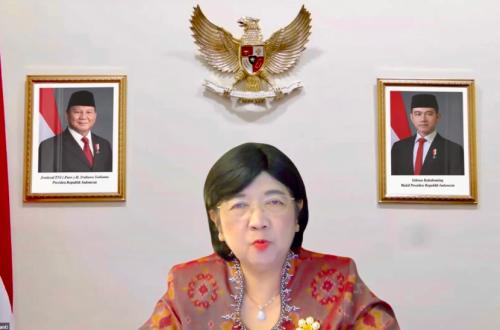
Pressure on the rupiah is one of the challenges Destry Damayanti will face if elected as Governor of Bank Indonesia (BI). Permata Bank Chief Economist Josua Pardede assessed that Destry needs to maintain exchange rate stability while ensuring monetary policy continues to support economic growth.
Josua predicted that the direction of BI’s monetary policy under Destry would not change drastically. Destry, who currently serves as BI’s Senior Deputy Governor, is considered likely to continue existing policies while keeping rupiah stability as a primary consideration.
“Based on the available material, we see the greatest likelihood is policy continuity, not a drastic change of direction,” Josua said in response to Republika during the PIER Economic Review Q2 2026 Virtual Media Briefing on Monday (10/8/2026).
He estimated that the BI-Rate would remain at 5.75 percent until the end of 2026, and even throughout 2027. Although July 2026 inflation was recorded at 2.88 percent, Josua assessed that the room for lowering interest rates is not yet safe enough due to ongoing pressure on the rupiah and significant external conditions.
Josua also forecast the rupiah to be in the range of Rp17,800 to Rp18,000 per US dollar by the end of 2026. According to him, BI cannot rely solely on inflation when determining the direction of interest rates. “A BI-Rate cut should not be carried out just because inflation is low. The room for a cut is safer if the rupiah is sustainably stable, capital flows improve, foreign exchange reserves stop declining, and pressure from global interest rates eases,” he said.
He added that pressure on the rupiah is also influenced by geopolitical uncertainty, high global interest rates, capital flow volatility, and current account pressures. Therefore, BI needs to use a combination of policies, ranging from foreign exchange intervention to liquidity management, rather than relying solely on interest rates.
Destry’s challenges also stem from the government’s fiscal policy. According to Josua, coordination between the government and BI remains necessary to boost the economy, but clear boundaries must be maintained so that fiscal needs do not dominate monetary policy. “What must be maintained is the boundary between coordination and fiscal dominance in monetary policy,” he said.
One policy that needs attention is the placement of the government’s excess budget balance (SAL) in state-owned banks, or Himbara. The transfer of funds from the government’s account at BI to banks will add liquidity, although it does not automatically pressure the rupiah. “Pressure on the rupiah will only increase if the additional liquidity then drives credit very quickly, increases imports, enlarges foreign exchange purchases, or causes rupiah interest rates to fall too far, making rupiah assets less attractive,” Josua explained.
He therefore suggested that the placement of SAL be carried out gradually and adjusted to liquidity conditions. These funds also need to be directed towards productive credit to have an impact on the economy, rather than merely adding cheap funds to the banking system. “In conclusion, SAL itself is not a direct threat to the rupiah. What determines it is how quickly SAL turns into credit, imports, and foreign exchange demand, as well as how effectively BI controls that additional liquidity,” Josua said.
Meanwhile, INDEF Economist and Director of the Center for Sharia Economic Development, A. Hakam Naja, assessed that Destry’s challenge is not only maintaining rupiah stability but also preserving BI’s independence. He stated that BI’s position as an independent institution is important to maintain public and investor confidence. “BI’s position as an independent state institution must continue to be maintained to preserve the trust of the public as well as domestic and global economic actors,” Hakam told Republika.
He said that fiscal and monetary policy coordination is still necessary. However, every decision must be based on professional and technocratic considerations to maintain stability while supporting economic growth. The government has submitted Destry Damayanti as the sole candidate for BI Governor to the House of Representatives. Destry is also currently serving as the Acting Governor of BI following Perry Warjiyo’s resignation.