
Destry and Purbaya Collaborate on Scheme to Prevent Bank Liquidity Shortages
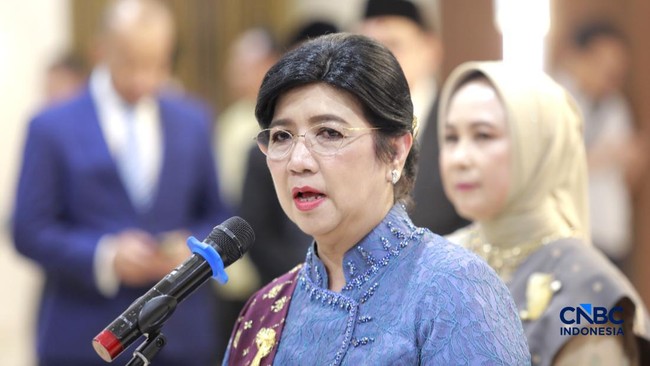
Jakarta, CNBC Indonesia - Bank Indonesia Governor Destry Damayanti has ensured that future policies between the central bank and the government will become increasingly integrated to maintain liquidity stability within the banking sector.
Destry stated that Bank Indonesia, alongside the Ministry of Finance under the leadership of Finance Minister Purbaya Yudhi Sadewa, has developed a specific timeline for liquidity interventions within the financial system.
“Therefore, coordination moving forward regarding when the Ministry of Finance will place funds in State-Owned Banks (Himbara) and when they will be withdrawn has been discussed, and we now have a timetable in place,” said Destry at the Hotel Kempinski area, Jakarta, on Thursday (3/9/2026).
Consequently, Destry ensured that through close synergy between monetary and fiscal authorities, liquidity issues in the financial system will be addressed more rapidly, preventing the occurrence of shortages.
“It comes back to synergy, as liquidity is a task not only for BI but also for the government via the Ministry of Finance, which we welcome. The key is simply good communication,” Destry emphasised.
Previously, Finance Minister Purbability Yudhi Sadewa admitted to having been negligent in monitoring banking liquidity conditions, which had led to periods of shortage within the financial system.
With the change in leadership at Bank Indonesia, following Destry Damayanti’s official swearing-in by the Supreme Court as Governor, she ensured that such negligence would not recur.
“Within the Financial System Stability Committee (KSSK), we are actually conducting routine checks; we are attempting to sharpen our instruments to monitor economic conditions and market liquidity, so it does not happen as it did previously,” said Purbaya while attending Destry’s inauguration at the Supreme Court, Jakarta, on Wednesday (2/9/2026).
“Including myself, I was somewhat negligent and late in assessing the liquidity conditions within the economic system,” he admitted.
Purbaya explained that this oversight occurred because the KSSK relied solely on the Liquid Assets to Non-Core Deposit (AL/NCD) ratio to assess banking and economic liquidity.
He noted that while this ratio was previously thought to always reflect stable and healthy liquidity, the banking sector was actually experiencing a liquidity crunch.
“In fact, the banks were experiencing turbulence. Therefore, we must improve this; we want to develop tools that truly reflect the real conditions on the ground,” Purbaya concluded.