
Despite US$641 Million Surplus, Indonesia's Exports to Middle East Plunge 13% Due to Geopolitical Conflict
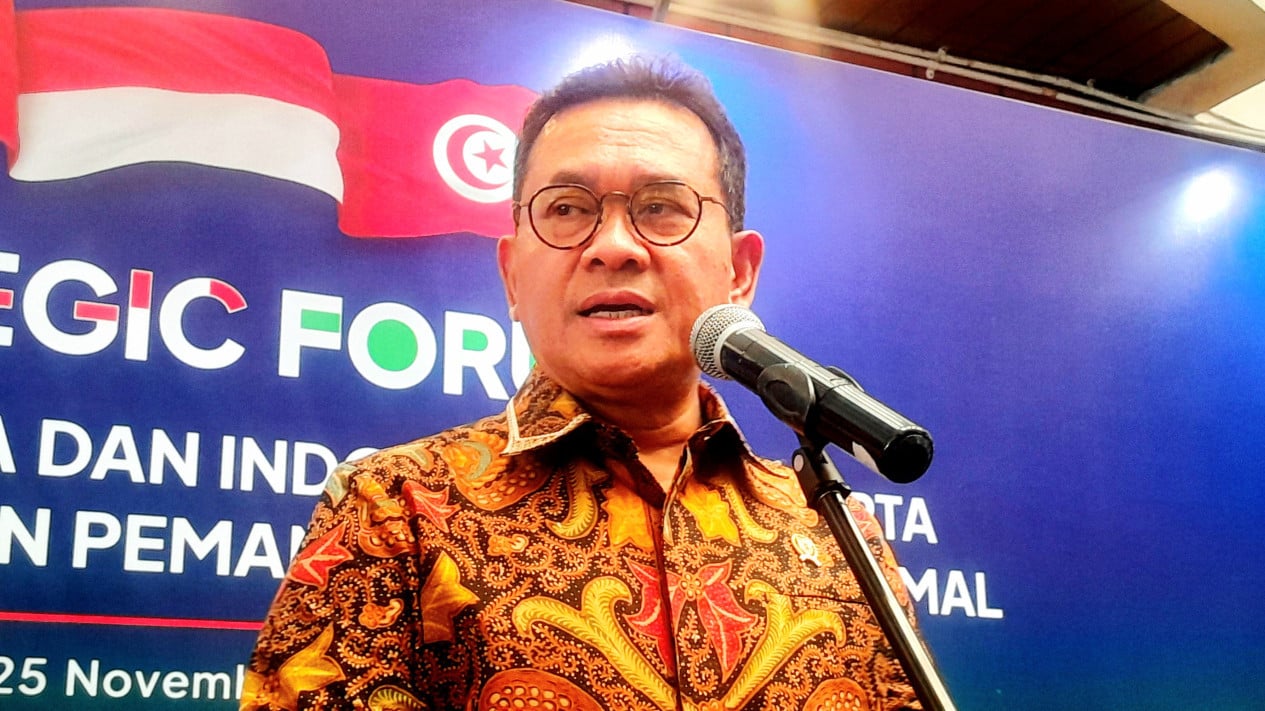
Trade Minister Budi Santoso, also known as Busan, stated that the geopolitical situation in the Middle East is affecting Indonesia’s export performance to the region.
He noted that although Indonesia still recorded a trade surplus of US$641 million with the region, exports to it plunged 13% in the January-February 2026 period.
“Indonesia’s exports to the Middle East reached US$9.8 billion, or 3.4% of total national exports,” Budi said at the Kadin Trade Sector National Coordination Meeting in Jakarta on Thursday, 30 April 2026.
“Of that amount, 40% of exports were directed to the United Arab Emirates and 29% to Saudi Arabia,” he added.
Nevertheless, Budi acknowledged that countries in the Middle East region continue to show interest in strengthening trade cooperation with Indonesia, in line with the success of previous trade agreements.
He explained that Indonesia’s success in establishing a Comprehensive Economic Partnership Agreement (CEPA) with the United Arab Emirates (UAE) has served as an entry point to bolster cooperation with other countries in the region.
“So that is actually one way; when the UAE has succeeded with us, other Middle Eastern countries also want to make trade agreements,” Budi said.
Therefore, Budi assured that the government will continue to promote export market expansion through various international trade agreements.
Besides the Middle East, Indonesia is also maintaining major markets such as the United States, which contributes significantly to the national trade surplus.
Budi added that structurally, Indonesia’s exports are dominated by the processing industry at 80%, followed by mining at 10%, with the remainder covering the oil and gas and agriculture sectors. Meanwhile, for imports, 70% are dominated by auxiliary raw materials, 8% capital goods, and 8% consumer goods.
“This means that what we import is actually for our industrial processes, most of which are also for our export processes. So actually, our economic ecosystem is running well,” he stated.
For information, the government is currently implementing several strategies in the trade sector, namely securing the domestic market, expanding export markets, and encouraging local products to compete in the global market.