
Despite temperature drop, tourists urged to avoid Kelimutu crater area
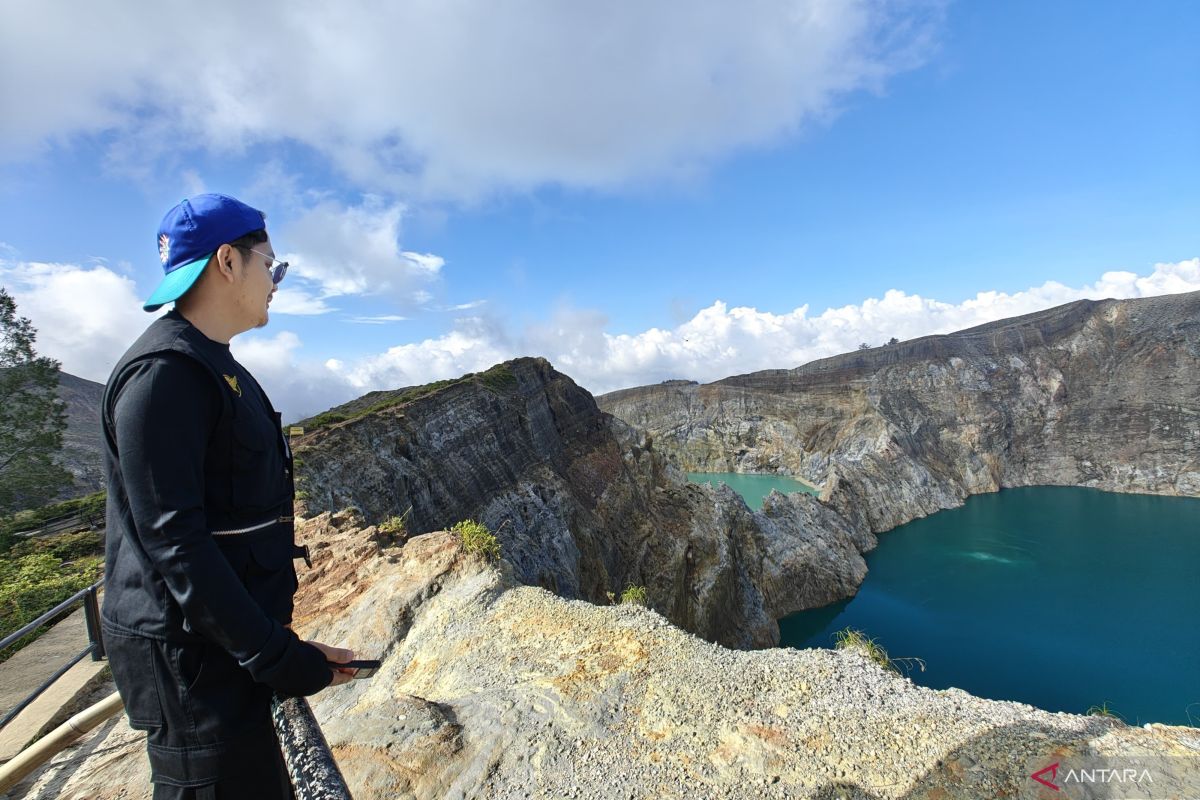
The Geological Agency of the Ministry of Energy and Mineral Resources (ESDM) has requested tourists to stay away from the crater areas of Mount Kelimutu, Ende Regency, East Nusa Tenggara, despite a decrease in the water temperature of Crater II, also known as Tiwu Ko’ofai Nuwamuri.
Acting Head of the Geological Agency, Lana Saria, stated in Jakarta on Sunday that based on recent measurements, the water temperature in the crater has dropped from 35 degrees Celsius to 33.2 degrees Celsius.
This temperature decrease was obtained from field measurements and observations conducted by the Geological Agency’s technical team on 4 July 202le, following a comparison with previous measurement data from 30 June 2026.
Although the water temperature has decreased, the Geological Agency noted that the colour of the lake water in Crater II has shown no change, maintaining a consistent light green colour since mid-June 2026.
Furthermore, Lana Saria confirmed that the downward trend in water temperature in Crater II has not been accompanied by any significant changes in seismic activity or the height of smoke rising above the lake’s surface.
At present, the volcanic activity level of the volcano, famous for its three-coloured crater lakes, remains at Level I with a Normal status.
Given that Mount Kelimutu is a popular volcanic tourist destination with a high number of visitors, the Geological Agency has issued several important recommendations to ensure public safety.
Local residents around Mount Kelimutu, as well as visitors and tourists, are urged not to approach the edges of the craters, particularly Crater II, to increase vigilance against the potential for phreatic eruptions that could occur at any time.
The Geological Agency also requested that the local government, alongside the Regional Disaster Management Agency (BPBD), continue to enhance coordination with the Mount Kelimutu Volcano Observation Post in Kolorongo Village, Waturaka, Ende Regency, as well as the Centre for Volcanology and Geological Disaster Mitigation (PVMBG).