
Despite Social Media Backlash, BPS Says Majority of Citizens Accept Census Officers
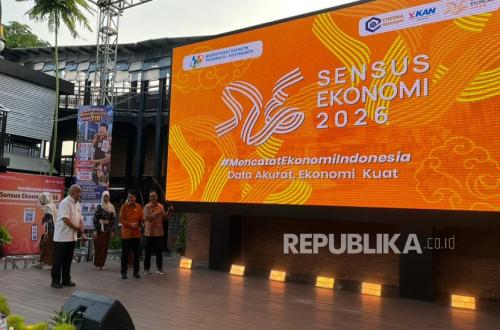
The Central Statistics Agency (BPS) has stated that the majority of the public are still accepting the arrival of 2026 Economic Census officers. The statement was made in response to a number of social media posts showing rejection of the data collection process.
Head of BPS Amalia Adininggar Widyasanti said that based on her agency’s monitoring, the number of citizens accepting census officers is still far greater than those refusing. According to her, the rejections are more visible on social media, creating a perception that they are occurring widely.
“We have monitored this. Proportionally, there are still many more who accept than refuse. It is just that those voicing their opinions on social media are the ones refusing; those who accept the census officers well rarely speak up. This is our collective task to tirelessly educate the public so they understand the importance of being recorded,” Amalia told Republika.co.id on Monday (6/7/2026).
Windhiarso Ponco Adi, Daily Chair of the 2026 Economic Census at BPS, conveyed that his party continues to improve public understanding regarding the implementation of the census, including when facing rejection in the field. Officers first provide a polite and professional explanation about the purpose of the census so that residents understand the benefits of the data collection and are willing to provide information.
BPS is also collaborating with various stakeholders, ranging from governors, regents, mayors, sub-district heads, village heads, neighbourhood and community unit heads, to community leaders, to help socialise the implementation of the 2026 Economic Census. All field officers are equipped with official identification, including a vest labelled ‘2026 Economic Census’, a name tag, an assignment letter, and a barcode that the public can scan to verify the authenticity of the officer’s identity.
“We hope that during this explanation process, the public can change their minds and provide answers,” said Windhiarso in Jakarta. “District/city BPS offices have officially assigned officers to visit respondents. Their identities can also be verified, so the public need not worry.”
Windhiarso added that BPS is also strengthening public communication through various channels, including social media, to correct misinformation regarding the census implementation. Education is carried out continuously so that the public understands the benefits of the 2026 Economic Census as a basis for formulating development policies and is not easily influenced by misleading information.
He said that an evaluation of the census implementation is conducted daily, and the progress of data collection is monitored across all regions of Indonesia. If an area is found to have low data collection achievement or is hampered by misinformation, BPS immediately takes corrective steps through socialisation with local governments and community leaders.