
Despite Reopening, the Hormuz Strait Crisis Is Not Over: The World Will Remain in Turmoil for Longer
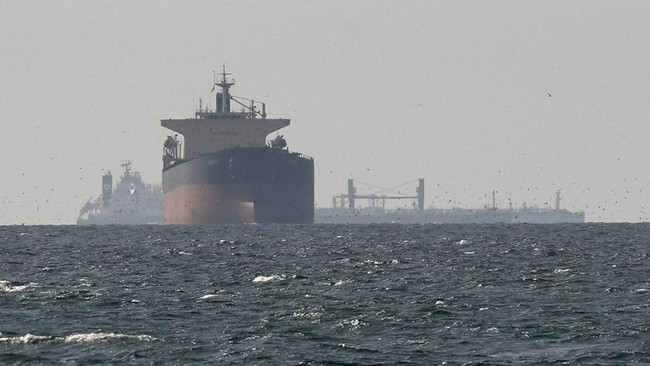
The effective closure of the Strait of Hormuz has not only halted oil and gas flows but also holds the potential for long-term impacts on global supply chains and international trade patterns, even if reopening occurs soon. Industry players in shipping and trade warn that resuming passage through the strait will not automatically return conditions to normal. Logistical impacts are expected to linger long after ships resume transit. “When the war officially ends and the bombings stop, it doesn’t mean the war is over for logistics, because that’s when the real work begins,” said Nils Haupt, senior director of corporate communications at German shipping company Hapag-Lloyd, quoted from Al Jazeera on Wednesday (1/4/2026). He anticipates a massive surge of ships eager to enter major ports in the Persian Gulf. “Many containers are heading to that region, and we will see supply chain disruptions to and from the Persian Gulf,” he stated. According to the International Maritime Organization, around 2,000 ships are currently stranded in the area due to Iran’s partial blockade, which only permits a small number of vessels from countries deemed friendly to pass through. Maritime intelligence firm Windward reports that about 400 other ships are in the Gulf of Oman, indicating shipping companies are awaiting the moment for the route to reopen. Some vessels have been diverted to the Suez Canal or taken longer routes around the Cape of Good Hope to deliver goods to Asia and Europe. Even Saudi Arabia’s oil shipments have been rerouted through the Red Sea to avoid the strait. Svein Ringbakken from the Norwegian Shipowners’ Mutual War Risks Association said that clearing the backlog of oil, gas, and other goods will be difficult to resolve quickly, even with full operation of logistics facilities. “The short answer is that it will take months to return shipping supply chains to normal due to that backlog,” he said. He added that many production lines had to be halted due to storage capacity limitations. “Production lines had to be stopped for many products due to lack of storage capacity,” he stated. “Add damage to production facilities and port infrastructure. All of this adds inefficiency when the strait reopens.” According to the International Energy Agency, more than 40 energy assets in the region have suffered severe damage. Energy companies such as QatarEnergy, Kuwait Petroleum Company, and Bapco Energies have even declared force majeure due to production disruptions. The effective closure of the Strait of Hormuz by Iran, in retaliation for US and Israeli attacks since 28 February, has disrupted around 20% of the world’s crude oil and liquefied natural gas (LNG) supplies. This has also driven up global energy prices. Additionally, exports of petrochemicals, fertilisers, and plastic raw materials have been hampered. SV Anchan from Safesea said this disruption raises long-term questions about how shipping companies manage risks. “From an industry perspective, the issue goes beyond mere access. The emergence of asymmetric threats, including unmanned attack capabilities, has fundamentally changed the risk environment,” he stated. He emphasised that recovery requires long-term stability. “Even if fully opened, returning to normal conditions will require a sustained period of stability.” Marco Forgione from the Chartered Institute of Export & International Trade believes rebuilding trust in the shipping industry will be difficult. “Rebuilding shippers’ confidence in the strait’s security will require significant security guarantees, which could take years,” he said. He also highlighted a surge in insurance premiums of up to 300%. “Shipping companies can only absorb these increases for a limited time,” he noted. Oscar Seikaly from NSI Insurance Group said new war insurance rates could return to normal if security is truly assured. “The resolution must be truly permanent and security guaranteed 100%, not partial or 90%.” Data from Lloyd’s List shows only a handful of ships have passed after obtaining Tehran’s permission. Even one ship was reported to have paid US$2 million to transit. Iranian legislators have also approved transit fee regulations, according to Fars News Agency. Nick Marro from the Economist Intelligence Unit said the experience of attacks in the Red Sea shows that restoring confidence is not easy. “There are still many concerns regarding the resilience of any ceasefire or conflict de-escalation,” he stated. Marro anticipates companies will diversify trade routes, as happened during the Covid-19 pandemic. “I think, given the current geopolitical uncertainty, this is likely to become a permanent feature of risk management, not just a temporary response to the Iran war,” he said.
Source: jawawa.id (https://jawawa.id/newsitem/despite-reopening-the-hormuz-strait-crisis-is-not-over-the-world-will-remain-in-turmoil-for-longer-1775104110)
Originally published by CNBC Indonesia (https://www.cnbcindonesia.com/news/20260401130740-4-723163/meski-dibuka-petaka-hormuz-belum-usai-dunia-kacau-balau-lebih-lama), translated from Indonesian